

The right approach to treating butt acne and dark marks depends on the type of skin lesions present. Red bumps around hair follicles, dry and rough bumps, and deep, painful lumps beneath the skin may require different treatments. If you focus only on dark spot creams while new bumps continue to develop, achieving a more even skin tone may be difficult.
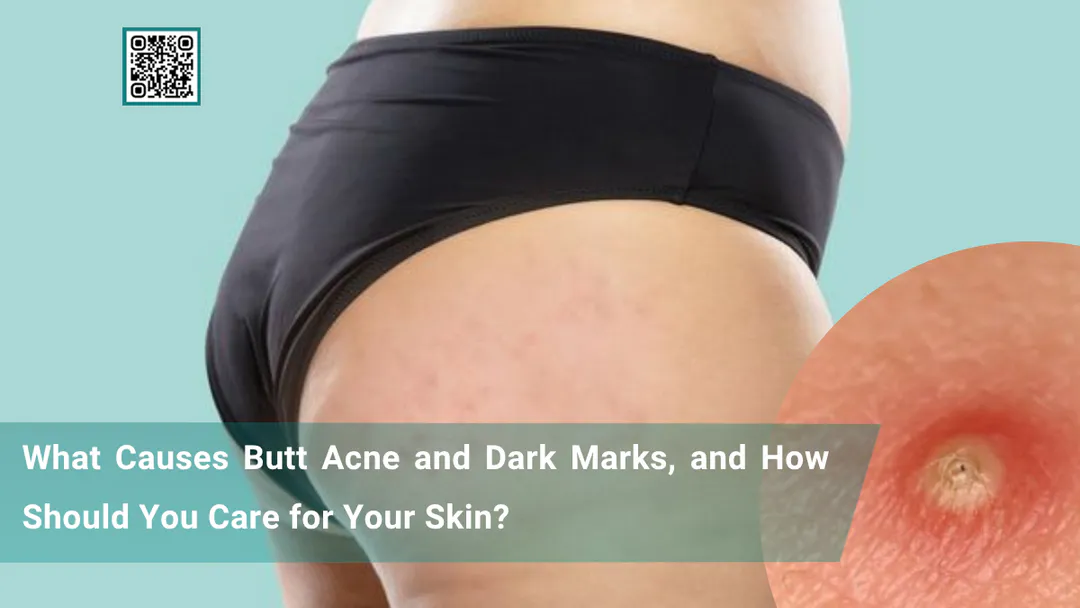
The first step is to distinguish active inflammation from dark marks left behind after previous lesions have healed. This helps determine whether the priority should be controlling new breakouts or addressing pigmentation.
Is Butt Acne Really Acne Vulgaris?
Not every bump commonly referred to as “butt acne” is acne vulgaris. Folliculitis is one common possibility. It may appear as red bumps, mild tenderness, itching, or pus-filled spots around hair follicles. Friction, tight clothing, warm and humid conditions, and shaving or plucking hair can contribute to the development of these lesions. [1]
Another possibility is keratosis pilaris. This condition typically causes numerous small, rough bumps that feel like sandpaper or resemble chicken skin. The bumps may sometimes appear slightly red or brown. Keratosis pilaris can affect the buttocks and should not be treated as though every bump were a pustule that needs to be squeezed. Moisturizing and caring for the outermost skin layer may be appropriate once the condition has been identified. [2]
If large, deeply painful lumps repeatedly develop in the same areas or leave tunnels and scars, other conditions should be considered, including hidradenitis suppurativa. This is a chronic inflammatory skin condition that can cause boil-like lumps on the buttocks or groin. It cannot be diagnosed simply because someone describes their condition as “butt acne.” [3]
When speaking with your dermatologist, describe both the symptoms and how they develop: whether the bumps itch or hurt, what activities precede their appearance, how long they last, and whether they discharge fluid. A photograph taken when a lesion first appears may also be helpful if the bump has subsided by the time of your appointment.
When Should You Seek Medical Attention Promptly?

A lump that grows rapidly, becomes very painful, develops spreading redness, discharges pus, or is accompanied by a fever should be assessed promptly. Do not attempt to lance or squeeze it to “remove everything inside,” as it may be a deeper infection requiring a different approach from ordinary acne.
You should also seek medical evaluation if the bumps repeatedly return, even when they are not particularly painful, especially if multiple topical medications have provided only temporary relief. Recurrence can help your dermatologist reassess the diagnosis and identify contributing factors. It is not simply a reason to use stronger medication.
At-Home Care for Mild Skin Lesions
For mild bumps without warning signs, start by reducing friction and keeping the skin clean and dry. After exercising, change out of sweaty clothing and cleanse the area gently. Avoid sitting for prolonged periods in tight, damp clothing.
- Choose comfortable clothing made from breathable materials that do not rub aggressively against affected skin.
- Avoid using loofahs, brushes, or abrasive scrubs on inflamed bumps.
- Temporarily avoid shaving, plucking, or waxing while the skin is red, painful, or damaged.
- Do not share razors, towels, or tools that come into contact with areas with fluid discharge.
- Keep a record of the products you have used so your dermatologist can review them if necessary.
These adjustments can help reduce irritation and other unfavorable effects on the skin, but they do not replace medical treatment when an underlying condition requires it. If symptoms persist or spread, seek an evaluation rather than repeatedly changing your body wash. [1]
Treating Butt Acne According to Its Underlying Cause
A dermatologist may recommend topical medication or other treatments depending on the severity of the condition and its underlying cause. Bacterial folliculitis is not treated in the same way as every other form of folliculitis. In recurrent cases or when treatment is ineffective, a sample from the affected area may help identify the cause. [4]
Avoid using antibiotics for prolonged periods without medical supervision or applying combination creams simply because a similar-looking bump improved after previous use. When attending your appointment, bring information about products you have stopped using as well, so your dermatologist can understand what your skin has been exposed to.
If keratosis pilaris is the primary concern, moisturizers or products that soften the outer layer of skin may be considered. Improvement often requires consistent, appropriate skincare. Squeezing individual bumps does not address the underlying mechanism responsible for the rough texture. [2]
You can also explore WeDo’s page on body acne treatment. For the buttocks, discuss the specific type of skin lesions before choosing a treatment course marketed broadly as acne treatment.
Treating Dark Marks on the Buttocks After Inflammation Subsides

Flat dark marks left after inflammation differ from indented or raised scars. If the skin has only changed color, the goal is to reduce uneven pigmentation. If the skin’s surface has also changed, treatment may need to address scar structure as well.
Do not expect dark marks to disappear as soon as an inflamed bump subsides. Post-inflammatory hyperpigmentation takes time to fade and may persist longer if the skin continues to become irritated. Topical medications, chemical peels, and light-based devices should be selected according to the skin’s condition. Inappropriate treatment may make the discoloration darker. [5]
While monitoring your progress, take photographs under consistent lighting and in the same position rather than comparing images with different color adjustments. If new bumps continue to develop on only one buttock, note any habits or activities that cause friction on that side and discuss them during your follow-up appointment.
What to Prepare for a Consultation at WeDo
You can prepare three key pieces of information: how long the condition has been present, which products you have used, and what bothers you most. If you are experiencing pain from new bumps as well as dark marks from older lesions, explain both concerns so the treatment goals can be prioritized appropriately.
When booking an appointment at WeDo Skin Clinic, you can ask about the examination process for sensitive areas and what accommodations are available to help you feel comfortable. There is no need to squeeze the bumps or exfoliate the skin before your appointment.
Frequently Asked Questions
Is butt acne caused by poor hygiene?
Not necessarily. Friction, hair removal, and various skin conditions can contribute to bumps. Excessive washing or scrubbing is not a universal solution.
Should I squeeze butt acne to make dark marks fade faster?
No. Squeezing can cause additional skin damage and does not address the underlying cause, particularly when the bumps are deep and painful.
Can I use facial acne medication on my buttocks?
Do not automatically apply the same treatment regimen. The appropriate approach depends on whether the bumps are caused by acne vulgaris, folliculitis, or another condition.
Do rough bumps on the buttocks without pus require oral antibiotics?
Antibiotics cannot be recommended based on that description alone. Dry, rough bumps may be associated with keratosis pilaris, so a dermatologist should assess the condition first.
Can dark marks be treated while inflamed bumps are still present?
A treatment plan may address multiple concerns, but it should not overlook the cause of new lesions. Procedures need to be considered according to the degree of inflammation and the skin’s ability to recover.
References
[1] American Academy of Dermatology. Acne-Like Breakouts Could Be Folliculitis.
aad.org
[2] DermNet. Keratosis Pilaris.
dermnetnz.org
[3] American Academy of Dermatology. Hidradenitis Suppurativa: Signs and Symptoms.
aad.org
[4] DermNet. Bacterial Folliculitis.
dermnetnz.org
[5] DermNet. Post-inflammatory Hyperpigmentation.
dermnetnz.org


