

Keloid & Hypertrophic Scar Treatment in HCMC: Injection Price & What to Expect
Keloid injection at WEDO Skin Clinic HCMC: 600,000đ per session for keloids under 5cm², free dermatologist consult. Sessions, pain and recurrence explained.
At WEDO Skin Clinic in Ho Chi Minh City, treating a keloid under 5cm² costs 600,000đ per session, with the consultation and scar assessment by a Specialist-level dermatologist free. Keloids form when fibrous tissue overgrows during healing, so almost every case needs a course of several sessions, with laser support where it helps, before the scar softens and flattens. Nothing clears a keloid in one visit.
Two answers up front, since they are always the next questions. The area is numbed first, so the injection registers as a brief pricking sensation as the needle meets the scar. And keloids are the scar type most likely to return, so the realistic goal is to flatten the scar and hold that result with scheduled reviews.
How it works
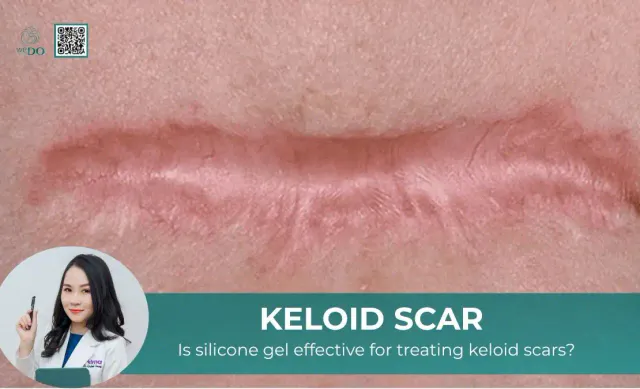
Do keloids go away on their own?
No. In ordinary healing, fibroblasts fill the wound with collagen, then get the signal to stop. In a keloid that signal never properly arrives: low-grade inflammation persists, collagen production continues after the skin has closed, and the fibrous mass thickens until it lifts the skin and creeps into tissue that was never injured.

Keloid vs hypertrophic scar
A hypertrophic scar is raised but stays inside the original wound border and can settle on its own over time. A keloid pushes past that border into untouched skin, does not flatten by itself, and returns far more readily. The distinction is practical: a hypertrophic scar can often be monitored with lighter intervention, while a keloid left alone only grows, and a bigger keloid means a longer course.
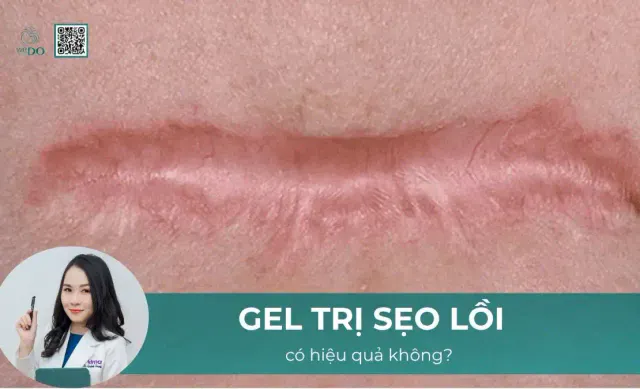
Can creams or home remedies flatten a raised scar?
Silicone gel is the one product worth discussing, provided it sits in the right place in the plan. It holds moisture against the scar and applies gentle pressure, easing itching and tightness and helping hold a result you already have. That is a supporting role, not a way to flatten established tissue - what silicone gel can and cannot do for raised scars covers when it earns its place. Excision as a shortcut deserves the same caution: the incision is itself a fresh wound, and in someone prone to keloids that can produce another one.
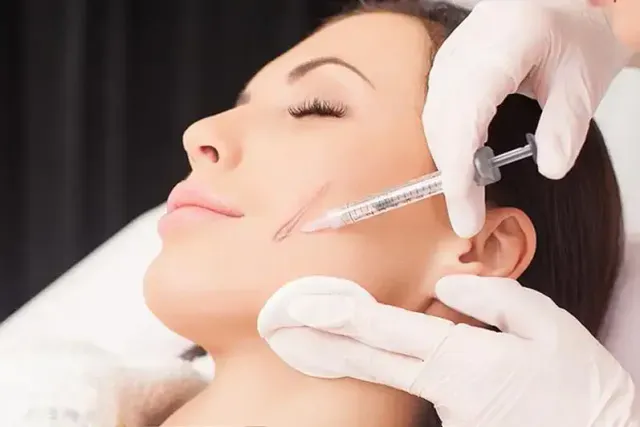
How does intralesional injection work?
For keloids this is the primary treatment, and the technique behind WEDO's scar injection service. Your dermatologist places a prescribed anti-inflammatory agent inside the scar tissue, not the healthy skin around it. Three things follow. The inflammation feeding the overgrowth is dampened, so the signal driving fibroblasts weakens. The blood supply sustaining the scar mass is restricted. And new collagen production slows while the body clears old collagen at its normal pace. The balance tips toward clearing, which is when the scar softens, sits lower and the surface evens out.
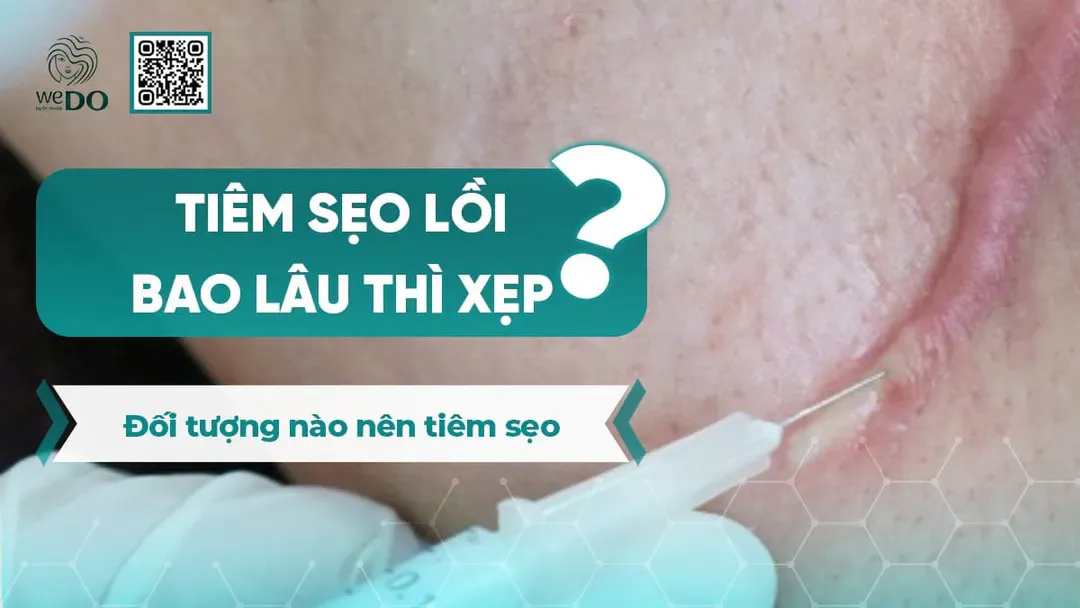
How many sessions will you need?
A keloid rarely flattens after one session - better to know that now than after your first visit. Each injection converts part of the fibrous mass, and the tissue needs time to respond before the next. Your doctor plans a course spaced a few weeks apart, reassessing height and softness each visit. How much it responds, and how fast, depends on the scar's size, its age and your individual healing response.
Laser and light support once the scar has settled
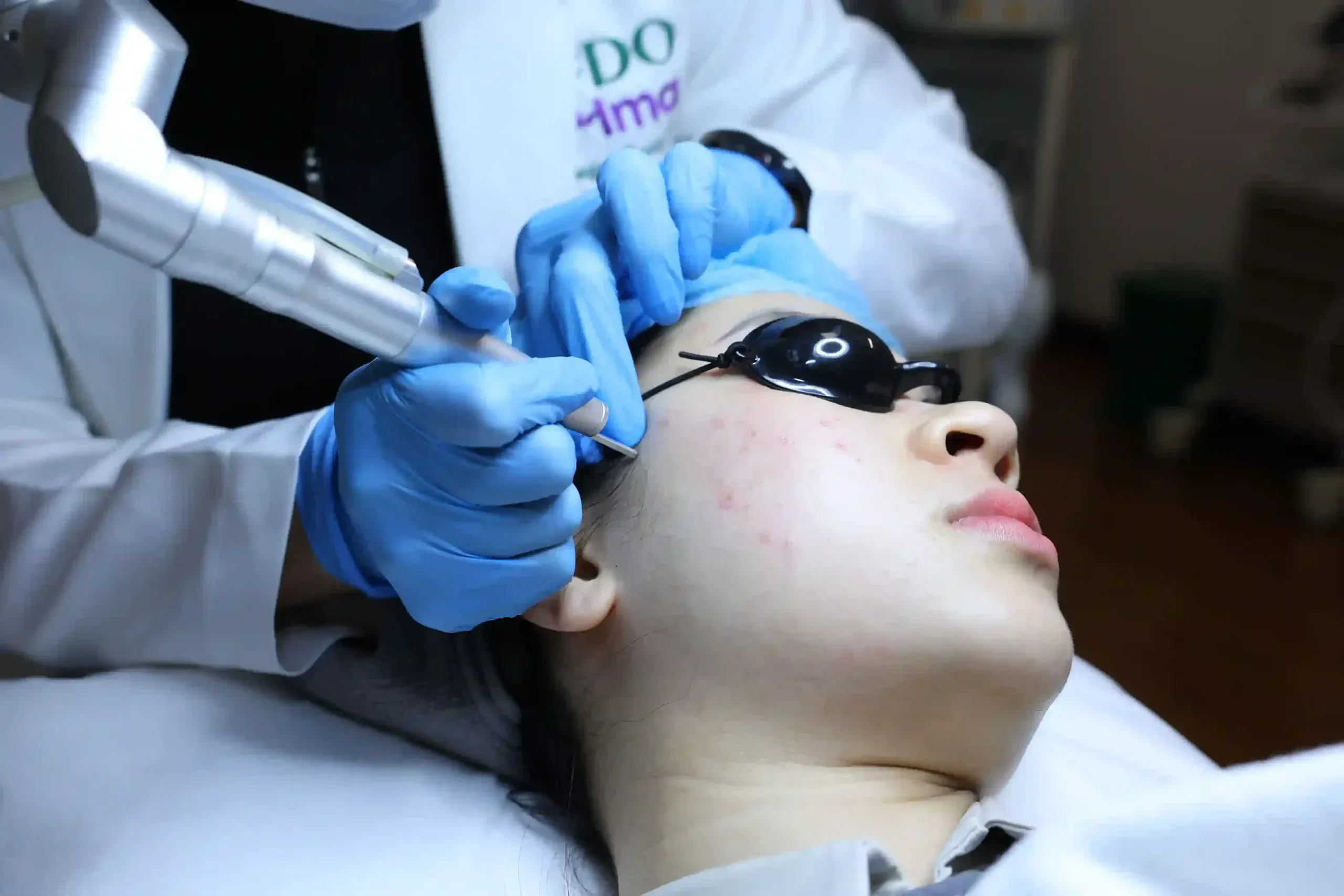
Once injections have lowered the scar, laser addresses what they cannot: color and surface texture. Q-Switched Nd:YAG (Lutronic Spectra) suits areas left darker than surrounding skin. Fractional CO2 suits the scar border or mixed raised-and-fibrous scars, creating controlled micro-injuries so the skin rebuilds its base. After heavier sessions, Celluma LED or Photocare Premium light therapy supports recovery.
Where do keloids commonly form?
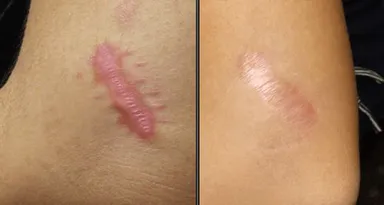
Keloids can appear anywhere skin has been injured, but some sites recur far more often: the chest over the breastbone, the shoulders, the upper back, earlobes after piercing, and skin with a history of severe inflammatory acne. If you have had one keloid, your risk with future skin injuries is higher than average - worth mentioning before any procedure that breaks the skin, piercings included.

Who should hold off?
Some situations call for caution or delay: a scar that is ulcerated, weeping or infected; pregnancy or breastfeeding; certain underlying conditions. Mostly this is not a closed door, just a reason to be examined and settle the urgent part first.
Why choose this treatment
Treatments & pricing
100% of treatments are performed by dermatology specialists. Prices do not include 8% VAT. Contact us for a direct assessment and an exact quote based on your skin, severity and target area.
| Treatment | Price |
|---|---|
Keloid Injection, Area <5cm² — Reduces keloid scarring, evens skin tone | 600.000 VND |
Q-Switched Nd:YAG Laser Scar Treatment | 2.400.000 VND |
Fractional CO2 Laser, Scar Area | 1.500.000 - 3.500.000 VND |
Celluma LED — Scar Tissue Recovery | 330.000 VND |
Photocare Premium High-Power — Recovery for Severe Scar Tissue | 480.000 VND |
5 steps, clinically led
Step 1: Assessment and classification
Your doctor confirms whether it is a keloid or a hypertrophic scar and assesses size, site, firmness and age. This step decides everything that follows.
Step 2: Personalized treatment plan
You get the expected number of sessions, the interval between them and the budget at the first visit, not along the way.
Step 3: Cleansing, antisepsis and numbing
The area is cleaned, disinfected and numbed, with the numbing given its full time to work — the step that decides how the session feels, so it is never rushed.
Step 4: Intralesional injection
Your dermatologist places the prescribed anti-inflammatory agent into the scar tissue, distributing the dose by area and firmness, then disinfects the site again.
Step 5: Aftercare and follow-up
Your doctor talks you through aftercare, books your next review and records the response so the next session can be tuned.
Make results last
Aftercare
Aftercare will not make a keloid flatten faster, but it keeps the scar from being provoked between sessions. Friction, scratching and strong sun are all fresh inflammatory signals – exactly what the plan is switching off.
- Use gentle, non-irritating products on the treated area.
- Apply sunscreen over the scar and keep it out of direct sun.
- Do not scratch or rub the scar, even when it itches.
- Avoid intense activity and friction from clothing or straps.
- Attend follow-ups so your doctor can track the flattening and adjust the plan.
On recurrence, plainly: keloids are the scar type most likely to come back, especially in people predisposed. What you control is how early it is caught. A scar that starts raising, reddening or itching again is far easier to bring down with a prompt touch-up than after months of regrowth. Keep your reviews even when things look settled.
Still have questions?
How much does a keloid injection cost?
Do keloid injections hurt?
How long does it take for keloid injections to flatten?
Do keloids come back after treatment?
Keloid vs. hypertrophic scar — what's the difference?
Can earlobe keloids from piercings be treated?
Can keloids be cured?
Shine with confidence in clear, radiant skin
Start your skin story.
Schedule your diagnostic session. Our doctors will map your unique skin biology to build a lifelong protocol for health.