

How Much Does Scar Removal Cost in Vietnam?
Scar Treatment Costs 2026 is a detailed price list of the latest treatments for keloid and atrophic scars at Wedo. Prices do not include 8% VAT. The price list is publicly available, with no hidden fees.
Medically reviewed by Dr Quynh Trang, Dermatologist (HCMC)
Scar treatment, especially for extensive or long-standing fibrotic scars, can involve a significant cost. Treatment costs may range from several hundred thousand to several tens of millions of VND, depending on the scar condition, treatment method, and number of sessions required.
At Wedo Skin Clinic, all treatment costs will be clearly explained by the doctor after consultation, with no hidden fees.
How it works

Medical injection for keloid scars
When the skin is injured, the body produces fibrous tissue as part of the healing process. Excessive proliferation of this tissue relative to the original wound can lead to keloid formation. For keloid injections, the doctor injects the medication directly into the scar to reduce excessive collagen production and accelerate collagen breakdown, helping the scar gradually flatten. The choice of medication depends on the scar’s current condition, taking into account both its expected efficacy and potential side effects. Commonly used agents include corticosteroids, 5-fluorouracil (5-FU), bleomycin, and botulinum toxin type A.
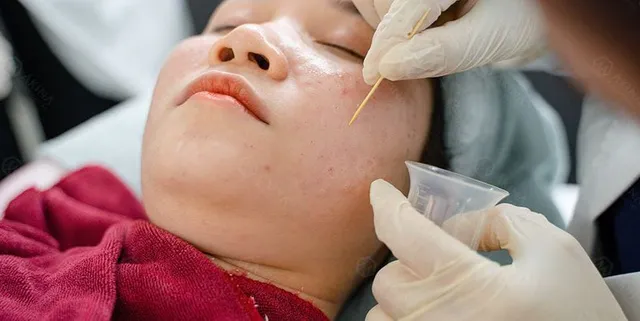
TCA CROSS
The doctor uses a sharpened wooden applicator to precisely apply high-concentration trichloroacetic acid (TCA) to the base of each scar, inducing a localized inflammatory response. This stimulates new collagen formation and promotes scar remodeling to improve the skin’s texture. This method is suitable for ice-pick scars, boxcar scars, and rolling scars.
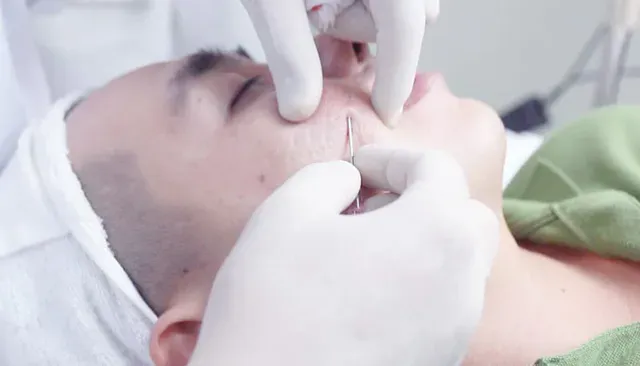
Subcision (scar release)
The doctor uses a specialized needle to pass beneath the skin and release the fibrous bands tethering the base of the scar, while creating controlled micro-injuries to stimulate new collagen production. A topical anesthetic is applied beforehand to minimize discomfort during the procedure. This method is NOT suitable for individuals with a history of keloid formation or abnormal scar overgrowth, active skin infections, bleeding disorders, or those taking anticoagulant medications.

Microneedling and RF needling
Thousands of ultra-fine needles create controlled micro-injuries in the dermis, stimulating collagen production as part of the skin’s natural repair process. Unlike conventional microneedling, RF microneedling delivers high-frequency radiofrequency energy through the needle tips, which can help shorten recovery time and reduce discomfort. This treatment is commonly indicated for widespread shallow atrophic scars and rolling scars. The skin may remain red for several days after each session, so it is important to follow the recommended post-treatment skincare instructions carefully.
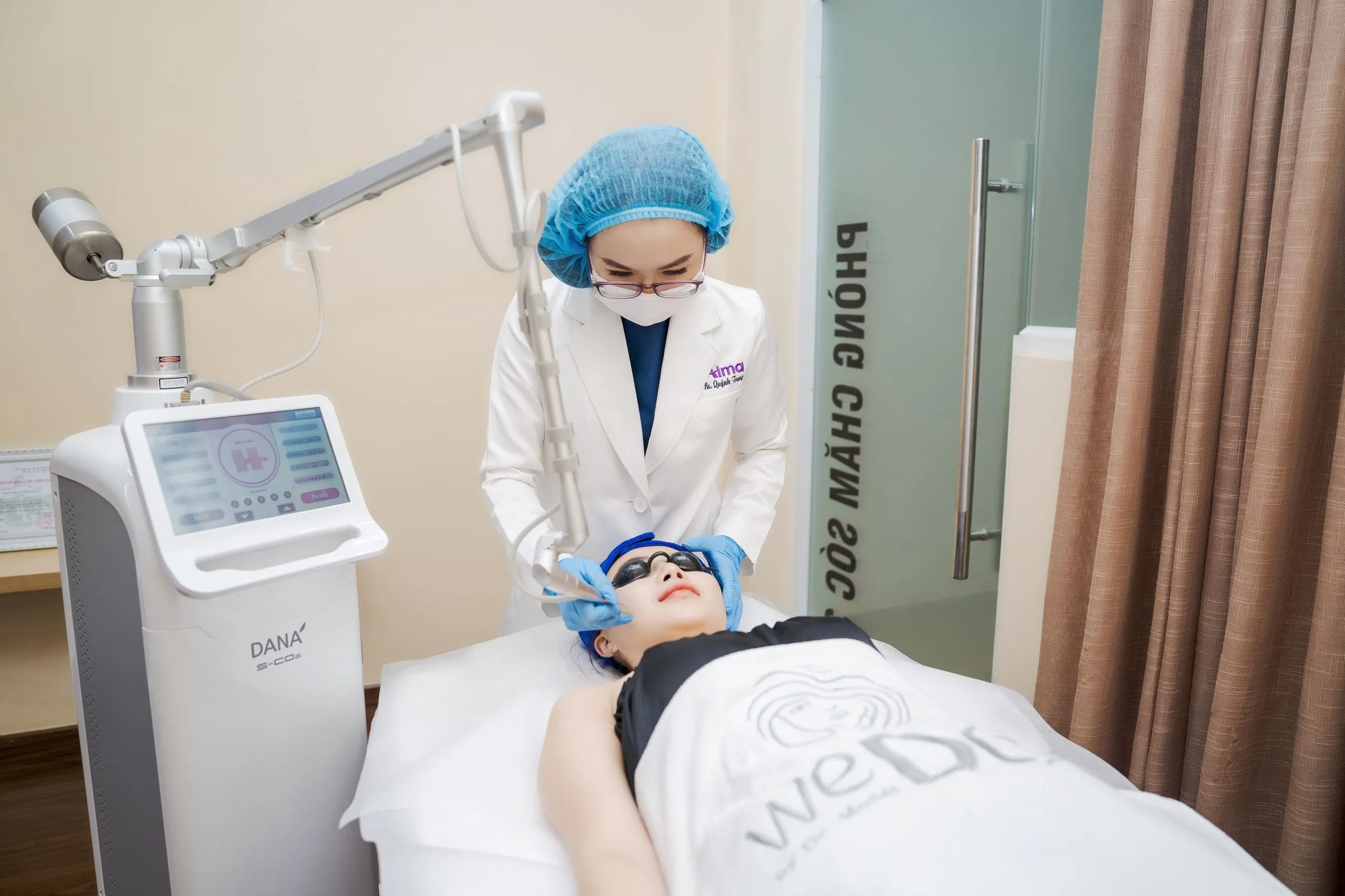
Resurfacing lasers: Fractional CO2 and Erbium
The laser beam is divided into ultra-fine beams that deliver high thermal energy to ablate fibrous tissue and damaged cells while resurfacing the scar edges, with minimal damage to the surrounding healthy skin. After fractional laser treatment, the skin develops a grid-like pattern of micro-crusts that typically lasts 7–10 days. Therefore, careful post-treatment skincare is essential.

Mesotherapy and PRP for scar recovery
Meso and PRP are considered supportive treatments that complement the primary scar treatments by promoting skin recovery and improving the skin surface. Meso involves injecting small amounts of restorative and moisturizing agents at multiple points into the dermis around the scar. The goal is to improve skin thickness and elasticity, providing a healthier skin foundation for subsequent invasive treatments. PRP (platelet-rich plasma) is a plasma preparation derived from the patient’s own blood. Compared with whole blood, PRP contains a significantly higher concentration of platelets. These platelets contain growth factors that may support and promote skin repair.
Why choose this treatment
Treatments & pricing
100% of treatments are performed by dermatology specialists. Prices do not include 8% VAT. Contact us for a direct assessment and an exact quote based on your skin, severity and target area.
| Treatment | Price |
|---|---|
Celluma LED therapy for scar-related tissue recovery | 330.000 VND |
Comedone and lesion clearing before scar treatment | 370.000 VND |
Photocare Premium high-output LED recovery after severe scarring | 480.000 VND |
Medical injection for keloid scars — area under 5cm² Flattens keloids, evens skin tone | 600.000 VND |
Scar mesotherapy — 5cm² area | 950.000 VND |
TCA CROSS for ice-pick scars and enlarged pores | 500.000 - 1.500.000 VND |
Erbium laser for scar base refinement and edge smoothing | 700.000 - 1.500.000 VND |
Subcision, mild to severe, releasing contracted scar tissue | 500.000 - 2.900.000 VND |
Microneedling for scar resurfacing and filling (area to full face) | 890.000 - 5.900.000 VND |
Fractional CO2 laser, scar area | 1.500.000 - 3.500.000 VND |
HA mesotherapy — deep hydration and collagen stimulation | 1.900.000 - 2.900.000 VND |
Mesotherapy for scars — recovery and collagen stimulation, full face | 1.900.000 - 4.900.000 VND |
Q-Switched Nd:YAG laser for scar treatment | 2.400.000 VND |
Needle-free microneedling with medical peel — pinpoint scars and pore reduction | 2.500.000 VND |
Meso Growth Factors for atrophic scar recovery | 2.500.000 - 3.500.000 VND |
Fractional laser for stretch marks / disfiguring scars, 5cm area | 2.500.000 - 2.800.000 VND |
RF Needling — firming and skin remodeling over the scarred area | from 2.800.000 VND |
PRP (platelet-rich plasma) — collagen stimulation, faster scar filling | 2.900.000 - 4.900.000 VND |
Subcision to stimulate atrophic scar filling | 3.900.000 VND |
Full-face scar mesotherapy | 3.900.000 VND |
Fractional CO2, full face — resurfacing for atrophic scars, enlarged pores and scar filling | 4.900.000 - 7.800.000 VND |
Subcision for widespread atrophic scar filling and skin smoothing | 5.900.000 VND |
4 steps, clinically led
Step 1: Skin imaging and area-by-area scar mapping — free
Imaging shows what the eye misses: how fibrous the scar base has become, the true border of a raised keloid, the pigment disturbance around the scar. Your dermatologist measures each affected area and records it as a scar map — the basis that makes every figure afterwards mean something.
Step 2: Classification and a personalized plan by a board-certified dermatologist
Your dermatologist establishes whether the scar is an excess-tissue or a tissue-loss problem, how old it is, and how much intervention your skin can absorb, then selects the combination of techniques and puts the sessions in order accordingly.
Step 3: An itemized quote and a session range before treatment begins
You receive a quote broken out line by line, matching the price list above, together with the expected number of sessions and the corresponding total — before you agree to anything, and with no obligation to start that day.
Step 4: Follow-up review and plan adjustment — free
After each stage your dermatologist compares standardized before-and-after photographs, assesses the response area by area, and adjusts: a different technique where progress is slow, fewer sessions where the skin has already improved enough.
Make results last
Follow the recommended post-treatment skincare routine.
After each treatment session, the doctor will provide detailed post-treatment skincare instructions and prescribe supportive cosmeceutical products if necessary.
In general, you should follow these guidelines:
- Use strict sun protection: Apply sunscreen and protect the skin with a mask or other physical barriers. Skin undergoing regeneration is more sensitive and prone to hyperpigmentation, so adequate UV protection is essential.
- Do not pick or remove scabs: After TCA CROSS or laser treatment, the skin may develop scabs and peel. Allow the skin to heal and the scabs to shed naturally. Prematurely removing scabs can interfere with wound healing and leave marks.
- Use only gentle products during recovery: Follow your doctor’s instructions and temporarily discontinue chemical exfoliants and strong active ingredients until you are advised to resume them. For keloids, avoid rubbing or any actions that irritate the scar surface, as repeated irritation may contribute to further scar growth.
Attend follow-up appointments as scheduled.
The interval between treatment sessions is determined based on the collagen remodeling cycle. Rescheduling appointments without medical guidance can disrupt the treatment plan and may result in additional sessions. Each follow-up also allows the doctor to assess the scar’s condition and treatment progress, and make appropriate adjustments when necessary.
Still have questions?
How much does scar removal cost in Vietnam?
How much does laser scar removal cost?
How much does keloid removal cost?
What determines the cost of scar treatment?
Is the consultation and scar assessment free?
Do I have to pay for the whole course upfront?
Why do scar removal quotes differ so much between clinics?
Shine with confidence in clear, radiant skin
Start your skin story.
Schedule your diagnostic session. Our doctors will map your unique skin biology to build a lifelong protocol for health.