WeDo Skin Clinic
Consult a dermatologist

Personalized plans — effective & safe

Book a consultation
Hotline: (+84)-898898875
Zalo chatCall nowMessengerLocation
Hormonal Acne Treatment: Why Creams Alone Don’t Clear It
Services & Treatments

Hormonal Acne Treatment: Why Creams Alone Don’t Clear It

Jawline breakouts that keep coming back? Free dermatologist consult and skin analysis, medical hormonal acne courses from 330,000đ. District 1 & 2, HCMC.

Medically reviewed by Dr Quynh Trang, Dermatologist (HCMC) · Updated August 1, 2026

Hormonal acne is treated from the inside out, which is why the products on your bathroom shelf never finished the job. A working plan combines prescription medication where your dermatologist judges it necessary, in-clinic technology that stops inflammation before it marks the skin, and a routine your skin tolerates. At WeDo Skin Clinic (District 1 and District 2, HCMC) your consultation and skin analysis are free; technology sessions from 330,000đ, full medical acne treatment courses from 1,250,000đ.

Why creams alone don’t clear hormonal acne

Topical products work at the surface of the pore: unclogging it, keeping C. acnes in check, mopping up oil for a few hours. None of that reaches the hormonal signal telling your oil glands to overproduce. Clear a pore today and tomorrow the gland gets the same instruction — hence the pattern patients describe at a first consult: a new serum, three good weeks, then the same lesions along the same jawline.

The wasted months aren’t the real cost. What stays behind is: dark marks that take months to fade and, where a deep lesion was squeezed, a collapsed follicle floor that scars permanently. Treating the breakout is always cheaper than treating the scar.

What is hormonal acne?

The oil glands along the chin, jawline and lower face carry more androgen-sensitive receptors than the rest of the face, so they react first when androgen levels rise: more oil, and thicker oil. Dead keratin cells stick to it and form a plug; the sealed follicle becomes a low-oxygen pocket where C. acnes multiplies, your immune system moves in, and that reaction is inflammation.

What sets hormonal acne apart is depth. The inflammation sits deep in the dermis, so lesions feel firm and tender and rarely come to a head, and sustained inflammation damages the collagen around the follicle — which is why this type scars far more often than surface blackheads. Androgen levels also move through life: puberty, the week before a period, pregnancy and the postpartum months, stopping birth control, perimenopause, stress and poor sleep. Hormonal acne therefore returns on your body’s own schedule, and that repetition is the clearest clue a dermatologist has.

Hormone fluctuations through the cycle, pregnancy and perimenopause explain why hormonal acne keeps returning

Signs of hormonal acne

Dermatologists weigh five features:

  • Lower-face distribution: chin, jawline, sometimes jaw angle and upper neck.
  • Deep inflamed lesions: firm, tender bumps or cysts, not surface whiteheads.
  • Cyclical flares: breakouts arriving at the same point each month.
  • Onset or relapse after 25: including people who cleared teenage acne.
  • Resistance to topicals: months of over-the-counter treatment, no lasting gain.

What triggers hormonal acne in females

Adult hormonal acne is more common in women because the female body passes through more hormonal transitions: the monthly cycle, pregnancy, the postpartum and breastfeeding months, perimenopause. Each shifts the estrogen–androgen balance and the oil glands answer to that ratio — which is why clear skin in your twenties can become heavy chin breakouts after a baby.

If you are pregnant or breastfeeding the plan is rebuilt, not adjusted, because several actives are contraindicated. Some cases are linked to polycystic ovary syndrome (PCOS) — one possible underlying cause, not the explanation for every case. If your acne comes with irregular periods, excess hair growth or hair thinning, book a specialist assessment.

How hormonal acne is treated: WeDo’s three-pillar plan

Inflammation level, hormonal status and what you’ve already tried decide the route. After an exam and skin analysis your dermatologist builds a plan on three pillars:

1. Medical therapy, where indicated. Prescription medication, oral or topical, targeting the mechanism driving oil-gland overactivity — the pillar that reaches the hormonal root, and the one needing supervision. 2. Technology to control inflammation. In-clinic devices cool active lesions and shorten how long each lives on your skin. A lesion that resolves quickly deposits less pigment and does less structural damage — that is how you avoid marks outlasting the acne itself. 3. Skincare and lifestyle. A short, gentle, non-comedogenic routine, plus sleep and stress management — generic-sounding, but they set how sharply hormones swing.

Do you need a hormone blood test for acne?

Not everyone does, and testing isn’t routine. Your dermatologist considers a hormone panel when acne is severe, resists a correctly executed course, or comes with signs of a hormonal disorder — irregular periods, unusual hair loss, excess hair growth — with endocrinology or gynaecology input where warranted.

Visiting Ho Chi Minh City?

Our dermatologists consult in English at both clinics, and plans are written around your travel dates: what must happen in person, what you continue at home, when a follow-up matters. See our guide to choosing a dermatologist in Vietnam before booking.

The technology

How it works

Rapid anti-inflammatory injection

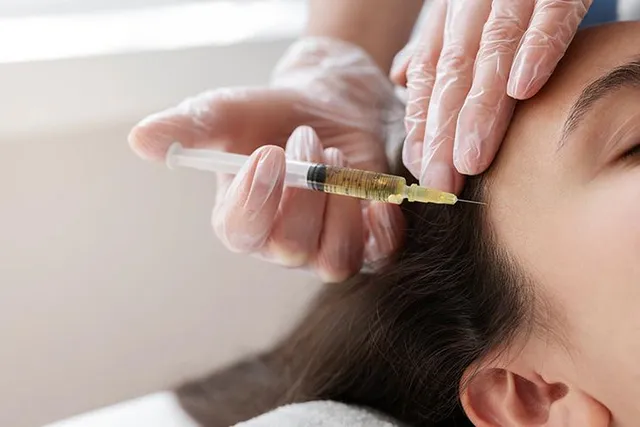
When a lesion is large, painful and needs to come down fast, your dermatologist delivers an anti-inflammatory agent directly into it rather than waiting for a topical to work its way in. Swelling usually settles within a day or two. Doctor-performed, for specific lesions rather than the whole face, no downtime.

LED Celluma and Photocare Premium

LED Celluma and Photocare Premium

Blue light acts on C. acnes inside the follicle; red light penetrates further to calm inflammation and support repair. No heat, no injury, so it suits inflamed skin not ready for anything stronger. Photocare Premium goes deeper and fades discoloration. A multi-session course with no downtime — see light therapy.
IPL (Intense Pulsed Light)

IPL (Intense Pulsed Light)

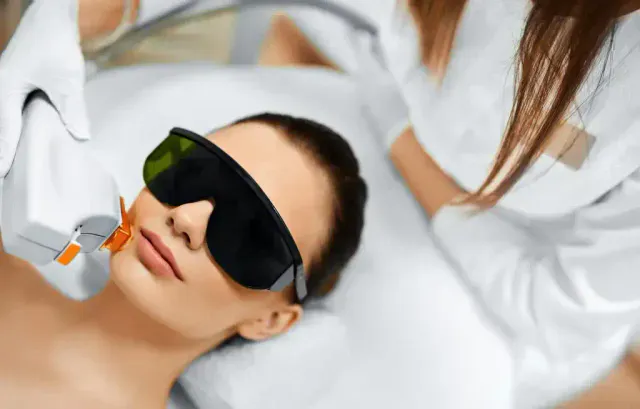
IPL emits a broad band of light absorbed by acne-causing bacteria and by the vessels feeding an inflamed lesion, so inflammation settles faster and red marks fade session by session. Best fit: inflammatory acne on a red background. A course spaced weeks apart; skin may flush for hours. See IPL acne treatment.
Medical-grade peel (Dermalogica / INNOA ESTHETICS)

Medical-grade peel (Dermalogica / INNOA ESTHETICS)

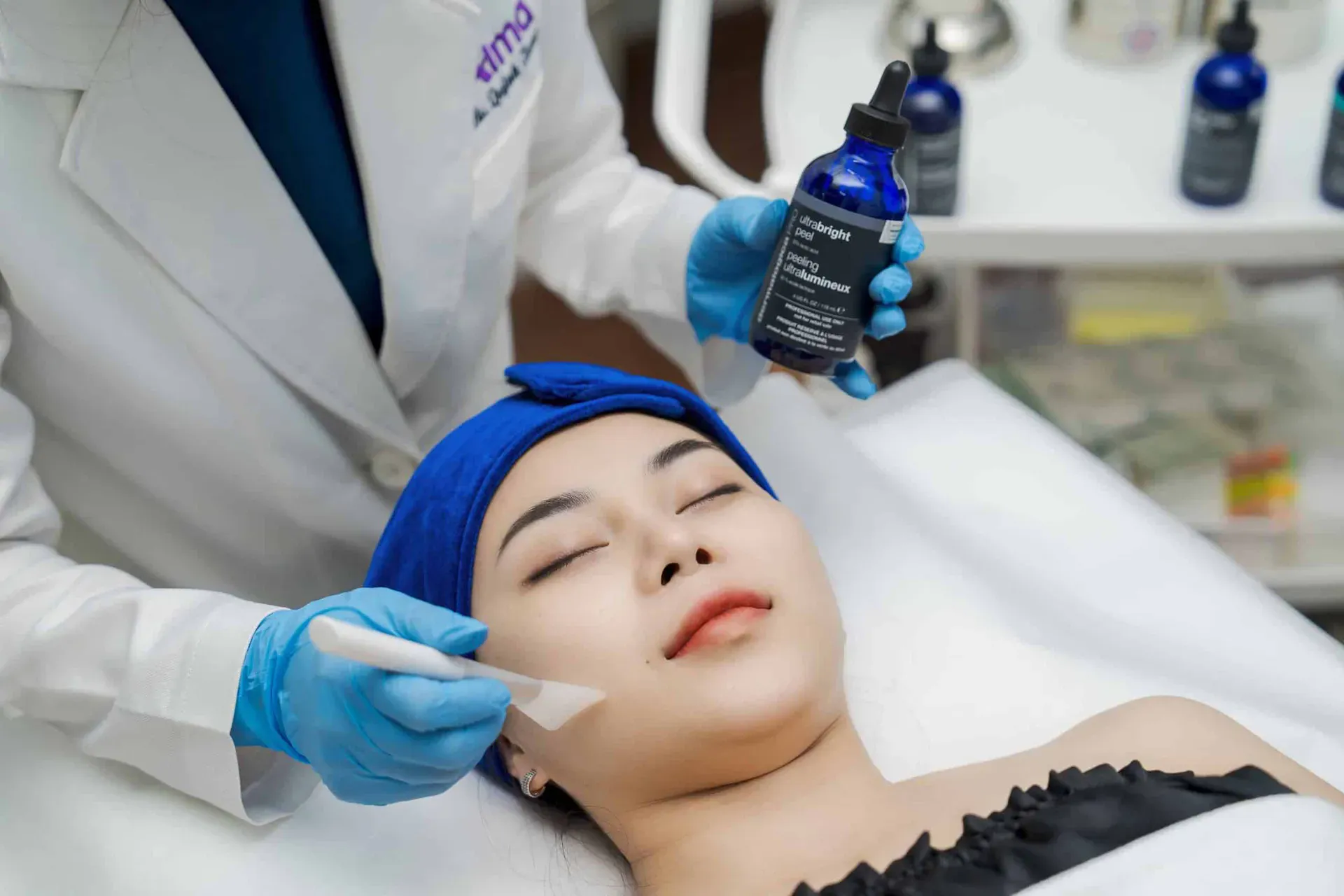
A peel uses actives at medical strength to lift the thickened dead-cell layer sealing the follicle. Once the plug clears, oil drains and new lesions have less chance to form. Dermalogica suits regular deep cleansing; INNOA ESTHETICS is stronger, for persistent inflammation. Expect light flaking and strict sun protection: acne chemical peel.
Dye VL Harmony

Dye VL Harmony

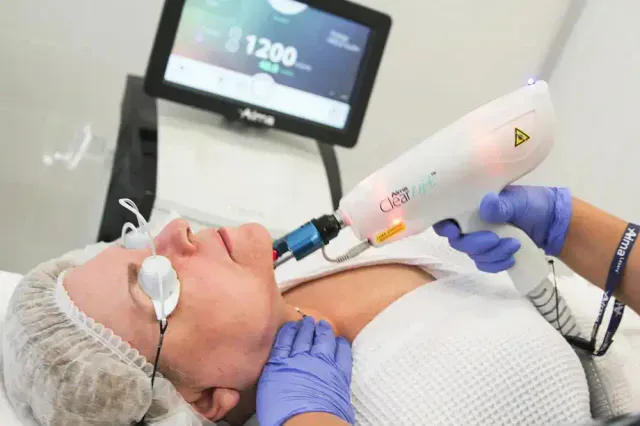
The Dye VL wavelength is absorbed selectively by haemoglobin in the vessels supplying previously inflamed skin, so it clears the redness left once lesions resolve — the reason a face still reads as "breaking out" when the acne is gone. Indicated once inflammation has settled but discoloration remains; non-invasive, painless, given as a course.
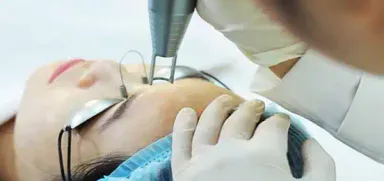
Derma Acne Clear — Spectra Laser

Derma Acne Clear — Spectra Laser

Spectra Laser (Q-Switched Nd:YAG) fires ultra-short pulses that help regulate oil-gland activity while acting on melanin deposited after inflammation. The step for stubborn acne that has been through the basics but still shows marks. A course, no real downtime.

Medical treatment — as prescribed by your dermatologist

Medical treatment — as prescribed by your dermatologist

For moderate-to-severe hormonal acne, or acne returning despite correct technology and skincare, your dermatologist may add prescription medication, oral or topical, at a dose set by your hormonal status. Stopping early because the skin looks good is the most common reason it comes back. See the full medical acne treatment protocol.

Advantages

Why choose this treatment

A specialist dermatologist examines you, writes the plan and reviews every follow-up.
Free multi-layer skin analysis first, so the plan matches your skin.
A protocol built around your triggers, with cost and timeline stated at the first visit.
Devices from internationally recognized manufacturers — FDA-cleared or CE-marked depending on the platform — in active clinical use.
Progress photographed at each stage, so adjustments follow measurable change.
Pricing

Treatments & pricing

100% of treatments are performed by dermatology specialists. Prices do not include 8% VAT. Contact us for a direct assessment and an exact quote based on your skin, severity and target area.

Full skin consult + multi-layer skin analysis + dermatologist follow-up
FREE
TreatmentPrice
Inflamed acne program — clearing and breakout control (MV2)
1.250.000 VND
Intensive inflamed acne program — inflammation control + Celluma LED (MV3)
1.600.000 VND
Rapid anti-inflammatory injection for painful, swollen acne lesions
100.000–300.000 VND
CELLUMA USA LED technology — inflammation recovery
330.000 VND
PHOTOCARE PREMIUM LED acne treatment
480.000 VND
IPL technology — reduces inflammation and acne, fades dark marks
370.000 VND
Oily & acne-prone skin care program — clearing and brightening (MA1)
760.000 VND
Premium combo: deep pore cleansing – radiance complex
910.000 VND
DERMALOGICA premium acne peel — reduces acne, fades dark marks
890.000 VND
INNOA ESTHETICS targeted acne peel — clears inflammation
1.400.000 VND
Dye VL Harmony — fades dark marks, restores acne-prone skin
1.700.000 VND
Derma Acne Clear — Spectra Laser, supports acne & inflammation control, fades dark marks
2.400.000 VND
Prices do not include 8% VAT

See the full price list

Treatment process

5 steps, clinically led

1

Step 1: Free consult and multi-layer skin analysis

A specialist dermatologist examines you and uses skin-analysis imaging to read what sits below the surface: oil output, depth of inflammation, pigment deposited. Free, and it commits you to nothing.

2

Step 2: Identify hormonal factors, order testing if needed

Your dermatologist reads the imaging against your history — cycle, timing of flares, products already tried — then judges how far hormones are involved and tests only if indicated.

3

Step 3: Finalize your personalized plan

You hear the whole plan first: whether medication is indicated, which technology, how many sessions, total cost, when to expect change.

4

Step 4: Treatment on schedule, tracked by photo

Sessions run to schedule; your skin is photographed under consistent lighting at each stage.

5

Step 5: Follow-up, adjustment and maintenance

At each review your dermatologist assesses the response, adjusts the plan, then sets the maintenance phase — the part that decides whether it returns.

Aftercare

Make results last

After each session treat the skin gently: mild cleanser, no scrubbing, skincare and makeup labelled non-comedogenic. Sunscreen daily, indoors included — treated skin pigments easily.

Never squeeze lesions at home. Hormonal acne is inflamed deep in the skin, and pressure at the wrong moment pushes that inflammation sideways and leaves a scar. When a lesion is ready to clear, have a nurse or dermatologist do it — see acne extraction.

If you’re on prescription medication, hold the dose and follow-up schedule even once your skin looks good — stopping early is the most common reason it returns. Come back sooner if there’s no improvement after a few weeks, or a new painful lesion appears.

FAQ

Still have questions?

Does hormonal acne go away on its own?
It can settle once hormones stabilise, for example after puberty. In adults it usually persists and recurs cyclically without treatment. Early treatment protects you from dark marks and scarring — far harder to reverse.
What triggers hormonal acne in females?
Natural hormonal shifts: the menstrual cycle, pregnancy and postpartum months, stopping birth control, perimenopause. Stress and poor sleep worsen it. Some cases are linked to PCOS, which needs a specialist assessment, not self-diagnosis.
What are the signs of hormonal acne?
Deep, tender lesions on the chin and jawline, flares repeating on a cycle, onset or relapse after 25, and little lasting improvement despite months of topical products.
How do you treat hormonal acne?
Three pillars: prescription medication where your dermatologist judges it necessary, in-clinic technology to control inflammation and limit scarring, and a tolerable skincare and lifestyle routine — combined into one plan after your exam.
How long does hormonal acne treatment take?
Most people see improvement within 4–8 weeks and stay on a plan for roughly 3–6 months depending on severity, adjusted to how the skin responds.
Do I need a hormone blood test for acne?
Not always. Testing is ordered when acne is severe or treatment-resistant, or comes with signs of hormonal imbalance: irregular periods, hair loss, excess hair growth.
How much does hormonal acne treatment cost?
At WeDo, consultation and skin analysis are free. Technology sessions start from 330,000đ and full courses run 1,250,000đ–1,600,000đ depending on the plan. Prescription medication is priced separately, confirmed at your exam.

Shine with confidence in clear, radiant skin

Start your skin story.

Schedule your diagnostic session. Our doctors will map your unique skin biology to build a lifelong protocol for health.

11 TRẦN DOÃN KHANH, QUẬN 1
17 THÁI THUẬN, QUẬN 2

Include your country code, e.g. +84-857466767