
Syringoma and Skin Tags Around the Eyes: How They Are Treated
Skin-colored bumps around the eyes may be milia, skin tags, syringomas, or warts. After identifying the exact type, a dermatologist will determine the appropriate treatment.
Medically reviewed by Dr Quynh Trang, Dermatologist (HCMC)
Are the bumps around your eyes syringomas — small, firm papules that often occur in clusters on the lower eyelids and cheekbones; skin tags (acrochordons) — soft, skin-colored growths, often attached by a small stalk along the eyelid margin or at the outer corner of the eye; or milia — small, firm white keratin-filled cysts located just beneath the thin skin? These three conditions can look very similar to the naked eye, so the first step is always to have a dermatologist examine and identify the lesion correctly. This determines both the appropriate treatment method and the expected cost.
How it works

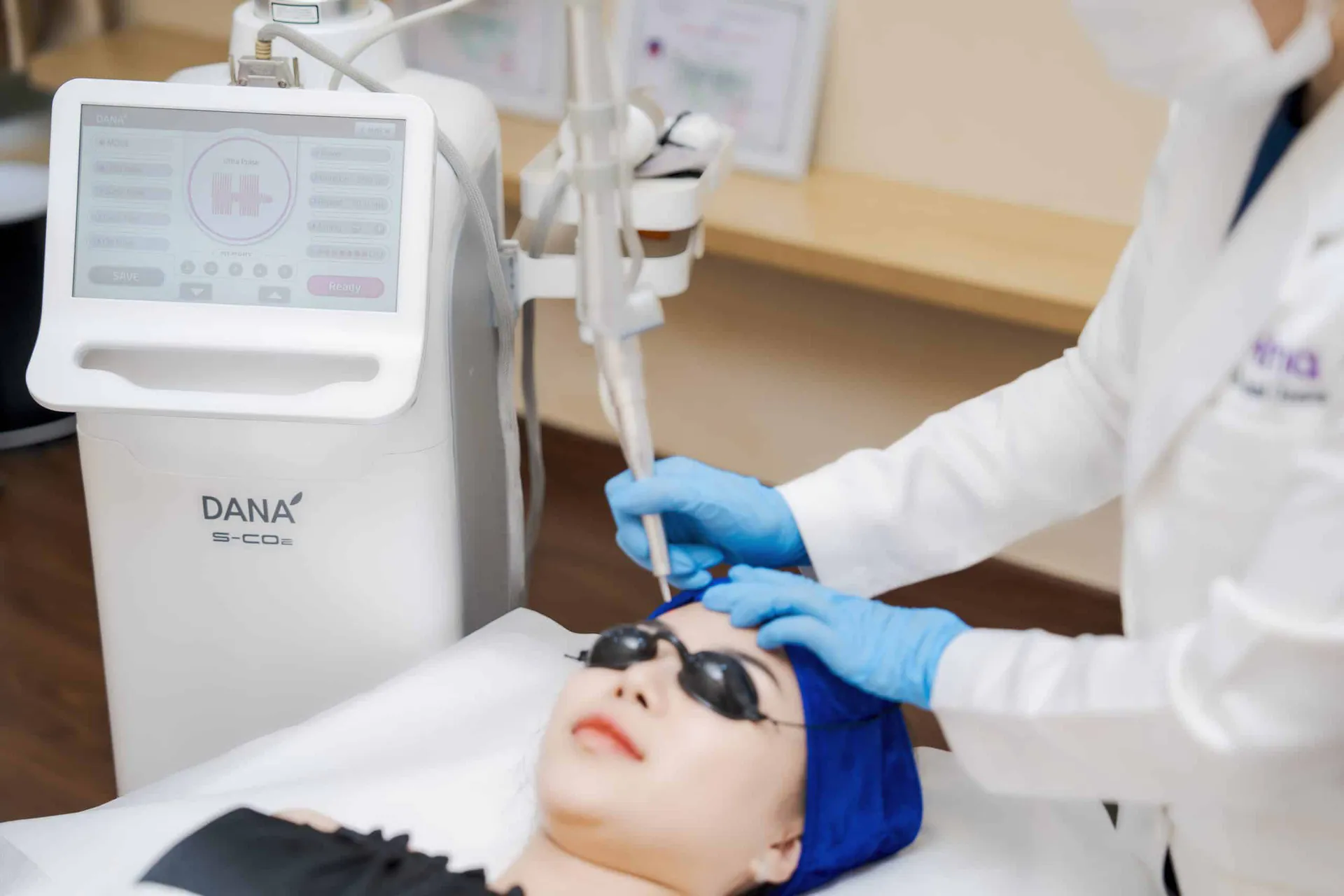
K-CO2 laser
The CO₂ laser beam is focused into a very small spot to precisely ablate each raised lesion rather than treating the entire skin area. Water in the tissue rapidly absorbs the thermal energy, limiting heat spread to surrounding tissue and helping protect sensitive areas such as the eyelid skin. Indications: Scattered to moderately dense syringomas, pedunculated skin tags, and isolated lesions at the outer corners of the eyes. Typically, one session is sufficient for scattered lesions, while 2–3 sessions spaced several weeks apart may be required for densely clustered lesions. The dermatologist reassesses the lesions at each follow-up visit. Each treated spot develops a small scab for 3–5 days, which typically sheds within 7–14 days.

Alma Pixel CO2 — fractional laser for densely clustered syringomas
Instead of continuously treating a single spot, the Alma Pixel CO₂ laser divides the beam into a grid of thousands of micro-columns of energy, leaving areas of healthy skin between them. These untreated areas provide a reservoir of cells that supports faster recovery. This makes the treatment more suitable for dense, rough patches on the lower eyelids and cheekbones, with less redness than treating closely spaced lesions individually with consecutive pulses. Indications: Densely clustered syringomas over a large area. Treatment typically involves 2–3 sessions spaced about 4 weeks apart, with the final number of sessions determined at each follow-up. The skin may remain red and mildly irritated for 2–3 days, while the grid-like scabs usually shed within about one week.
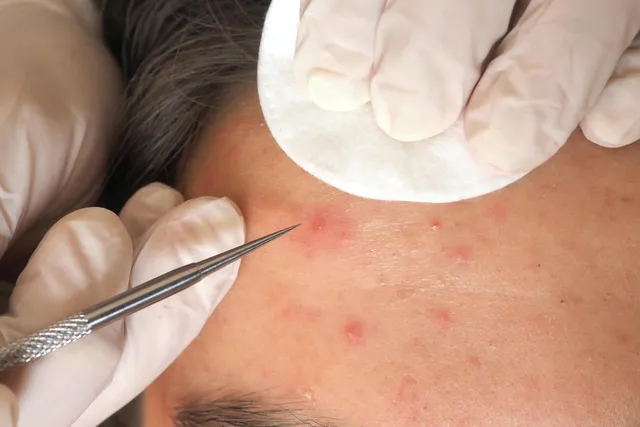
Sterile needle extraction for milia
Milia are small keratin-filled cysts located just beneath the thin skin. To remove them, the dermatologist disinfects the area, uses a sterile needle to create a tiny opening in the cyst roof, then extracts the entire white keratin plug. Indications: Typical milia on the lower eyelids and around the eyes, confirmed by the dermatologist during skin examination. The procedure is usually completed in one session when only a few milia are present. If there are multiple scattered lesions, treatment may be divided into two sessions to avoid irritating the delicate eyelid skin at once. There is generally little to no downtime; the extraction sites may remain mildly red for several hours to one day.

Each treatment method is suited to a specific type of lesion.
The three types of lesions above are located at different depths within the same delicate skin area: syringomas extend deeper beneath the surface, skin tags protrude from the skin and are attached by a stalk, while milia are superficial and located just beneath the stratum corneum. Therefore, the dermatologist must first identify the type of lesion before developing a treatment plan. The same energy level may be adequate for one lesion but excessive for another—and on eyelid skin, excessive treatment can leave long-lasting marks.
Why choose this treatment
Treatments & pricing
100% of treatments are performed by dermatology specialists. Prices do not include 8% VAT. Contact us for a direct assessment and an exact quote based on your skin, severity and target area.
| Treatment | Price |
|---|---|
Syringoma (sweat-duct tumor) treatment around the eyes — laser (K-CO2) | 600.000 VND |
Small skin tag (soft fibroma) — treated per lesion | 700.000 VND |
Removal of Skin Tags/Brown Spots (Fewer than 10 Lesions) | 980.000 VND - 1.100.000 VND (Depending on Technology) |
Large or stalked skin tag (soft fibroma) — treated per lesion | 1.200.000 VND |
Removal of Skin Tags/Brown Spots (10–20 Lesions) | 1.400.000 VND - 1.600.000 VND (Depending on Technology) |
Removal of Skin Tags/Brown Spots (20–30 Lesions) | 2.200.000 VND - 2.600.000 VND (Depending on Technology) |
Syringoma treatment — fractional laser (Alma Pixel CO2) | 3.000.000 VND |
Milia around the eyes — sterile extraction | The doctor will examine and provide specific recommendations |
6 steps, clinically led
Step 1: Examination and skin analysis to establish the lesion type
The dermatologist examines each zone around the eye, comparing morphology, firmness and distribution to separate syringomas from skin tags and milia. This step is free.
Step 2: Confirming method, expected session count and cost
Based on lesion type, number and distance from the lid margin, the dermatologist selects the technique, estimates sessions as a range, and quotes the cost before you decide to proceed.
Step 3: Cleansing the eye area, numbing and placing eye shielding
The area is cleansed and disinfected, topical anesthetic is left on for its full working time, and a corneal shield or protective goggles are placed according to where the lesion sits.
Step 4: Treating each lesion at settings configured for eyelid skin
The dermatologist works personally, lesion by lesion or cluster by cluster, at the energy and depth set for eyelid skin — stopping at the intended endpoint rather than pushing to clear everything in one pass.
Step 5: Recovery product, aftercare and eye-area sun protection
The treated area is covered with a recovery product as directed by the dermatologist, and you are talked through cleansing, sun protection and what to avoid over the first 7 days.
Step 6: Follow-up to assess healing and treat any remaining cluster
The dermatologist checks how the area has healed, assesses the response, and treats a remaining cluster only once the skin has recovered enough — timing decided clinically rather than by a fixed calendar.
Make results last
Caring for the eye area in the first 7 days
How to Treat Post-Inflammatory Hyperpigmentation Around the Eyes
After the scab falls off, the newly exposed skin may appear pink or darker than the surrounding skin for some time. This is post-inflammatory hyperpigmentation (PIH), not scarring. Compared with other areas, hyperpigmentation around the eyes is often more difficult to manage because the skin is thinner, placing pigment closer to the surface. This area is also frequently exposed to sunlight, while eye rubbing and pressure from eyeglass frames can further irritate the healing skin.
When Should You Return to the Clinic Immediately?
You should return to the clinic immediately if any of the following signs occur, rather than waiting for your scheduled follow-up:
- Swelling in the treated area that continues to worsen after day 3
- Pain that progressively increases
- Cloudy discharge
- Scabs coming off prematurely due to external trauma, such as rubbing or accidentally hitting the area
Why new lesions can still appear?
A well-healed treatment site does not necessarily mean the condition has been fully resolved, especially with syringomas. The underlying tendency to develop these lesions can persist, so new papules may appear in nearby areas months or even years later. Most patients may need a follow-up session to treat newly developed lesions rather than retreating the original ones. The dermatologist will discuss this during the initial consultation, which is also why follow-up should continue beyond the point when the scabs have completely shed.
For the informational background on the folk term that brought you here, how skin tags around the eyes are usually approached is the longer read.
Still have questions?
Do syringomas grow back after removal?
What is a syringoma?
Syringoma vs milia — what is the difference?
Do syringomas go away on their own?
How much does syringoma removal cost in Ho Chi Minh City?
Is laser treatment around the eyes safe?
How long does healing take after laser treatment around the eyes?
Can I remove skin tags near my eye myself?
Shine with confidence in clear, radiant skin
Start your skin story.
Schedule your diagnostic session. Our doctors will map your unique skin biology to build a lifelong protocol for health.