WeDo Skin Clinic
Consult a dermatologist

Personalized plans — effective & safe

Book a consultation
Hotline: (+84)-898898875
Zalo chatCall nowMessengerLocation
Hives (Urticaria) in Ho Chi Minh City: Acute, Chronic and Warning Signs
Services & Treatments

Hives (Urticaria) in Ho Chi Minh City: Acute, Chronic and Warning Signs

Acute or chronic hives (the 6-week line), the warning signs that need emergency care, common triggers, and a free dermatologist exam in Ho Chi Minh City.

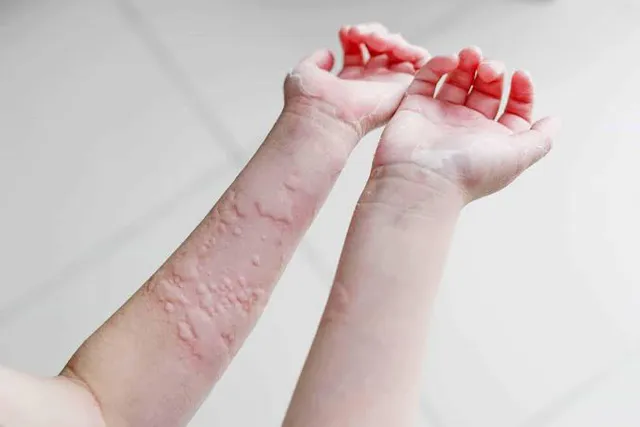
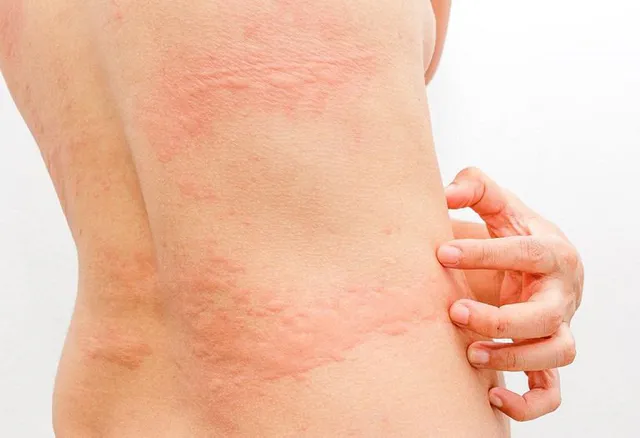
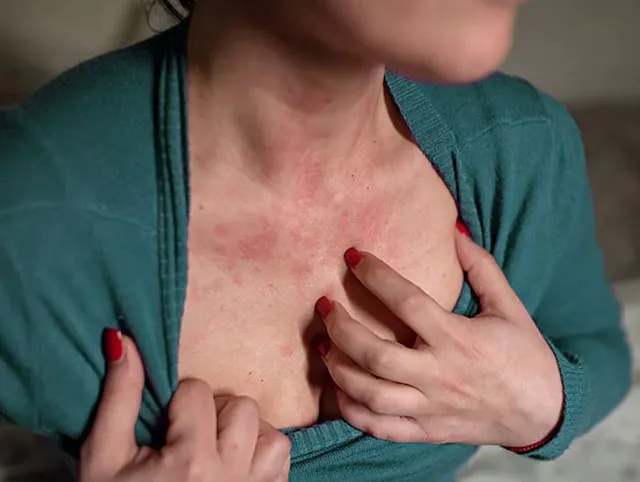
Hives are raised, intensely itchy pink or red welts that come up and fade completely within 24 hours, leaving no mark behind — that disappearing act is the single most useful thing about them, and it is the first thing a dermatologist will ask you about.

But if the hives come with difficulty breathing, wheezing, swelling of the lips, tongue or around the eyes, trouble swallowing, a hoarse or changed voice, dizziness or severe abdominal pain, this is a medical emergency: call 115 — Vietnam’s emergency number — or go straight to the nearest hospital emergency department. Do not wait, and do not come to a dermatology clinic first.

For everything else, the number that matters is six weeks. Hives lasting less than six weeks are acute; hives lasting six weeks or longer and appearing on most days are chronic — and the two are approached in genuinely different ways.

The dermatologist examination and skin analysis at WeDo Skin Clinic are free, including when all you want is a name for what is happening to your skin. Because hives have no fixed course of treatment, WeDo publishes no single price for “treating hives”: your dermatologist examines you, establishes whether this is acute or chronic, looks for a trigger if there is one to find, and quotes the plan and its cost after that visit. Any medication involved is prescribed by your doctor, always.

Medically reviewed by Dr Quynh Trang, Dermatologist (HCMC) · Updated August 1, 2026

Chronic hives cost people sleep, make them wary of food they used to enjoy, of the sun and of exercise, and the feeling of having no idea why the skin keeps erupting is entirely real. If you have already bought something over the counter before reading this, that is what anyone does after a week of itching at 3am — but it is also the reason to have someone look at your skin before you keep going.

Our clinics are in District 1 and District 2, and consultations are held in English. This page is specifically about hives in adults; for the wider picture of the conditions we treat, start from treatment of skin diseases at WeDo, and if you have recently arrived in the country, our guide to skin treatment for foreigners in Vietnam covers how the practical side works here.

The technology

How it works

What do hives look like, and why does each welt fade within 24 hours?

Start with the vocabulary, because patients and clinicians rarely use the same word. "Hives" is what most people say. "Urticaria" is the clinical term and means the same thing. "Welts", "wheals" and "nettle rash" all describe the same lesion. None of these is more correct than the others, and nothing about your diagnosis changes depending on which word appears on your notes. One more piece of vocabulary is worth correcting straight away: hives and "an allergy" are not synonyms. An allergic reaction is one of several things that can produce hives, and in most long-running cases no allergen is ever identified. Treating the two words as interchangeable is what sends people down months of elimination diets that change nothing. The lesion itself is called a wheal: a raised, well-demarcated patch of skin, pink or red, that itches fiercely. It can be a few millimeters across, like a mosquito bite, or several wheals can merge into a plaque the size of a hand. But the informative feature is not the shape — it is the clock. Each individual wheal lasts minutes to hours, then flattens and vanishes without leaving a mark, while new ones appear somewhere else. The rash appears to migrate over the course of a day, and the photograph you took in the morning usually no longer matches the skin that is itching by evening. The mechanism explains both of those observations. The dermis contains immune cells called mast cells, preloaded with inflammatory mediators, of which histamine is the main one. When they are triggered they release histamine into the surrounding tissue. Local capillaries widen and leak fluid into the tissue — that fluid is the raised part you can feel — and sensory nerve endings are stimulated at the same time, which is the itch. Because the body reabsorbs that fluid fairly quickly, the wheal flattens and disappears within 24 hours and leaves nothing behind. The same mechanism in the deeper layers of the skin and in mucous membranes produces swelling rather than itchy wheals. That is called angioedema, and it typically affects the eyelids, lips and hands. Swelling of the lips, tongue or throat is an emergency, and the section below on warning signs explains exactly why. Hives can appear on any area of skin, including the face, and they characteristically get worse at night or whenever the skin is warmed up. One condition is confused with hives more often than any other, and telling them apart saves people months of treatment aimed in the wrong direction. Hives are wheals that rise and resolve completely within 24 hours, leave no mark, and usually move around the body. Dermatitis — atopic, contact or allergic — is a dry red patch that may weep, stays in the same place for days, and tends to leave discoloration or thickened skin behind. From that comes a rule worth memorizing: if an individual lesion stays in exactly the same spot for more than 24 hours, is more painful or burning than itchy, or leaves bruising or a brown mark as it fades, then it is usually not ordinary hives, and it needs a dermatologist to examine it and rule other conditions out.

Acute or chronic? The six-week line decides what happens next

The first question a dermatologist answers is usually not "what caused this" but "how long has this been going on". Six weeks is the line that separates two groups managed in different ways. Acute hives are an episode lasting less than six weeks, and most cases fall here. They are often linked to a trigger you can actually identify — a food, a medication you are already taking, an infection, an insect bite — and they usually settle on their own once that trigger has passed. Chronic hives means symptoms lasting six weeks or longer and appearing on most days of the week. This is the group that wears people down, not because the lesions are worse, but because there is no clear end point to wait for. And here is the part almost nobody writes plainly: in most chronic cases, no external allergen is ever found. The condition is not caused by having "eaten the wrong thing" or "not cut out enough", and cutting out more foods usually does not improve it. That changes the goal of treatment completely — from hunting for a culprit, to controlling symptoms, reducing how often and how severely the flares come, and reviewing the picture over time. Which is why the six-week mark is worth remembering. It is the boundary your dermatologist uses to decide whether further assessment is warranted, and it is the point at which you should stop waiting and get seen.

Common triggers — and why many cases never produce one

Triggers for hives are rarely found in a textbook. They are usually found in the last week of your life. What follows is grouped by what you can actually observe. Food and drink: seafood, peanuts and tree nuts, eggs, milk, some additives. The suggestive pattern is a reaction within a few hours of eating, repeating in the same way. Conversely, if you eat something regularly without breaking out, it is probably not the culprit. Medication you are already taking: some medicines can produce hives in susceptible people. The useful response is not to guess but to bring a list of everything you are taking — including supplements, vitamins and traditional remedies — to the consultation. And do not stop medication you take for another condition without asking the doctor who prescribed it. Infection: a cold, a sore throat or a viral illness often precedes or accompanies an episode of acute hives. Plenty of people never connect the two, because the cold has cleared by the time the skin starts erupting. Physical triggers are the group least often described accurately, and the group a newcomer to this climate meets first. Heat and sweating — sun exposure, exercise, spicy food, hot showers — produce very small, prickly, intensely itchy wheals; that pattern is called cholinergic urticaria. Pressure and friction: backpack straps, bra bands, waistbands, and the exact place you just scratched; if drawing a fingernail lightly across the skin raises a welt along the line you drew, that is dermatographism. Sudden cold: stepping from the street into heavy air conditioning, or an iced drink. And direct sunlight, in some people. If you have recently moved to Vietnam, expect your skin to behave differently for a while. This is one of the most common reasons long-stay foreigners come to see us. You are sweating constantly and then cooling abruptly in air conditioning many times a day, which is exactly the physical-trigger territory described above. Seafood features far more heavily in the everyday diet here than in most Western ones, so a sensitivity that never had the chance to declare itself may do so now. Detergents, soaps and household cleaners are different brands with different formulations. Insect exposure is different. None of that means something has gone medically wrong — it means the conditions changed, and the pattern is worth mapping properly rather than guessing at. Weather deserves two honest sentences. Seasonal changes, unpredictable rain and Ho Chi Minh City's year-round humidity can all set off a new episode in someone already prone to hives. In practice, most of what gets called "weather allergy" is the combination of heat, humidity and sweat — the physical triggers above — rather than the rain itself. Insect bites can start an acute episode. Prolonged stress and poor sleep do not cause the condition but lower the threshold at which it appears. Alcohol dilates blood vessels and usually makes the itch worse during an active flare. And the most important sentence in this section: triggers are deeply individual, and in chronic hives most cases never yield an external cause at all. That does not mean you have not looked hard enough. It is something your dermatologist reconstructs with you systematically during the consultation, from your history, the rhythm of your flares and whatever you have managed to record.

When is this an emergency, and when should you just be seen soon?

Call 115 — Vietnam's emergency number — or go straight to the nearest hospital emergency department, without waiting and without coming to a dermatology clinic first, if hives appear with any of the following: difficulty breathing, wheezing, noisy breathing or chest tightness; swelling of the lips, the tongue, the area around the eyes, or a sensation of swelling or tightness in the throat; difficulty swallowing, hoarseness or a changed voice; dizziness, faintness, cold sweating or collapse; vomiting with severe abdominal pain. Go to emergency care too if hives erupt very rapidly immediately after taking a medication, eating something, or being stung or bitten. These signs mean the reaction has moved beyond the skin, and at that point time matters more than anything else. The second group is not an emergency, but should be seen soon: hives lasting six weeks or longer, or recurring repeatedly; an individual lesion that stays in one place beyond 24 hours, burns more than it itches, or leaves bruising or a brown mark as it fades; hives accompanied by fever, joint pain, weight loss or persistent fatigue; itching that is costing you sleep or affecting your work; pregnancy; taking several medications or living with another medical condition; or having already self-treated without improvement. The first list exists so that you leave this page and get emergency care. The second exists so that you get seen. Neither list exists to sell you a course of treatment. So what does a plan for hives actually look like? Your dermatologist examines the skin and takes the history along a timeline, classifies the episode as acute or chronic against the six-week mark, and looks for a trigger if there is one. Where medication is needed it is prescribed by your doctor, chosen for you specifically, alongside guidance on making a flare more bearable and on avoiding whatever triggers have been identified. Then comes a review appointment, so the response can be assessed and the medication adjusted or stopped at the right moment, rather than continued indefinitely with nobody watching. An honest word on testing: not everyone with hives needs tests. Your dermatologist orders them when the history points somewhere specific, not as a broad sweep — testing widely tends to return findings that change nothing about the treatment. And an honest word on expectations: the goal is to control symptoms, reduce how often and how severely flares arrive, and lengthen the settled stretches in between. It is not a promise to remove the condition permanently.

Advantages

Why choose this treatment

A dermatologist personally examines you and establishes whether this is acute or chronic before prescribing anything.
The examination and skin analysis are free, even if all you want is to find out what you have.
You are told plainly which signs need emergency care and which need a prompt appointment, instead of being left to judge that yourself.
Treatment plans are built around your type, your severity and your own trigger picture rather than a standard package.
Medication is used only on your doctor's prescription, with scheduled reviews so it is adjusted or stopped at the right time rather than taken indefinitely.
Two clinics, in District 1 and District 2, with consultations in English.
Pricing

Treatments & pricing

100% of treatments are performed by dermatology specialists. Prices do not include 8% VAT. Contact us for a direct assessment and an exact quote based on your skin, severity and target area.

Skin examination and dermatologist consultation for hives (urticaria)Your treatment plan and its cost are quoted after the examination
FREE

See the full price list

Treatment process

5 steps, clinically led

1

Step 1: History along a timeline

Your dermatologist asks in detail: when it started, how long an individual welt lasts before fading, whether there has ever been swelling of the lips or around the eyes, and everything you are currently taking, supplements included.

2

Step 2: Examination and classification

Your dermatologist examines the skin directly and under magnification, classifies the episode as acute or chronic against the six-week mark, and rules out the situations that need further assessment before treatment begins.

3

Step 3: Plan discussion and a specific quote

Your dermatologist explains what you have, what a realistic goal looks like for it, which steps are involved and over what period — then quotes the cost specifically, before you decide anything.

4

Step 4: Treatment

Where it is needed, medication is prescribed for you individually, alongside guidance on easing the itch at home and on limiting whichever triggers have been identified.

5

Step 5: Review and a maintenance plan

Your dermatologist assesses the response, adjusts or stops medication at the right point, goes through your diary with you, and sets a plan for the settled periods between flares.

Aftercare

Make results last

Easing the itch at home, safely, while a flare is running

Nothing below replaces your dermatologist’s plan. These measures do one job: make you more comfortable while an episode is running its course.

  • Apply a cool compress or a cool damp cloth; bathe in cool to comfortably warm water and never hot — heat makes hives worse almost immediately.
  • Use a gentle, fragrance-free cleanser and avoid harsh bar soaps.
  • Wear loose cotton clothing, and take off belts, straps and anything else pressing on the skin.
  • Keep your nails short and cool the skin instead of scratching — scratching typically raises fresh wheals along the line you just scratched.
  • During an active flare, go easy on strong sun, hard exercise, alcohol and spicy food.
  • Keep the bedroom cool at night, since that is when the itch is usually at its worst.

This page deliberately names no medication of any kind, including anything sold without a prescription: what is appropriate depends on your type, your age, pregnancy and whatever else you take for other conditions, which makes it your dermatologist’s call after examining you. If you want to understand how to look after skin that is reacting easily, read how to identify and care for sensitive skin and our list of ingredients sensitive skin should avoid; there are further sensitive skin care tips for the calmer stretches. If a new product has left an area acutely irritated, read steps to deal with skin irritation before putting anything else on it.

WeDo also offers separate skincare services with their own price lists, such as deep hydration recovery. To be explicit: it is not a treatment for hives and it is not part of the plan described on this page. Hives are a vascular, mediator-driven reaction rather than a dry or damaged skin barrier, so the barrier-repair logic that applies to dermatitis does not apply here. Whether it suits you at all, and when, is your dermatologist’s decision after examining your skin.

A hives diary: how to help your dermatologist find your trigger

Hives have an inconvenient habit: they usually fade completely before you can get to a clinic. What you bring with you often decides whether the consultation moves quickly or slowly.

Pick one specific welt and record the time it appeared and the time it had fully gone — this is the single most useful data point, because it answers the 24-hour question directly. Add the location; what you ate, drank or took in the six hours before; what you had just been doing (sun, exercise, a hot shower, tight clothing); the weather; and how intense the itch was on a scale of one to ten.

Most important of all: photograph the skin while the hives are up. That photograph is often the only evidence your dermatologist has of what the lesions actually looked like. Bring a list of everything you are taking as well, supplements and traditional remedies included.

One honest caveat, so you are not disappointed: in chronic hives a diary usually does not produce a single culprit. It is still worth keeping, because it rules out the wrong suspicions and it lets both of you track how the condition changes over time.

While you are keeping it, watch for the group of conditions most often mistaken for hives. If the lesions are dry red patches that may weep, stay in one place for days and leave discoloration behind, the picture points toward dermatitis instead — our eczema and dermatitis page covers that group, and our article on atopic dermatitis goes deeper into the commonest type. If the real problem is chronic facial redness that flushes with heat or spicy food, with visible small vessels but no raised wheals and nothing that resolves within 24 hours, read understanding rosacea.

Hives that persist or keep coming back: when to come back in

First, the signs that must not wait: difficulty breathing, wheezing, swelling of the lips, tongue or throat, trouble swallowing, hoarseness, dizziness or faintness. That is an emergency — call 115 or go to the nearest hospital emergency department, not to a dermatology clinic first.

Beyond that group, book a review if the hives have now run past six weeks; if an individual lesion lasts more than 24 hours or leaves a mark as it fades; if there is fever, joint pain or persistent fatigue alongside; if the itch is costing you sleep; or if nothing has improved after a prescribed course. Do not simply repeat an old prescription for a new episode without having it looked at — this episode may not match the last one.

A relapse does not mean the treatment failed either. In chronic hives the sensible measure is how many days you get without thinking about it: flares further apart, milder when they come, and sleep back to normal. If you want to read more about widespread episodes, we have an article on hives all over the body; if you are still deciding where to be seen, our pieces on choosing an international skin clinic and on finding a dermatologist in Vietnam set out what is worth asking.

How a visit and a course of treatment are organized at WeDo is set out on our treatment process page, and the costs of our other services are listed in the full price list. Your examination and skin analysis, though, are free: book a free exam at our District 1 or District 2 clinic — including if all you want is a name for what keeps appearing on your skin.

FAQ

Still have questions?

Are hives contagious?
No. Hives do not pass from person to person through contact, shared items or shared water; they are your own skin reacting when immune cells in it release histamine, not an infection. When several people in a household break out at once, it is usually because they ate the same thing or met the same trigger, not because they passed it to each other.
How long do hives last?
An individual welt normally fades within 24 hours and leaves no mark, even though new ones may appear elsewhere. The episode as a whole varies from person to person: under six weeks is acute hives, while six weeks or longer with symptoms on most days is considered chronic and should be assessed by a dermatologist. If one lesion stays in the same spot beyond 24 hours, get it looked at — it may not be ordinary hives.
Are hives dangerous?
Most hives affecting only the skin are not dangerous, but one group of signs is a genuine emergency: difficulty breathing, wheezing, chest tightness, swelling of the lips, tongue or around the eyes or a sensation of swelling in the throat, difficulty swallowing, hoarseness, dizziness or faintness. If any of those appear, call 115 — Vietnam's emergency number — or go to the nearest hospital emergency department immediately, without waiting and without coming to a dermatology clinic. Outside that group, hives lasting six weeks or longer should be examined by a dermatologist.
Should I just take an over-the-counter allergy medication for hives?
Not as a long-running solution on your own. Medication used for hives comes in several kinds, with doses and durations that depend on the type, your age, pregnancy and whatever else you take for other conditions; the wrong choice or prolonged use can cause unwanted effects and can mask signs that need assessing. Have a dermatologist examine you and prescribe accordingly — and if there is any breathing difficulty or swelling of the lips or tongue, that is an emergency rather than a situation for self-medication.
How are hives different from eczema or dermatitis?
Hives are raised, intensely itchy wheals; each one rises and resolves completely within 24 hours, leaves no mark, and the rash tends to move around the body during the day. Dermatitis and eczema are dry red patches that may weep or crust, usually stay in the same place for days, and can leave discoloration or thickened skin behind. The two are treated along completely different lines, which is why they need distinguishing first.
Why do I keep getting hives in Vietnam's climate?
Constant sweating followed by abrupt cooling in air conditioning is a classic physical trigger, and heat, exercise, hot showers and spicy food all belong to the same group. A diet with far more seafood in it than you are used to is a second common factor, and detergents, soaps and insect exposure are all different here. It is worth having this mapped properly at a consultation rather than guessing, because the pattern is usually clearer than it feels.
Do I need a referral to see a dermatologist in Ho Chi Minh City?
No. You can book directly with WeDo — no referral and no prior GP visit is required, and consultations are held in English. If you are claiming on international insurance, tell us at the visit and we will issue an itemized receipt for your provider.

Shine with confidence in clear, radiant skin

Start your skin story.

Schedule your diagnostic session. Our doctors will map your unique skin biology to build a lifelong protocol for health.

11 TRẦN DOÃN KHANH, QUẬN 1
17 THÁI THUẬN, QUẬN 2

Include your country code, e.g. +84-857466767