
TCA Cross
TCA Cross breaks up fibrotic acne scar tissue at its core, stimulating collagen to visibly smooth pitted scars — often after just a few sessions.
How it works
What is TCA CROSS?
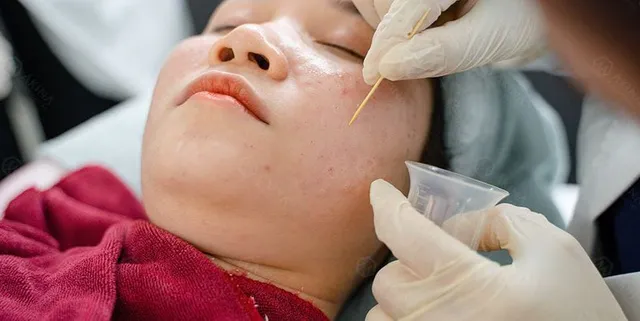
In the TCA CROSS technique, “TCA” stands for trichloroacetic acid. At low concentrations, TCA is commonly used for superficial chemical peels. However, at higher concentrations, its keratolytic effect is significantly enhanced, allowing deeper penetration without systemic absorption. The method involves applying high-concentration trichloroacetic acid directly onto atrophic acne scars using a fine wooden applicator.
How TCA CROSS Works?
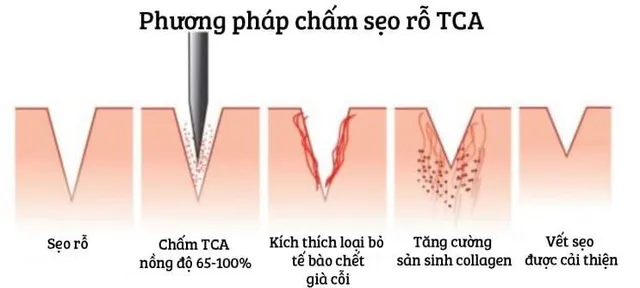
When a dermatologist applies high-concentration TCA to atrophic scars using a fine wooden applicator, it triggers a controlled local inflammatory response that stimulates new collagen formation and scar remodeling. The healing process occurs rapidly—typically within 3 to 4 days—and causes minimal damage to the surrounding tissue.
Types of Scars Suitable for TCA CROSS
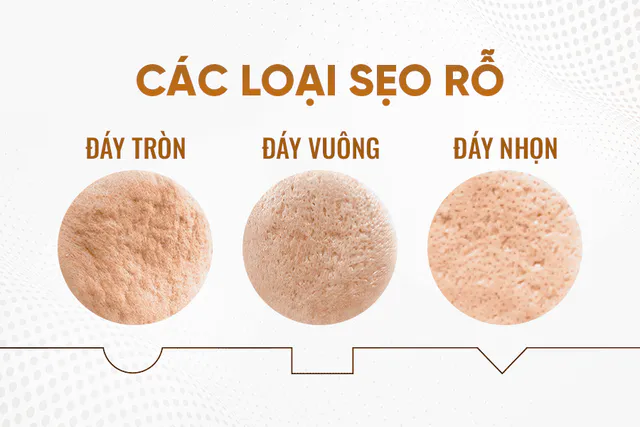
- Ice pick scars: Narrow, pinpoint depressions less than 2 mm wide, with a wider opening and a tapering base forming a “V” shape. These scars may extend into the deep dermis or subcutaneous tissue. - Boxcar scars: Round or oval depressions with sharply defined vertical edges, typically 1.5–4 mm in diameter. - Rolling scars: Broad depressions 4–5 mm in diameter, often caused by fibrous tethering beneath the skin that produces a shallow, undulating surface.
Contraindications
TCA CROSS is not recommended for: - Pregnant or breastfeeding women. - Patients with a known allergy to trichloroacetic acid. - Individuals with a history of keloid formation. - Those who have taken oral isotretinoin within the past 6 months.
Why choose this treatment
Treatments & pricing
100% of treatments are performed by dermatology specialists. Prices do not include 8% VAT. Contact us for a direct assessment and an exact quote based on your skin, severity and target area.
| Treatment | Price |
|---|---|
TCA CROSS – Targets ice-pick scars and enlarged pores | 500.000 - 1.500.000 VND≈ US$19–58 |
Approximate reference at US$1 ≈ 26,000 VND (Sep 2026). Prices are quoted and charged in VND.
7 steps, clinically led
Step 1: Examination and Scar Assessment
The first step in the treatment process is to examine and assess the scars. The dermatologist will evaluate the scar type, location, and severity to determine the most appropriate treatment plan.
Step 2: Personalized Treatment Planning
Based on the assessment, the dermatologist designs a personalized treatment plan tailored to each patient’s skin condition. Since every scar is unique, the plan must be customized accordingly. It includes treatment methods, number of sessions, cost estimates, and post-treatment care instructions—helping patients understand the process and prepare for optimal recovery.
Step 3: Comprehensive Cleansing and Disinfection
Makeup removal, facial cleansing, and exfoliation are performed to eliminate impurities and dead skin cells, ensuring optimal treatment efficacy. The treatment area is then disinfected using saline or chlorhexidine solution.
Step 4: Applying TCA to Individual Scars
Using a fine wooden applicator, the dermatologist precisely applies TCA to the base of each scar while gently stretching the surrounding skin to control acid spread. This step is performed slowly and carefully to ensure proper concentration and prevent burns or damage to healthy tissue.
Step 5: Monitoring Skin Reaction
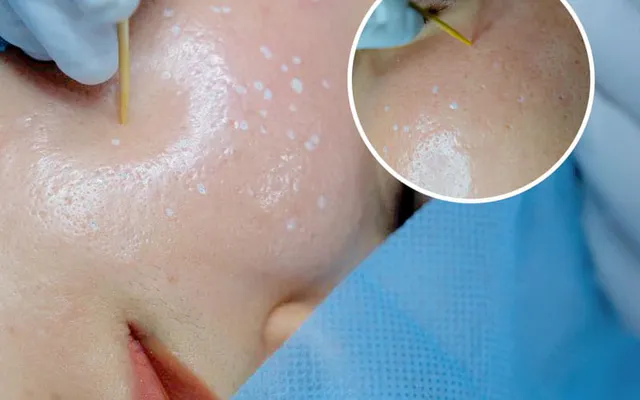
Within 10–15 seconds of application, a white frost appears on the treated area—an indication that TCA has effectively penetrated the scar tissue.
Step 6: Post-Treatment Skincare Guidance
To maximize scar-repair results, proper aftercare and the use of supportive skincare products are essential. The dermatologist will prescribe suitable products that aid recovery, stimulate collagen and elastin production, and provide detailed skincare instructions for each healing stage. A follow-up support group is created to connect patients with the clinic and dermatologist through online communication channels, allowing regular monitoring of skin progress at home.
Follow-up Appointments
Post-treatment follow-up visits are crucial for evaluating treatment outcomes and monitoring skin recovery. During these visits, the dermatologist assesses progress and may adjust the treatment plan or recommend additional procedures if needed. This ensures each patient receives optimal care and achieves the best possible results.
Make results last
Post-Treatment Care After TCA CROSS
- Follow your dermatologist’s aftercare instructions precisely.
- Avoid direct sun exposure.
- Apply a broad-spectrum sunscreen with SPF 30 or higher.
- Use suitable masks and skincare products for post-treatment skin.
- Avoid touching your face.
- For the first 3 days: refrain from spa treatments, steam baths, sunbathing, or exfoliation.
- Do not use products containing retinoids, tretinoin, acne creams with Retin-A, doxycycline, or AHAs.
- Avoid activities that raise body temperature or cause sweating for 2–3 days.
- Drink 1.5–2 liters of water daily.
- Maintain a healthy diet rich in vitamin C and fiber from fruits and vegetables.
- Limit stimulants and alcohol such as beer, wine, and tobacco.
- Manage stress and anxiety.
- Get at least 8 hours of sleep per day.
- Attend follow-up appointments as scheduled and adhere to the full treatment plan.
Still have questions?
Does TCA CROSS hurt?
When does the skin start peeling after TCA CROSS?
Shine with confidence in clear, radiant skin
Start your skin story.
Schedule your diagnostic session. Our doctors will map your unique skin biology to build a lifelong protocol for health.