

Pitted scars on the nose and enlarged pores can both make the skin’s surface appear uneven, but they do not necessarily require the same treatment. Before purchasing creams advertised to “fill in scars” or choosing laser treatment, it is important to determine whether the visible depressions are actual scars, prominent pores, or a combination of different skin concerns.
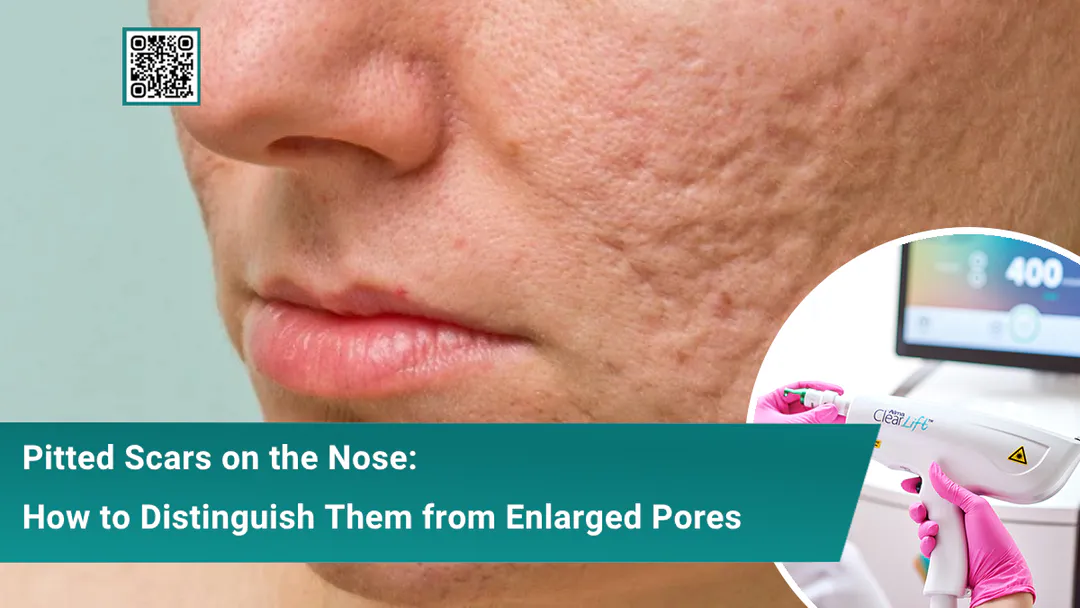
A close-up photograph taken under angled lighting can make the surface of the nose look very different from how it appears in person. Therefore, avoid relying on a single magnified image to assess scar severity or select a cosmetic procedure.
Do Pitted Areas on the Nose Always Indicate Scarring?
Pores may appear more prominent when the skin produces excess oil or becomes clogged. In these cases, appropriate skincare and acne management can play an important role. By contrast, depressed scars need to be assessed according to their shape, depth, and location before a treatment approach can be selected. [1][2]
Before your consultation, consider recording the following details:
- When did the depressions first appear, and have they changed over time?
- Did the affected areas previously have inflammatory acne or other skin injuries?
- Does your skin still have blackheads, swollen bumps, redness, or irritation?
- Have you previously squeezed pimples, undergone chemical peels, or received cosmetic procedures on your nose?
- Which concern bothers you most: the depressions, uneven skin tone, or excess surface oil?
These answers can help you describe your concerns more accurately. However, your dermatologist will still need to examine your skin directly. A history of squeezing pimples alone does not establish that every small opening on the nose is a scar.
If Enlarged Pores Are the Main Concern
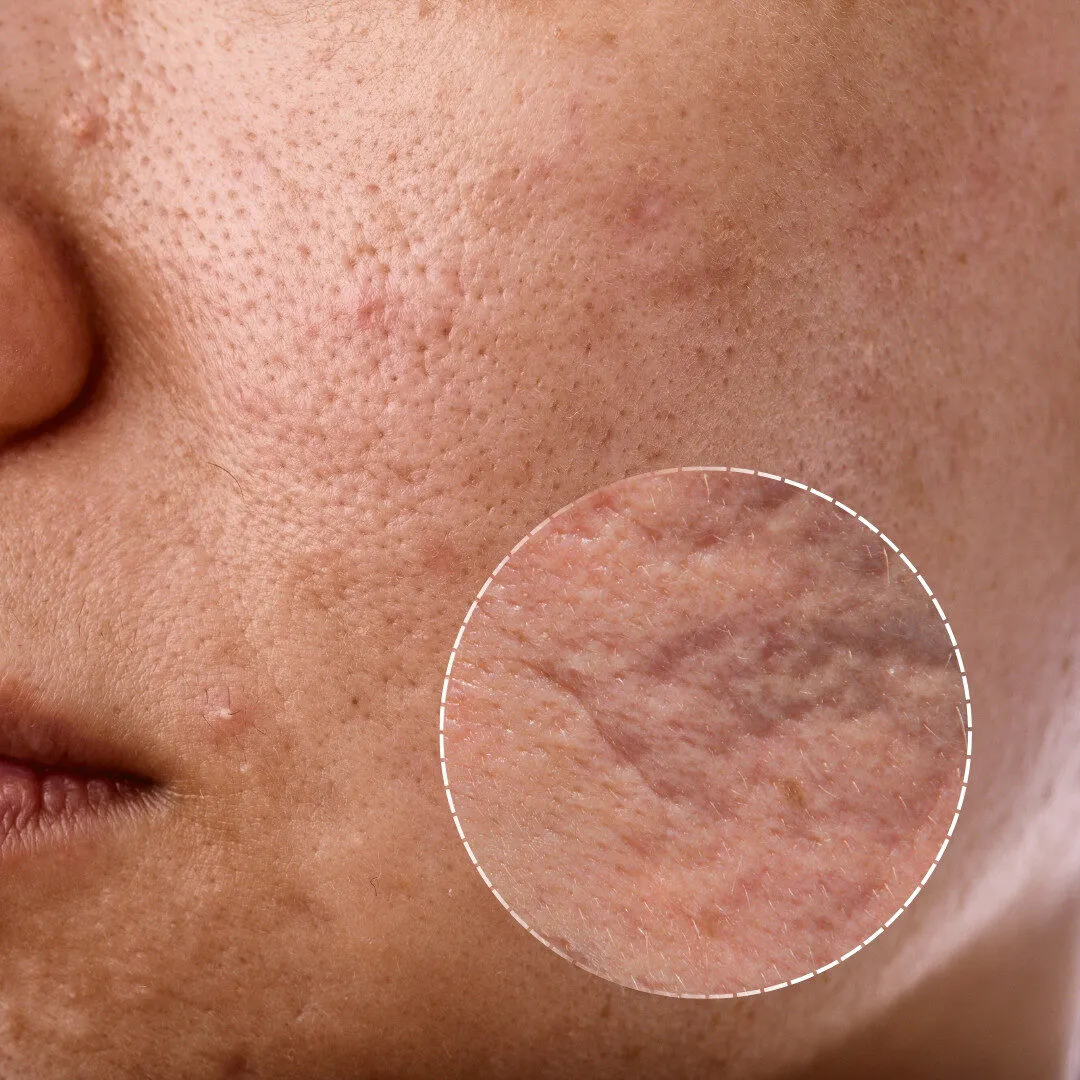
When prominent pores are the primary issue, the first step is often to review your cleansing routine and skincare products. Gentle cleansing, avoiding excessive friction, and choosing non-comedogenic products may help improve the skin’s appearance. Harsh cleansing does not “close” pores. [1]
If you are using several acne treatments simultaneously and your nose feels irritated, make a list of all the products you use and how frequently you apply them. The problem may be the combination of products or your skin’s tolerance, rather than a need to introduce another active ingredient.
Setting realistic expectations can also help prevent unnecessary treatment. You may aim to reduce excess oil and achieve a smoother-looking complexion rather than expecting the skin to have no visible pores under magnification.
If Your Dermatologist Confirms Depressed Scars
Scar treatment is usually tailored to the type of scar and the condition of the skin. Different scar shapes may require different approaches, so no single technology should be considered a universal solution for the entire nose. If active acne is still present, treatment may begin with acne control to help prevent new skin damage. [2]
Topical creams should not be promoted as a solution that can fill every deep pitted scar. Improving acne or the skin’s surface does not mean that altered tissue can be completely regenerated. When a topical product is recommended, ask about its specific purpose and when its effectiveness should be assessed.
Options commonly discussed for depressed acne scars include laser resurfacing, microneedling, and procedures targeting individual scars. Your dermatologist will determine which approach is appropriate for your actual skin condition rather than selecting a treatment based solely on the name of a device. [2]
You can review the available options in our overview of acne scar treatment at WeDo, then discuss the specific concerns affecting your nose during a consultation.
Is TCA CROSS Suitable for Every Depressed Spot on the Nose?
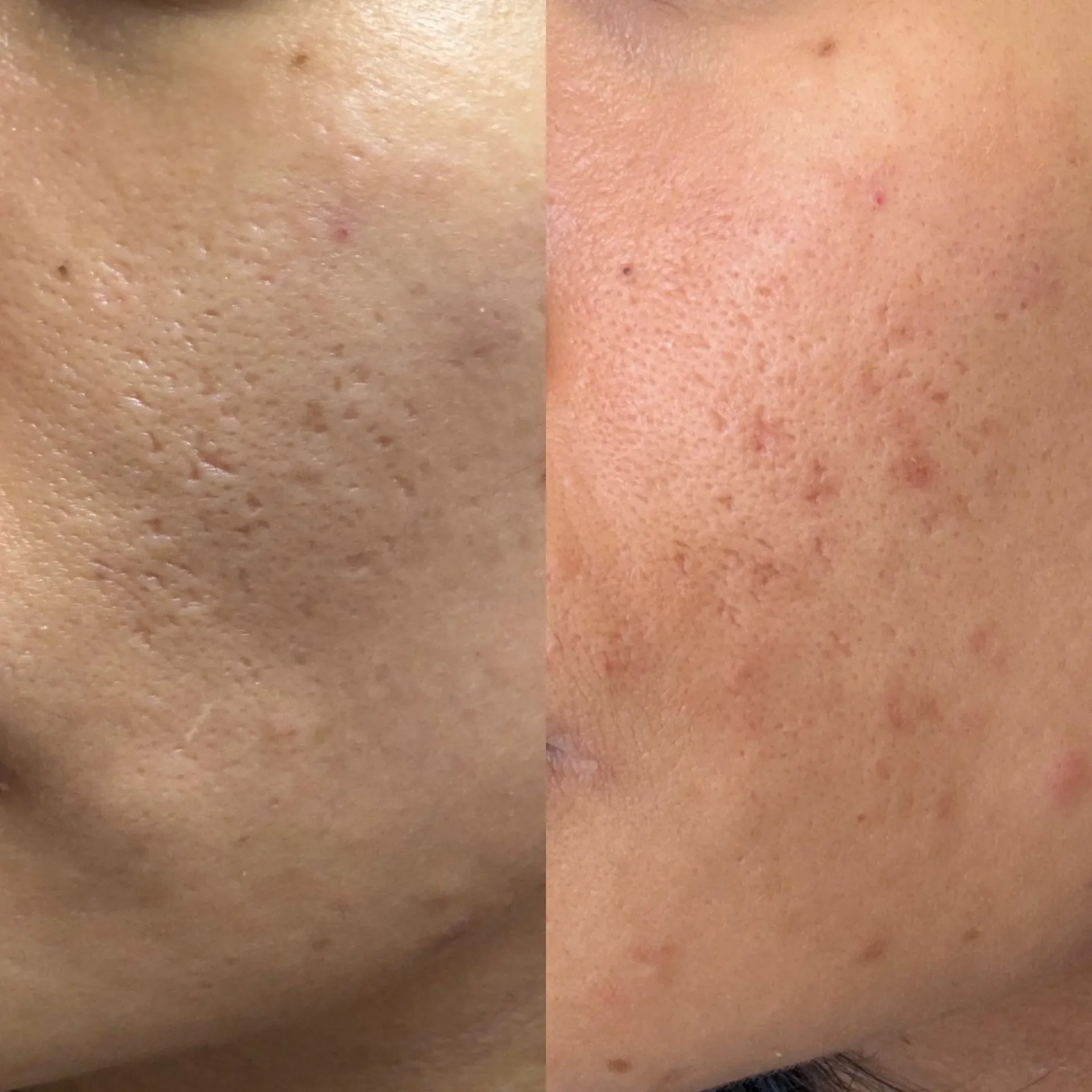
TCA CROSS is a technique that uses trichloroacetic acid applied locally to selected scars to stimulate tissue remodeling. Whether it is appropriate depends on the scar type, severity, treatment goals, and the practitioner’s assessment. The technique does not involve applying acid across the entire nose. [3]
Do not purchase acid products and apply them to small pits based on online videos. You could end up treating normal pores or areas of skin that are unsuitable for the procedure. When a technique requires precise identification of the target lesion, diagnosis cannot be replaced by online illustrations.
Even when the procedure is recommended, expectations should remain realistic. No single treatment guarantees that scars will disappear completely. Ask about potential risks, aftercare requirements, and follow-up appointments before proceeding. [3]
Preparing for Nose Scar Treatment
Bring a list of your medications, acne treatments, skincare products, and any previous procedures to your consultation. Do not mention only the products you have used during the past week; recent treatments and procedures may also need to be considered when planning your care.
In addition to explaining your desired results, tell your dermatologist how much recovery time you can accommodate and whether your work involves frequent sun exposure. A suitable treatment plan should account for post-procedure care, not just the time spent in the treatment room.
Important questions to clarify include:
- Do I have actual scars on my nose, or are enlarged pores the main concern?
- Which type of skin change is each proposed treatment intended to address?
- Should active acne or irritation be treated first?
- When can the results be evaluated after the skin has recovered?
- If the results are not as expected, how might the treatment plan be adjusted?
Monitoring Results and Caring for Your Skin After Treatment

Follow the specific instructions provided by your treatment provider regarding cleansing, skincare, and sun protection. Do not independently decide when to restart acids or retinoids based on general online articles, as aftercare depends on the procedure performed. [4]
Scar improvement may take time and multiple treatment sessions. Comparing photographs taken immediately after a procedure with older images can be misleading when the skin is still swollen or discolored. Take photographs from consistent angles, distances, and lighting conditions at the intervals recommended by your dermatologist. [4]
If you experience a reaction that concerns you, contact your treatment provider and share clear photographs along with the time your symptoms began. Do not apply additional products in an attempt to “speed up” the healing process.
If the depressions on your nose have persisted and you are unsure whether they are scars or enlarged pores, you can contact WeDo Skin Clinic to ask about consultation appointments. Identifying the correct concern will help make discussions about treatment options and costs more specific.
Frequently Asked Questions
Can pitted scars on the nose fill in naturally?
You should not expect long-standing depressed scars to return to their original appearance on their own. First, confirm whether the marks are actual scars, then discuss the potential for improvement with a dermatologist.
Do small holes that appear after squeezing blackheads mean I have scars?
Not necessarily. The skin and pores should be assessed after the area has settled, especially if redness or swelling is still present.
Can pore-minimizing creams treat pitted scars?
These are not exactly the same treatment goals. Do not interpret reduced oiliness or a smoother skin surface as proof that deep scars have been filled in.
Does having pitted skin on the nose mean I need CO2 laser treatment?
No. Treatment selection should be based on the type of skin changes, the condition of your skin, and professional assessment rather than the location of the concern alone.
Can the number of treatment sessions be determined from a photograph?
Photographs can support an initial discussion, but they are not sufficient to establish an exact treatment plan for every individual. The number of sessions may also need to be adjusted according to your actual response.
References
[1] American Academy of Dermatology. What Can Treat Large Facial Pores?
aad.org
[2] American Academy of Dermatology. Acne Scars: Consultation and Treatment.
aad.org
[3] DermNet. TCA CROSS.
dermnetnz.org
[4] American Academy of Dermatology. Acne Scars: How to Care for Your Skin After Treatment.
aad.org


