WeDo Skin Clinic
Consult a dermatologist

Personalized plans — effective & safe

Book a consultation
Hotline: (+84)-898898875
Zalo chatCall nowMessengerLocation
Lip Tattoo Removal with Q-Switched Nd:YAG Laser
Services & Treatments

Lip Tattoo Removal with Q-Switched Nd:YAG Laser

Dermatologist-led lip tattoo and lip blush removal in Ho Chi Minh City: Q-Switched Nd:YAG laser, free consultation and skin analysis, quote after assessment.

Medically reviewed by Dr Quynh Trang, Dermatologist (HCMC) · Updated August 1, 2026

Lip tattoo removal at WeDo Skin Clinic is performed with a Q-Switched Nd:YAG laser (Lutronic Spectra, dual 1064/532nm) — and 532nm is precisely the wavelength for the red, pink and orange pigment families that make up almost all permanent lip makeup. Your consultation and skin analysis with a dermatologist are free; because the lip is not a separately listed line on our price list, your dermatologist quotes your cost directly after that examination, based on pigment color, saturation and the area that actually needs treating. Pigment fades session by session, with sessions spaced 4–6 weeks apart, and once the lip has healed completely you can have it tattooed again in a new color and border. Both clinics are central — District 1 and District 2 — and consultations are held in English.

Almost nobody arrives regretting the decision they made. The reason is usually more specific: lip blush done four or five years ago now reads brick red in daylight; the base has gone dull, so every lipstick over it looks muddy; the border sits slightly off and you notice it more each year; or a new artist has asked you to lighten the old pigment before any new lip work is done.

A color shift does not mean the original work was bad. Permanent lip makeup pigment is a blend: warm colorants — red, pink, orange — give you the shade you chose, mixed over an iron-oxide and titanium base that makes the result read pastel and hold longer on lip tissue. Those two components do not break down at the same rate. The warm tones fade comparatively fast under UV and normal skin turnover, while the base persists; what is left behind is what your eye reads as dullness, graying or brick red. It is pigment chemistry, not a bad appointment. (Freshly tattooed lips that are still peeling are a separate matter — the lip has to be fully healed before removal is even considered.)

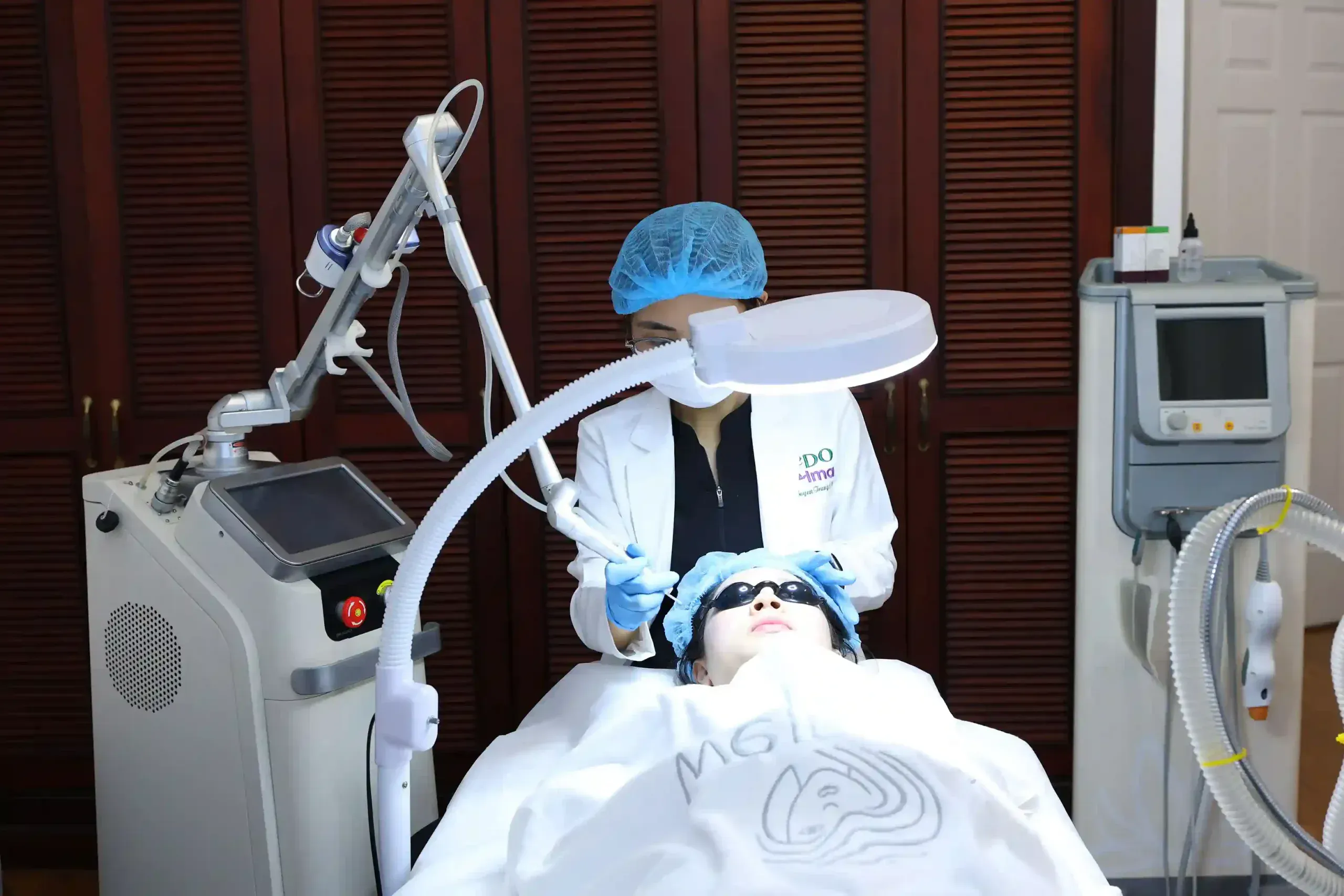
Faced with that, most people weigh three options. Tattooing over the old work is fastest, but it only behaves on a genuinely faint base; layering new color onto a saturated one adds pigment to tissue that is already loaded, and the result is hard to predict. Creams and solutions sold as “ink removers” work by deliberately injuring the upper layer of the skin so pigment lifts out with the scab; the lip is thin, semi-mucosal and richly vascular, so on this area specifically that is the shortest route to infection, a lost border and pigment disturbance that is difficult to reverse. Laser does the opposite: it leaves the surface intact and targets the pigment particle underneath. That is the platform behind WeDo’s Q-Switched Nd:YAG laser tattoo removal across every area we treat.

Q-Switched Nd:YAG laser targeting ink pigment beneath the skin at WeDo Skin Clinic

The same device, but each area is a different problem. Brows and lips differ in pigment type, in how thickly that pigment was laid down and in the tissue underneath, so eyebrow tattoo removal follows its own protocol — the brow also requires eye shielding throughout, which does not arise around the mouth. Body work is priced by area and relies mainly on the 1064nm wavelength; see tattoo removal with the Nd:YAG 1064 laser. The devices behind all three are listed under treatment technology at WeDo.

How much does lip tattoo removal cost?

Your cost depends on four things a dermatologist can only read under magnification: the color the pigment is currently showing, how many layers have been tattooed over each other, how saturated the base is, and how much lip actually needs treating. A lip blushed once with a light powder technique is not the same body of work as a full border tattooed three times over a decade. So the number is quoted after your free examination and skin analysis, before you decide to start — not printed in advance as a single rate for everyone.

For a sense of where cosmetic tattoo removal sits at WeDo: eyebrow tattoo removal is listed at 1.500.000 VND per session and eyeliner at 2.000.000 VND per session. Those are the prices of two different areas — the lip currently has no separately listed line. Prices exclude 8% VAT.

If what you actually need is pricing by tattoo size rather than by cosmetic area, the tattoo removal price list by size sets out each band with worked examples.

You pay session by session rather than buying a course upfront. That matters here, because it means you can stop once the base is faint enough for whatever you plan to do next.

Results, and when you can have your lips tattooed again

Pigment fades session by session. It is worth agreeing on that at the first consultation, because expecting one visit to clear everything is the most common reason people lose heart midway through. After each session your body needs weeks for the lymphatic system to clear the fragmented pigment; what you see around week four is that session’s real result, not the swollen, darker-looking lip of the next morning.

Your dermatologist reassesses the fade at the start of every visit and decides whether to treat again or stop. Plenty of patients stop earlier than planned, because they only need the base faint enough for a new lip tattoo, not a completely clear lip. For the general picture, read how many laser tattoo removal sessions a tattoo tends to need and what drives that number.

On re-tattooing: it is entirely possible, and for many people it is the actual destination rather than a bare lip. The condition is that the lip has healed completely — tattooing too early gives uneven color uptake and raises the risk of infection. Your dermatologist examines the lip and confirms when it is safe at your follow-up visit.

Your examination, skin analysis and treatment plan are free. Because the lip has no separately listed line on our price list, your dermatologist quotes the cost directly after that examination, based on pigment color, how many layers were tattooed, how saturated the base is and how much lip needs treating; you pay session by session and decide only once you know the number.

The technology

How it works

How the Q-Switched Nd:YAG (Lutronic Spectra) laser treats lip pigment

How the Q-Switched Nd:YAG (Lutronic Spectra) laser treats lip pigment

Lip pigment does not sit on the surface. It was deposited below the epidermis and stayed there because the particles are too large for immune cells to carry away — your body has been trying to clear them for years without success. The laser's job is therefore not to bleach the pigment but to break those particles small enough that your body can finish the work itself. Spectra compresses a full pulse of energy into billionths of a second, too fast for heat to spread into surrounding tissue; the energy expands abruptly inside the pigment particle and fractures it mechanically while the semi-mucosal surface above stays essentially intact. It is indicated for permanent lip makeup and lip border pigment, including bases that have gone dull or brick red. Sessions sit 4–6 weeks apart, the minimum time for the lip to recover and for the lymphatic system to clear the previous session's fragments — treating sooner does not remove pigment faster. There is no extended downtime, only the aftercare restrictions of the first few days. Your cost is quoted after the free examination, based on exactly what that examination shows.
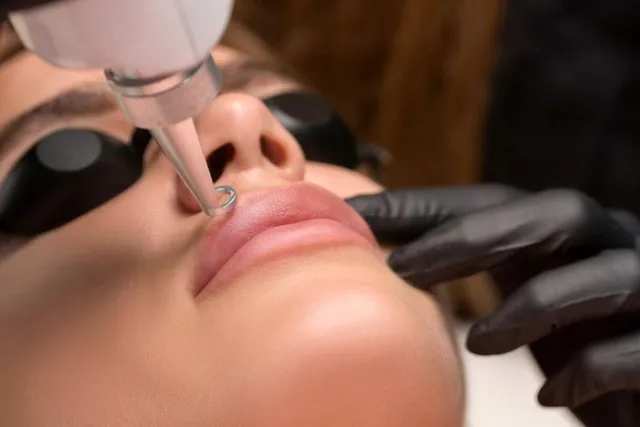
Red, pink and orange pigment over an oxide base: why lips differ from brows

Red, pink and orange pigment over an oxide base: why lips differ from brows

532nm addresses red, orange and brown pigment; 1064nm goes deeper and handles a base that has darkened. Lips need both, because a lip tattooed years ago usually carries residual warm color and a persistent dark base at the same time. The biggest difference from the brow is sheer volume of pigment: brow work is fine strokes, whereas lip pigment covers the entire lip body and border and is typically laid down denser and more saturated. Lip pigment also has a behavior of its own — pastel bases blended with iron oxide and titanium can darken temporarily right after the first laser pulse. That is why your dermatologist always test-fires a small spot in a concealed area, watches how the base responds, and only then sets the parameters for the whole lip. It is also why treating lip pigment at home is unsafe: nobody there can read that response, and there is no way to stop at the right moment.
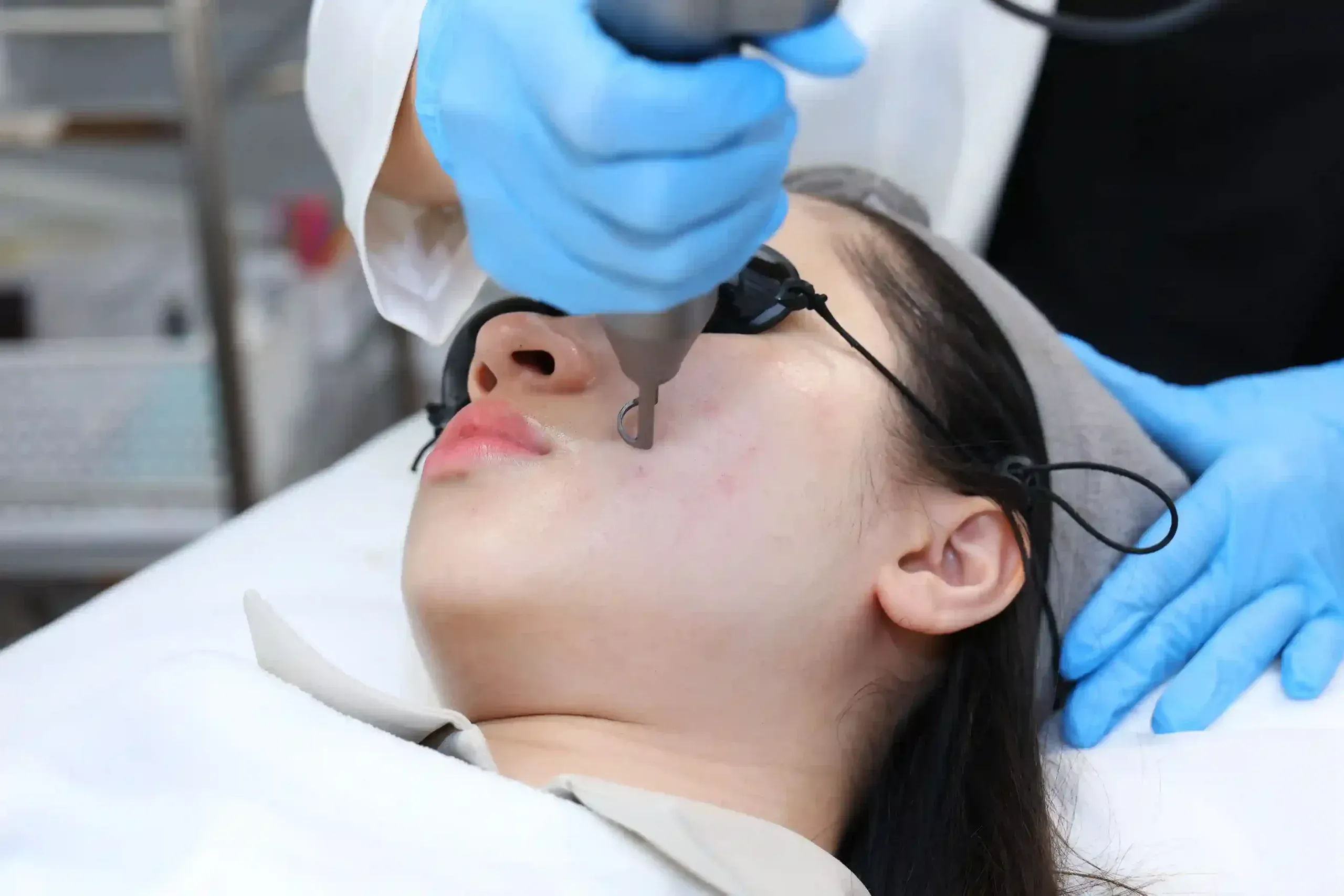
Protecting the lip border and the area around the mouth

Protecting the lip border and the area around the mouth

The lip is semi-mucosal: thin, richly vascular, and it swells more visibly than the brow area in the first days after treatment. The most important technical goal here is preserving the vermilion border — the boundary between the red lip and the surrounding skin — because a blurred or broken border is far harder to correct than residual pigment. Energy is therefore calibrated specifically for lip tissue rather than borrowed from body-tattoo settings, and your dermatologist works in short segments instead of sweeping across the whole lip. If you have a history of recurrent cold sores, tell your dermatologist at the consultation: it changes the plan directly, and prophylaxis is given as indicated before treatment starts.

Advantages

Why choose this treatment

A dermatologist examines your lip, reads the pigment personally and builds the plan — in English, no template protocol.
Dual 1064/532nm wavelengths handle both the red-pink layer and the base that has darkened to gray or brick red.
A small test spot in a concealed area is always fired and assessed before the whole lip is treated.
The lip is numbed beforehand; most patients feel only mild heat during treatment.
No extended downtime — just the aftercare restrictions of the first few days after each session.
Consultation and skin analysis are free, and your cost is stated clearly before you decide to begin.
Pricing

Treatments & pricing

100% of treatments are performed by dermatology specialists. Prices do not include 8% VAT. Contact us for a direct assessment and an exact quote based on your skin, severity and target area.

Skin examination, lip pigment assessment and treatment plan with a dermatologistYour cost is quoted after the examination
FREE

See the full price list

Treatment process

6 steps, clinically led

1

Step 1: Consultation and a personalized plan

Your dermatologist examines the lip under magnification, assesses the current pigment color, the saturation of the base, how many times the lip has been tattooed and any history of cold sores, then sets out the approach and the cost. This is also the moment to mention any date you want to be re-tattooed by, so the course can be planned backwards from it.

2

Step 2: Cleansing and makeup removal

Lipstick, balm and any makeup around the mouth are removed completely. Anything left on the surface absorbs part of the laser energy and distorts how the pigment responds, so this apparently minor step affects the result of the session directly.

3

Step 3: Numbing

Numbing cream is applied across the lip and border and left on long enough to take full effect. That waiting time is what decides how comfortable the session feels, so it is never cut short.

4

Step 4: Cream removal, disinfection and the test spot

Your dermatologist wipes off the cream, disinfects the area, then fires a small test spot in a concealed part of the lip and watches how the base responds. With oxide-based lip pigment this step is never skipped, in any case.

5

Step 5: Laser treatment with Spectra

Your dermatologist works along the pigment in short segments, with energy calibrated for lip tissue. You will hear a small snap and feel brief heat; if it feels sharper than that, say so and the energy comes down.

6

Step 6: Soothing care, aftercare instructions and your next appointment

The lip is soothed, you are talked through eating, drinking and home care for the first days, and the next session is booked 4–6 weeks out. The lip may swell and the pigment may look darker early on — that is normal healing, not the pigment deepening.

Aftercare

Make results last

Keep the lip clean and dry

Clean gently as instructed and pat dry rather than wiping across. A lip kept constantly wet by saliva or drinks is a favorable environment for bacteria on skin that is actively healing.

Eating and drinking in the first days

Avoid hot, spicy, salty and sour food in the days after each session — this is the group most likely to sting and irritate a freshly treated lip. Drink through a straw so liquid does not run over the treated area, and do not lick your lips, even though it is the hardest reflex to give up all week.

Do not pick at crusts or peel the lip

The lip may flake lightly as it heals. That crust covers new skin that has not finished forming, and lifting it early is the surest way to turn a low-risk procedure into a mark on a place you cannot hide. If this is exactly what worries you, read does tattoo removal leave scars for what genuinely drives that risk.

Moisturize and protect the lip from sun

Use the lip moisturizer your dermatologist recommends and do not switch products while the lip is healing. Outdoors, cover the area or use lip sun protection: freshly treated tissue pigments quickly and marks easily.

No lipstick, and no tattooing over a healing lip

Wait until the lip has finished flaking and your dermatologist has cleared you before wearing lipstick again. Never tattoo or blush over an area that has not healed — a needle on an open wound is both an infection route and a recipe for uneven color you will have to correct later.

Take any medication exactly as prescribed

If your dermatologist prescribes a topical or oral treatment to support healing, take it only at the dose and for the duration given, under their supervision.

FAQ

Still have questions?

How much does lip tattoo removal cost?
Your dermatologist quotes the cost after a free examination and skin analysis, because the price depends on pigment color, how many layers were tattooed, how saturated the base is and how much lip needs treating; the lip currently has no separately listed line on our price list. For a sense of scale, two other cosmetic tattoo areas at WeDo are listed at 1.500.000 VND per session for eyebrows and 2.000.000 VND per session for eyeliner, excluding 8% VAT.
How much does lip tattoo removal cost in Vietnam?
Prices vary by clinic, device and how much pigment is present. At WeDo Skin Clinic in Ho Chi Minh City the lip is quoted after a free dermatologist examination rather than sold at a fixed rate, because pigment color, layering and area drive the work. As a reference point, eyebrow tattoo removal is listed at 1.500.000 VND per session and eyeliner at 2.000.000 VND per session, excluding 8% VAT.
Can lip blush or permanent lip makeup be removed?
Yes. A Q-Switched Nd:YAG laser fractures the pigment particles below the surface so your body can clear them gradually, which means lip pigment fades session by session rather than disappearing in one visit. How far it clears depends on pigment color, depth and how many times the lip was tattooed — your dermatologist will tell you plainly after the first examination.
How many sessions does lip tattoo removal take?
For tattoos generally, WeDo finds 4 to 6 sessions are usually needed, spaced 4–6 weeks apart so the skin recovers and the lymphatic system clears the fragmented pigment. Lip pigment falls in the red-pink-orange family and is usually laid down densely, so most cases sit in the upper half of that range; your dermatologist estimates your own count after the examination.
Can red, pink or orange lip pigment be removed?
Yes: 532nm is the wavelength for red, orange and brown pigment, while 1064nm handles a base that has darkened. Pastel pigment blended with oxide can darken temporarily right after the first pulse, which is why your dermatologist always test-fires a small spot in a concealed area and watches the response before treating the whole lip.
Is lip tattoo removal dangerous, and does it leave scars?
Scarring risk is low when the technique is correct, because the laser acts selectively on pigment and leaves the surface layer intact — unlike methods that strip the skin to lift pigment out. The real risks come from wrong indication, wrong energy settings and poor aftercare, which is why this needs a dermatologist to examine, prescribe and follow up; tell your doctor at the consultation if you have a history of cold sores or keloid scarring.
Is there a lip tattoo removal cream, or a way to remove a lip tattoo at home?
Topical products advertised as "ink removers" work by deliberately injuring the upper layer of the skin so pigment lifts out with the scab. The lip is thin, semi-mucosal and richly vascular, so this approach readily causes infection, a lost lip border and pigment disturbance that is hard to reverse. That is why dermatologists do not recommend treating lip pigment at home.
How long after lip tattoo removal can I get my lips tattooed again?
You can, but only once the lip has healed completely; tattooing too early gives uneven color uptake and raises the risk of infection. Your dermatologist examines the lip and confirms when it is safe at your follow-up visit.

Shine with confidence in clear, radiant skin

Start your skin story.

Schedule your diagnostic session. Our doctors will map your unique skin biology to build a lifelong protocol for health.

11 TRẦN DOÃN KHANH, QUẬN 1
17 THÁI THUẬN, QUẬN 2

Include your country code, e.g. +84-857466767