

Treating dark underarms starts with identifying why the skin beneath the arms has become darker. If your skin frequently feels itchy or irritated after shaving or using deodorant, changing your skincare habits may be more important than searching for a whitening cream. On the other hand, dark patches accompanied by thickened skin should be evaluated to rule out underlying medical conditions.

There is no single treatment suitable for every case of underarm darkening. Understanding your skin condition can help you avoid a cycle of applying strong products, developing irritation, and experiencing even more discoloration.
Why Does the Skin Under the Arms Become Darker?
Dark underarms do not necessarily indicate poor hygiene. What matters is whether your skin has changed color compared with its previous appearance, when the change began, and whether other symptoms have developed.
One possible cause is post-inflammatory hyperpigmentation (PIH), which occurs when previously irritated or damaged skin retains brown discoloration after the inflammatory response subsides. Repeated episodes of itching or irritation after shaving, friction, or using skincare products are useful details to share during a medical consultation. However, skin color alone is not enough to identify the exact cause. [1]
Review any products you have recently started using, how frequently you shave or pluck your hair, the types of clothing you wear, and when the discomfort began. Avoid discarding multiple products at once without recording their names and the reactions associated with each one. This information may help your dermatologist identify the underlying cause.
Another condition to distinguish from ordinary underarm darkening is acanthosis nigricans. Possible signs include darker, thicker skin with a velvety texture in body folds. Depending on the circumstances, a doctor may recommend blood glucose testing or other investigations. Not everyone with dark underarms has diabetes, and the condition cannot be diagnosed reliably from a photograph alone. [2]
How to Care for Dark Underarms at Home
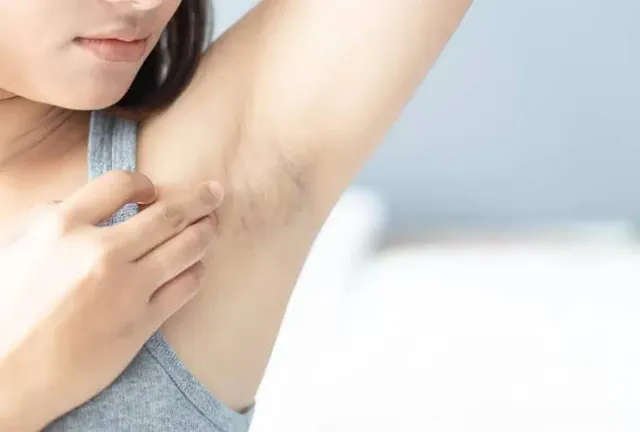
The initial goal is to help the skin settle and prevent further damage. A simple, consistent routine that allows you to monitor your skin’s response is more useful than repeatedly switching products based on advertising claims.
- Cleanse gently and avoid scrubbing to try to remove the discoloration.
- Temporarily stop using a new product if it repeatedly causes burning or itching. Keep its packaging so you can provide the details during a medical consultation.
- Choose comfortable clothing that minimizes repeated friction against irritated underarm skin.
- Avoid shaving, plucking, or hair removal treatments on areas that are scratched, damaged, or inflamed.
- If moisturization is needed, choose a simple, fragrance-free product and monitor how your skin tolerates it.
Gentle products can help reduce the risk of further irritation, but they do not guarantee lighter underarms. If itching or flaking continues to recur, do not simply add another dark spot treatment. When an active skin condition is responsible for the discoloration, treating that condition should take priority. [3]
Avoid using bleach, lemon juice, or mixtures with unknown concentrations to try to “peel away” dark pigmentation. Burning and peeling are not signs that a treatment is working. On skin that is already irritated, additional aggressive treatments may worsen the problem and make the underlying cause more difficult to assess.
What Role Do Topical Products and Procedures Play?
After an examination, a dermatologist can determine whether treatment should focus on inflammation, pigmentation, or skin thickening. For acanthosis nigricans, topical skincare may be only one part of the treatment plan; addressing underlying contributing factors can also be important. Do not self-medicate based solely on a condition’s name, as the appropriate approach depends on your actual skin condition. [2]
If you are considering a chemical peel or laser treatment, ask about the intended outcome and why the procedure is appropriate for your underarms. Chemical peels use controlled chemical injury to affect the skin. The intensity of treatment, recovery process, and risk of post-treatment discoloration vary between individuals. Therefore, you should not follow facial peeling instructions and apply them to your underarms without professional guidance. [4]
A useful consultation should help you understand the following:
- What is the likely diagnosis, and are any additional tests needed?
- Does the skin need to stabilize before using active ingredients or undergoing a procedure?
- What results can reasonably be expected, and when will progress be reassessed?
- What signs indicate that you should stop using a product or contact your treatment provider?
- Which services and aftercare items are included in the estimated cost?
You can also learn more about pigmentation management in our article on post-acne hyperpigmentation treatment. However, you should not automatically apply an entire facial acne-mark treatment regimen to the underarms.
Is It Possible to Treat Dark Underarms in 3 Days?

You should not regard “how to lighten underarms in 3 days” as a guaranteed treatment goal. If your skin feels more comfortable, looks smoother, or appears lighter in photographs after a few days, this does not prove that the underlying pigmentation has been successfully treated.
To monitor progress, take photographs using consistent lighting, distance, and positioning. Avoid comparing an image taken under warm yellow lighting with one that has been brightened using your phone. Also, record changes in itching, burning, and the products you are using so that you can provide specific information during follow-up appointments.
The time required for improvement depends on the underlying cause, the extent of skin damage, and whether the area continues to be irritated. Instead of increasing the frequency of product application when you do not see immediate brightening, discuss an appropriate reassessment timeline with your dermatologist.
When Should You See a Dermatologist?
Consider seeking professional evaluation if dark patches appear recently and change rapidly, the skin becomes noticeably thickened, itching or irritation persists, or skin lesions repeatedly return. Painful swollen bumps, discharge, or ulcers should be assessed as dermatological concerns rather than treated as cosmetic discoloration alone.
Before your appointment, prepare any previous photographs, a list of products you have used, and notes about your hair removal methods. If you would like to improve dark underarms, you can contact WeDo Skin Clinic to ask about consultation appointments and discuss suitable options after your skin has been assessed.
Frequently Asked Questions
Are dark underarms caused by inadequate washing?
Not necessarily. Skin discoloration should be assessed alongside your history of irritation, other symptoms, and changes over time. Aggressive washing will not resolve every underlying cause.
Should I change my deodorant if my underarms feel irritated?
If a product repeatedly causes irritation, stop using it and monitor your skin. If symptoms persist, bring the product information to your medical appointment rather than continuing to experiment with multiple new products.
Does laser hair removal automatically eliminate dark underarms?
No. Hair reduction and skin tone improvement are two different goals. Your pigmentation concerns should be assessed separately before deciding on treatment.
Is laser treatment necessary for severe underarm hyperpigmentation?
The appropriate treatment cannot be determined by the degree of discoloration alone. The underlying cause and the condition of your skin must be assessed first.
Can I use facial whitening cream on my underarms?
Do not assume that products suitable for the face are automatically appropriate for the underarms. Check the product instructions and consult a dermatologist if your skin is irritated or you are considering using a medicated topical treatment.
References
[1] DermNet. Post-inflammatory hyperpigmentation.
https://dermnetnz.org/topics/postinflammatory-hyperpigmentation
[2] American Academy of Dermatology. Acanthosis Nigricans: Diagnosis and Treatment.
https://www.aad.org/public/diseases/a-z/acanthosis-nigricans-treatment
[3] American Academy of Dermatology. How to Fade Dark Spots in Darker Skin Tones.
https://www.aad.org/public/everyday-care/skin-care-secrets/routine/fade-dark-spots
[4] DermNet. Chemical Peels.
https://dermnetnz.org/topics/chemical-peels


