WeDo Skin Clinic
Consult a dermatologist

Personalized plans — effective & safe

Book a consultation
Hotline: (+84)-898898875
Zalo chatCall nowMessengerLocation
Dermatitis and Eczema Treatment in HCMC — Atopic, Allergic, Contact
Services & Treatments

Dermatitis and Eczema Treatment in HCMC — Atopic, Allergic, Contact

Atopic, allergic and contact dermatitis explained: triggers, warning signs and skin-barrier care. Free dermatologist exam in Ho Chi Minh City before any plan.

Medically reviewed by Dr Quynh Trang, Dermatologist (HCMC) · Updated August 1, 2026

The dermatologist examination and skin analysis at WeDo Skin Clinic are free — including when all you want is a name for the itchy red patch you have been looking at for weeks. Atopic, allergic and contact dermatitis run on different mechanisms and different triggers, so there is no single price for “treating dermatitis”: your dermatologist examines the skin, identifies the type and severity, and quotes the plan and its cost after that visit. Treatment usually runs on two tracks at once — medication prescribed by your doctor to bring the flare under control, and skin-barrier repair plus trigger identification to stretch out the calm periods in between.

Chronic dermatitis is not only a skin problem. The itch costs you sleep, patches on the hands or neck make people cover up, and the feeling that it never really goes away is real. If you have already bought a cream over the counter, felt better for a few days and then flared again, that is the ordinary behavior of this group of conditions rather than a mistake on your part.

Our clinics are in District 1 and District 2, and consultations are held in English. This page covers atopic, allergic and contact dermatitis specifically; for the wider picture of every skin condition we treat, start from treatment of skin diseases at WeDo. If you want more depth on one type in particular, our article on atopic dermatitis and its complications goes further into that entity than this page does.

The technology

How it works

Atopic, allergic and contact dermatitis: how do they differ?

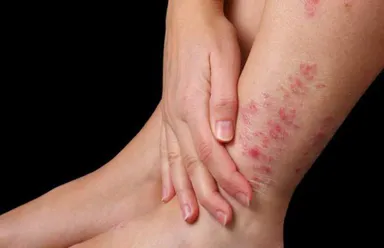
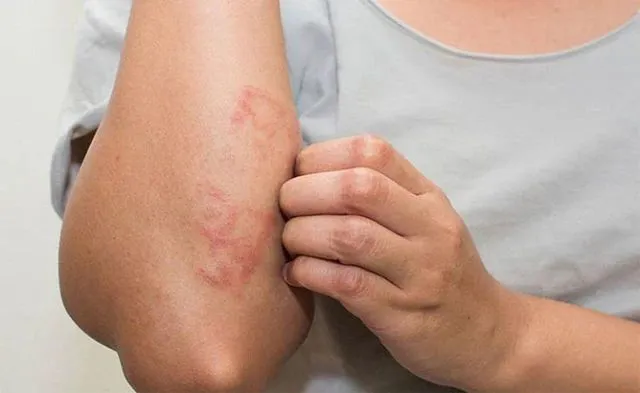
Start with the names, because English makes this harder than it needs to be. "Dermatitis" simply means inflammation of the skin. "Eczema" is the word most patients use, and in everyday use it usually means atopic dermatitis — though clinicians sometimes use it more broadly for several inflammatory patterns that look alike. So when one clinic writes eczema and another writes atopic dermatitis, they are, in the great majority of cases, describing the same thing. That is worth saying plainly once rather than leaving you to reconcile it yourself. Atopic dermatitis sits on an allergic constitution, often alongside a personal or family history of asthma or hay fever. The skin barrier in these patients is weaker from the outset, so the picture is dryness, itch and repeated flares rather than a single episode. Lesions favor the elbow and knee creases, the face and the hands. Allergic contact dermatitis is a hypersensitivity reaction to a specific allergen the immune system has met before and remembered. Because it has to go through that recognition step, the rash typically appears late — one to several days after exposure — which is exactly why people fail to connect cause and effect. A useful clue: the redness often spreads beyond the area that was actually touched. Irritant contact dermatitis works differently again. No immune recognition is needed; a chemical, friction or prolonged moisture damages the barrier directly if it is strong enough and lasts long enough. The rash stays where the contact happened, its border is fairly sharp, and in principle anyone can develop it given a strong enough exposure. This is why a perfectly healthy person can develop hand dermatitis a few weeks into a new job. Common sites across the group: the face and the skin around the mouth, the hands and finger webs, the elbow and knee creases, the neck, and anywhere tight clothing rubs. Two conditions are frequently filed under "dermatitis" and should not be. Inflammatory acne is a disorder of the hair follicle and its oil gland — raised red spots with a visible core or pus, on oily areas — not the dry, itchy plaque of dermatitis. Hives are raised, intensely itchy weals that appear and vanish within hours and move around the body; dermatitis stays in the same place for days. In photographs, the types of dermatitis look very similar to one another and to several other conditions. Telling them apart with any confidence needs an in-person examination, a proper history and a look at the skin under magnification — which is what the first visit at WeDo is for, and why it is free.
What happens when your skin barrier weakens?

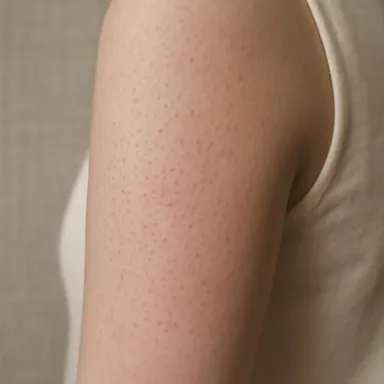
The outermost layer of skin is the stratum corneum: cells stacked like bricks, held together by intercellular lipids acting as mortar. That wall does two jobs at once — it keeps water in, and it keeps allergens, bacteria and chemicals out. When the lipid mortar runs short, the wall leaks, and everything follows a very predictable loop. Water evaporates through the skin faster, so the skin gets dry and tight. Dry skin itches. Itchy skin gets scratched. Every scratch strips away more of an already thin barrier, allergens and bacteria get in deeper, inflammation steps up, and the skin becomes drier and itchier still. That is the itch–scratch cycle, and it is the medical answer to the question almost every dermatitis patient asks: why does the cream clear this flare, only for another one to arrive later? Understanding the loop also changes how you should think about moisturizer. For someone with dermatitis, moisturizing is not a beauty step — it is part of the treatment. It replaces the missing mortar and it breaks the "dry leads to itchy" segment of the cycle. Prescribed medication settles the inflammation you have now; barrier repair is what decides how soon the next flare arrives. The disease also has two faces. In an acute flare the skin is red, slightly swollen, sometimes blistered and weeping, and very itchy. In the chronic phase, after months of scratching and rubbing, that same skin thickens, the natural skin lines become exaggerated, it darkens and it cracks easily. The two phases are managed differently, so what your dermatologist needs to know is not only what the rash looks like today but where you are in your own course.

Common triggers in Ho Chi Minh City's climate

Most trigger lists in the literature were written for temperate climates. In Ho Chi Minh City the things that actually set off a flare sit very close to daily life. Year-round heat and humidity trap sweat under tight clothing, under straps and in skin folds; the sweat dries and leaves salt behind, and skin held damp for hours loses barrier strength. In the other direction, every trip in and out of an air-conditioned room moves your skin between two very different humidities and speeds up water loss. Pool water carries disinfectant and sea water carries salt — both are noticeably drying if you do not rinse and moisturize soon afterward. The trio behind hand dermatitis turns up in our clinics every week: strong detergents and dish soap, antibacterial hand wash used all day, and rubber gloves worn sealed for hours at a stretch. Kitchen staff, hairdressers, nail technicians, healthcare workers and cleaners are the groups we see most. Add to that a newly switched skincare product or fragrance, street dust and pollution, and stretches of poor sleep and sustained stress. If you have recently moved to Vietnam, expect your skin to behave differently for a while. This is one of the most common reasons long-stay foreigners come to see us: eczema that was stable in a cooler, drier country changes character in a hot, humid one. The water is different, the detergents and household cleaners are different, the products on the shelf are different, and you are alternating between tropical humidity and heavy air conditioning many times a day. That is a change in conditions, not a sign that anything has gone medically wrong — but it does mean the routine that used to hold your skin steady may need reviewing rather than repeating. One local trigger has no equivalent in most countries: the rove beetle, a small striped insect that appears indoors during the rainy season and is drawn to lights at night. It does not bite. The damage comes from a toxin released when the insect is crushed or wiped across the skin, which is why the lesion has such a recognizable shape — a red, burning streak or band, sometimes blistered, tracing exactly the path your hand took. The correct response is to rinse the area immediately with clean water, not to scrub it, and never to slap or crush the insect against your skin, because the harder you hit it the wider the toxin spreads. See a doctor if the rash spreads, shows signs of infection, or lies near the eye. Finally, triggers are deeply individual. Two people with the same diagnosis can have two entirely different lists, and no amount of reading produces yours. It gets reconstructed during the consultation, from your history, your work, your habits and everything currently going onto your skin.

When should you see a dermatologist? Signs not to wait on

Plenty of mild flares settle once you stop the exposure and look after the skin properly. But one group of signs should not be watched and waited on. Come in promptly if the rash weeps yellow fluid or forms honey-colored crusts, if the area becomes increasingly swollen, hot and painful, or if you develop a fever — those suggest secondary infection, and the infected component needs treating in its own right rather than left to settle. Come in if blisters appear in clusters, are markedly painful and spread quickly. Come in if the rash involves the skin around the eyes, the lips or the genitals, where the skin is thin and unforgiving of improvised treatment. Come in if the itch is costing you sleep, if the rash spreads noticeably within a few days, or if it fails to improve after a prescribed course. And come in early if you are pregnant, taking immunosuppressive medication, or living with another condition that has to be weighed before anything is prescribed. This list exists so that you get seen — not so that you can diagnose or manage yourself at home. So what does a dermatitis plan actually look like? Your dermatologist examines the skin and takes a detailed history of how and when it started, then establishes the type and the severity. The flare is brought under control with medication prescribed by your doctor, chosen for you and for the specific site involved. Running alongside it is the barrier-repair work you do daily at home. Last comes a review appointment, so the response can be assessed and the medication adjusted or stopped at the right moment, rather than continued indefinitely with nobody watching. And an honest word about expectations: the goal is to control flares and lengthen the settled periods between them — not a promise of permanent cure, particularly in atopic dermatitis. What does change, and changes substantially, is how often flares come, how severe they are, and how many nights you sleep through.

Advantages

Why choose this treatment

A dermatologist personally examines and analyzes your skin and establishes the type of dermatitis before prescribing anything.
The examination and skin analysis are free, even if all you want is to find out what you have.
Treatment plans are built around your type, your severity and your own trigger list rather than a standard package.
Treatment pairs flare control with skin-barrier repair, instead of only clearing the episode in front of us.
Scheduled review visits so medication is adjusted or stopped at the right time, rather than used long-term without supervision.
Two clinics, in District 1 and District 2, with consultations in English.
Pricing

Treatments & pricing

100% of treatments are performed by dermatology specialists. Prices do not include 8% VAT. Contact us for a direct assessment and an exact quote based on your skin, severity and target area.

Skin examination and dermatologist consultation for dermatitisYour treatment plan and its cost are quoted after the examination
FREE

See the full price list

Treatment process

5 steps, clinically led

1

Step 1: History and examination

Your dermatologist asks in detail about onset, how each flare has behaved, your occupation, your home environment and every product currently going onto your skin, then examines each affected area directly.

2

Step 2: Skin analysis and typing

Magnified skin analysis shows the state of your barrier and the depth of the damage, establishes which type of dermatitis you have, and rules out the situations that need further assessment before treatment.

3

Step 3: Plan discussion and a specific quote

Your dermatologist explains your type, what a realistic goal looks like for it, which steps are involved and over what period — then quotes the cost specifically, before you decide anything.

4

Step 4: Treatment

The flare is controlled with medication prescribed by your doctor, running alongside the daily skin-barrier repair routine you carry out at home.

5

Step 5: Review and a maintenance plan

Your dermatologist assesses the response, adjusts or stops medication at the right point, revisits your trigger list with you, and sets a maintenance plan for the settled period between flares.

Aftercare

Make results last

Daily skin-barrier care during a flare

Wash in comfortably warm water rather than hot, and keep it short — hot water strips out exactly the lipids your skin is already short of. Use a gentle, fragrance-free cleanser and avoid harsh bar soaps.

Afterward, pat dry with a soft towel instead of rubbing, then moisturize while the skin is still slightly damp: those first few minutes are when an emollient holds water in most effectively. Dry areas need moisturizing several times a day, not just morning and night.

Choose loose cotton clothing, and rinse laundry thoroughly so no detergent residue is left in the fibers. Keep your nails short. When the itch arrives, cool the area or press a palm against it rather than scratching — every scratch restarts the itch–scratch cycle.

This page deliberately names no ingredients and no specific products, because the right choice depends on your type and severity. If you want to go deeper, read how to identify and care for sensitive skin and our list of ingredients sensitive skin should avoid; there are further sensitive skin care tips for the calm periods between flares. The short version is two rules: no fragrance, no drying alcohol.

WeDo also offers separate skincare services with their own price lists, such as deep hydration recovery and light therapy. They are not a treatment for dermatitis and are not part of the plan described on this page; whether any of them suits you, and when, is your dermatologist’s decision after examining your skin.

Finding your own triggers

A flare diary sounds low-tech, and it is still the most useful thing you can do without us. Every time the skin turns, write five lines: the date, the area affected, what you had just been doing, what you had just put on your skin, and the weather. After three or four flares the overlaps start to surface on their own — and they are usually not what you first suspected.

When you switch products, try the new one on a small area for a few days before using it on your whole face or body. Wear gloves for chemical contact, but do not leave them sealed on for hours; take them off, rinse and dry your hands in between. Keep sweat from sitting trapped under tight clothing. And bring the diary to your appointment: it shortens the search for a cause dramatically, because your dermatologist is working from your real data instead of guessing.

If a recent product has left the skin acutely irritated, read steps to deal with skin irritation before putting anything else on the area.

While you are keeping the diary, watch for conditions that get filed under “dermatitis” by mistake. If the lesions are raised weals that come up and disappear within hours and keep moving, hives are more likely — a patch of dermatitis stays put for days, in the same place; hives all over the body describes that lesion pattern in more detail. If the real problem is chronic facial redness that flushes with heat or spicy food, with visible small vessels and no acne cores, the picture points toward rosacea instead: read understanding rosacea, or see our rosacea treatment page. If the scale is thick, dry and silvery, layered over a red patch with an unusually sharp border — typically on the elbows, knees and scalp — that picture belongs to psoriasis rather than to a dermatitis flare. And if a patch has a clear, slightly raised edge that creeps outward while the centre fades back to normal, leaving a ring, think fungal skin infection — the two are treated in opposite directions, which is exactly why this boundary is worth settling with a dermatologist before you put anything else on it.

Dermatitis keeps coming back: when to come back in

A relapse does not mean the treatment failed. With this group of conditions a new flare usually signals two things worth rechecking: which trigger has come back into your life, and whether the barrier care quietly stopped once the skin looked good again.

Book a review if signs of infection appear (yellow discharge, honey-colored crusts, increasing swelling, heat, pain or fever), if the rash spreads quickly, if the itch is costing you sleep, or if the skin has not improved after a prescribed course. Do not simply repeat an old prescription for a new flare without having it looked at — this episode’s type and severity may not match the last one’s.

How a visit and a course of treatment are organized at WeDo is set out on our treatment process page, and the costs of our other services are listed in the full price list. Your examination and skin analysis, though, are free: book a free exam at our District 1 or District 2 clinic — including if all you want is to find out what the patch on your skin actually is.

FAQ

Still have questions?

Is eczema contagious?
No. Eczema and atopic dermatitis do not pass from person to person through contact, shared items or shared water; they are inflammatory reactions on an allergic constitution with a weakened skin barrier, not an infection. If a patch becomes secondarily infected, it is that infection — not the eczema itself — that needs treating separately.
Can eczema be cured permanently?
For most patients the goal is to control flares and lengthen the settled periods in between, rather than a permanent cure. Once the skin barrier is repaired and you know your own triggers, flares typically become less frequent and less severe. Your dermatologist will set out realistic expectations for your specific case during the consultation.
How long does contact dermatitis take to clear?
The single most important step is removing the exposure: once the trigger is gone and the skin is treated properly, the rash usually settles day by day. How long that takes depends on severity, site and whether any infection is present, so your dermatologist will give you a time frame after examining the skin.
Is eczema the same as atopic dermatitis?
In everyday use, yes — most patients and many clinicians use "eczema" to mean atopic dermatitis. Strictly, "eczema" is sometimes used more broadly for a group of inflammatory patterns that look similar but do not all behave the same way. The practical consequence is that the label matters less than having someone establish which pattern you actually have.
Should I treat dermatitis with an over-the-counter cream?
Better not to. Over-the-counter creams do quite different things, and some are only meant for limited periods under supervision; using the wrong one, or using one for too long on thin skin, can worsen the damage or mask signs of infection. Have a dermatologist examine the skin and prescribe for your specific type.
Do I need a referral to see a dermatologist in Ho Chi Minh City?
No. You can book directly with WeDo — no referral and no prior GP visit is required, and consultations are held in English. If you are claiming on international insurance, tell us at the visit and we will issue an itemized receipt for your provider.
How is dermatitis different from acne?
Inflammatory acne is a disorder of the hair follicle and its oil gland, showing as raised red spots with a core or pus on oily areas of skin. Dermatitis is inflammation of the skin barrier itself, showing as red, dry, itchy patches that may weep, with no comedonal core. The two are treated along completely different lines, which is why they need distinguishing first.

Shine with confidence in clear, radiant skin

Start your skin story.

Schedule your diagnostic session. Our doctors will map your unique skin biology to build a lifelong protocol for health.

11 TRẦN DOÃN KHANH, QUẬN 1
17 THÁI THUẬN, QUẬN 2

Include your country code, e.g. +84-857466767