
Can Acne Scars Be Removed? An Honest Guide by Scar Type
Acne scars fall into three main groups: post-acne dark marks, atrophic (pitted) scars, and raised scars, each requiring a different treatment approach.
Medically reviewed by Dr Quynh Trang, Dermatologist (HCMC)
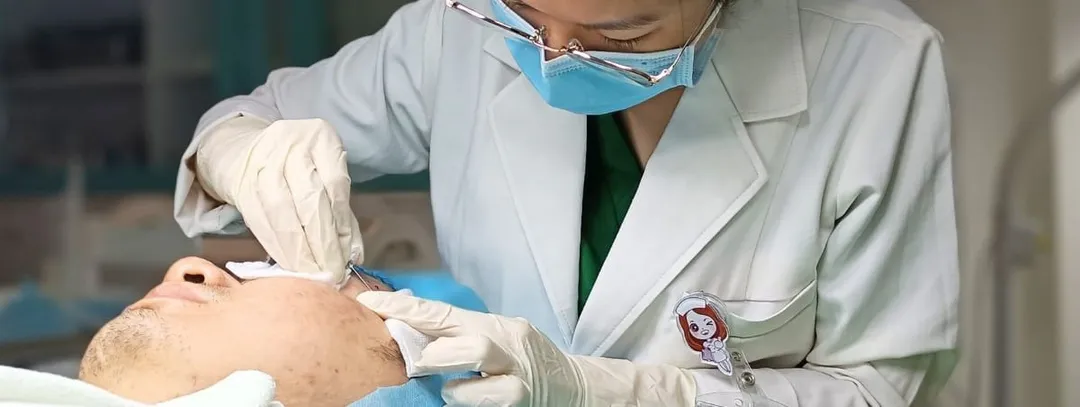
Before treatment, the dermatologist will examine and assess the skin to accurately identify the type of scar. A patient may have all three types of acne scars at the same time. Accurate identification and classification are essential for developing an appropriate treatment plan.
How it works
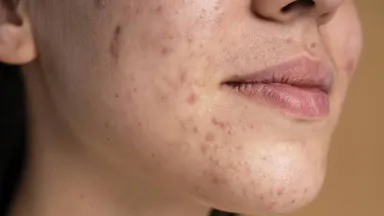
Post-Acne Dark Marks (Hyperpigmentation)
Post-acne dark marks do not alter the skin’s surface but are caused by pigment changes. They appear as darker areas where acne lesions previously occurred. Because the skin structure remains intact, these marks may gradually fade over time with strict sun protection. However, this is not guaranteed. A dermatologist-guided treatment plan can help accelerate the process. The key is to correctly identify the type of scar or mark and distinguish between different types. For example, a mark that is both darker and slightly indented should be treated as an atrophic (pitted) scar, not simply hyperpigmentation.

Atrophic Acne Scars (Pitted Scars)
Atrophic acne scars form when the underlying supporting tissue is damaged and the skin cannot adequately regenerate, leaving depressions on the skin surface. Unlike post-acne dark marks, atrophic scars do not fill in on their own over time and may become more fibrotic. Treatment aims to stimulate new tissue formation to restore volume and improve the skin surface. Results depend on selecting the appropriate technique for each scar type and treatment area, based on a dermatologist’s assessment and individualized treatment plan.
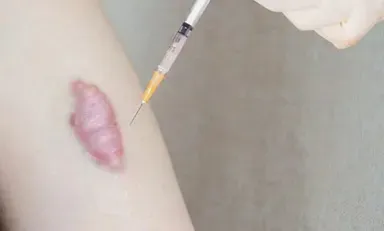
Keloid and hypertrophic scars
Unlike atrophic scars, keloid and hypertrophic scars form when scar tissue grows excessively, causing the scar to become raised and sometimes itchy or tight. The primary treatment is medical injections according to a dermatologist’s treatment plan, gradually flattening and softening the scar with each session. Other supportive treatments are considered only after the scar has flattened.
Why choose this treatment
Treatments & pricing
100% of treatments are performed by dermatology specialists. Prices do not include 8% VAT. Contact us for a direct assessment and an exact quote based on your skin, severity and target area.
| Treatment | Price |
|---|---|
Gentle Subcision for Atrophic Scars | 900.000 VND |
Moderate Subcision with Release of Fibrotic Scar Bands | 1.500.000 VND |
Deep Subcision with Cosmetic Correction of Depressed, Raised, and Tethered Scar Areas | 2.900.000 VND |
TCA CROSS for Ice Pick Scars & Large Boxcar Scars | 500.000 - 1.500.000 VND |
Laser Scar-Base Resurfacing and Scar-Edge Smoothing | 700.000 - 1.500.000 VND |
Fractional CO₂ Laser for Acne Scars | 1.500.000 - 3.500.000 VND |
HA Mesotherapy for Skin Repair, Deep Hydration, and Collagen Stimulation | 1.900.000 - 2.900.000 VND |
Mesotherapy for Acne Scars – 5 cm² Treatment Area | 950.000 VND |
Full-Face Acne Scar Mesotherapy | 3.900.000 VND |
4 steps, clinically led
Step 1: Skin exam to identify your scar type
A dermatologist examines each area under directed light and identifies whether you have dark marks, pitted scars, raised scars, or a combination.
Step 2: The right protocol — and the right order
Based on the exam, the doctor points you to the protocol your case belongs to and, if several types are present, sequences which is treated first.
Step 3: A clear quote before anything starts
The cost per method and the expected number of sessions are quoted right after the exam; you take your time and decide before treatment begins.
Step 4: Treatment per protocol, with scheduled follow-up
Sessions follow the protocol of the corresponding service, with free follow-up visits so the doctor can assess response and adjust when needed.
Make results last
Preventing new scars while treating old ones
The most overlooked part of scar treatment is stopping new scars from forming. Do not squeeze pimples and do not pick at crusts at any stage — pressure drives inflammation deeper, and lifting a crust reopens unhealed skin; both invite fresh marks and scars. The mistakes that turn a pimple into a scar are covered in pimple-popping mistakes that cause scars. If breakouts are still active, run medical acne treatment alongside your scar plan rather than after it. And protect every treated area from the sun — healing skin darkens easily, whichever scar type you are treating.
Still have questions?
Can acne scars be removed permanently?
Do acne scars go away on their own?
How much does acne scar treatment cost in Ho Chi Minh City?
How do I know which type of acne scar I have?
When should I start treating acne scars?
Shine with confidence in clear, radiant skin
Start your skin story.
Schedule your diagnostic session. Our doctors will map your unique skin biology to build a lifelong protocol for health.