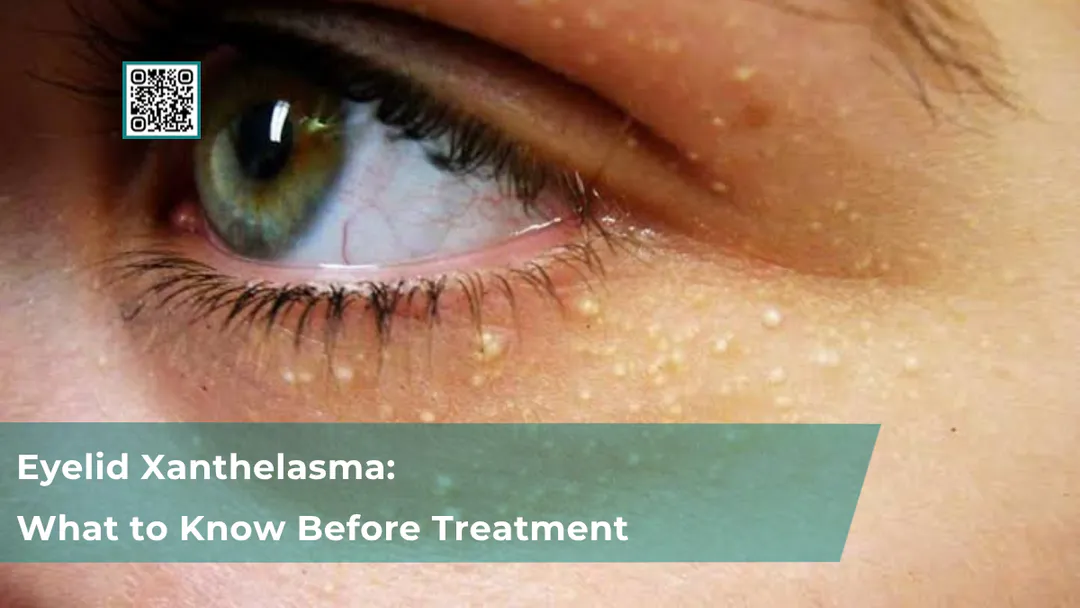
Eyelid xanthelasma, also known as xanthelasma palpebrarum, typically appears as yellowish patches of skin around the eyelids, particularly near the inner corners of the eyes. These lesions are different from acne and cannot be treated by squeezing out a plug. Before considering removal, it is important to identify the lesion correctly and determine whether an underlying metabolic condition may be present.
Wanting to improve the appearance of the skin around the eyes is a valid reason to seek medical advice. However, a consultation should involve more than simply choosing between laser treatment and electrocautery. The results of a health assessment may also influence the recommended treatment and follow-up plan.
What Does Eyelid Xanthelasma Look Like?
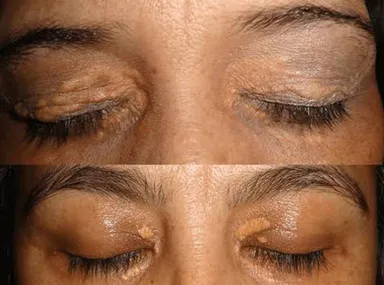
Xanthelasma is a type of xanthoma associated with the accumulation of lipids within skin cells. It may appear as yellow or yellow-orange flat patches, raised bumps, or plaques that develop gradually. Both the upper and lower eyelids can be affected, and some people develop lesions on both sides. [1]
The word “tumor” in some translations of the condition does not mean that it is cancerous. However, not every bump or patch around the eyes should automatically be identified as xanthelasma. If a lesion changes rapidly, develops an ulcer, bleeds, causes pain, or affects vision, seek medical evaluation to investigate other possible causes.
You may find it helpful to take a photograph when you first notice the lesion and record how long it has been present, whether it has grown, and which treatments you have tried. Previous photographs can provide a clearer picture of how the lesion has changed than a general observation that it has become more noticeable recently.
How Is Xanthelasma Different from Syringomas and Milia?
“Milia” and “skin tags” are sometimes used loosely in everyday conversation to describe small bumps around the eyes. However, several different skin conditions can occur in this area, and they do not all have the same characteristics.
Syringomas are benign growths that originate from the ducts of sweat glands. They typically appear as clusters of small, firm bumps around the eyelids. Syringomas are one of the conditions commonly referred to as “flesh-colored bumps” or “skin tags” in everyday language. [2]
Milia are tiny cysts containing keratin. They often appear as small, white or ivory-colored bumps near the skin’s surface and can develop on the eyelids or cheeks. Keratin is a protein found in the skin; it is not a plug of oil that can simply be squeezed out, as some people may assume. [3]
Xanthelasma, by contrast, is commonly recognized by its yellowish color and characteristic plaque-like appearance. These descriptions can help explain the differences, but they are not enough to establish a diagnosis by looking in the mirror. Lesions that appear similar may require different approaches to treatment.
Does Eyelid Xanthelasma Always Mean High Cholesterol?
No. Xanthelasma can occur even when blood lipid levels are within the normal range. However, evaluating blood lipids remains important because the condition can be associated with disorders of lipid metabolism. [1]
Your doctor may ask about your family medical history, current medications, and recent health screening results. Depending on your circumstances, additional tests may be recommended, such as blood glucose testing, thyroid function tests, or other investigations. Not everyone requires the same set of tests. [4]
If you already have blood test results, bring the complete report and note when the tests were performed. Saying that your cholesterol was normal last year is not a substitute for reviewing the actual values and considering your current health status.
It is also important to distinguish between two separate goals: treating a lipid disorder when medically indicated to protect your health, and removing an eyelid lesion to improve the appearance of the affected skin. Do not take cholesterol-lowering medication on your own in an attempt to make yellow plaques disappear.
Common Treatment Options to Consider
Once the diagnosis has been confirmed, your doctor can discuss monitoring the lesion or treating it. Options used in clinical practice include surgical excision, laser treatment, and certain local tissue-removal techniques. The choice depends on the lesion’s size, location, extent, and the need to protect the structures of the eyelid. [1][4]
The name of a particular technology alone does not establish that it is suitable for everyone. For lesions close to the eyelid margin or those covering a larger area, preserving eyelid function and shape should be a priority—not simply minimizing the time required for the procedure.
Before proceeding, consider asking your doctor:
- Is this definitely xanthelasma, or could it be another type of lesion?
- Do I need any additional assessment before treatment?
- Why is the proposed method suitable for this particular location?
- What changes should I expect during recovery?
- What is the follow-up plan if some of the lesion remains or it returns?
Do not apply acids, wart-removal products, or home cautery devices to the skin around your eyes. These products do not become safe or appropriate simply because a lesion is small.
Treatment Results and the Risk of Recurrence

Xanthelasma can recur after treatment. Removing an existing plaque does not guarantee that new lesions will never develop around the eyelids. The potential risks of scarring, changes in skin pigmentation, and eyelid deformity should also be discussed before undergoing a procedure. [4]
When assessing treatment results, distinguish between photographs taken shortly after the skin has healed and those taken later, once the skin color has had more time to stabilize. If you have an upcoming event or regularly wear makeup, let your doctor know so that they can advise you on appropriate timing.
Avoid repeating a procedure at another clinic while the skin is still healing. Records of previous treatment can help your doctor understand what the eyelid area has already undergone and plan the next steps more safely.
Where to Seek an Assessment and How to Prepare
You can begin with a dermatology consultation at WeDo Skin Clinic to have the lesion around your eyes assessed. If your condition requires an ophthalmologist or an oculoplastic surgeon, the appropriate treatment pathway should be determined after examination.
Prepare a list of your current medications, known allergies, previous treatments around the eyelids, and recent laboratory results. If you use medication or topical products around your eyes, ask whether any preparation is necessary before your appointment. Do not stop medication prescribed for an underlying condition without medical advice.
Frequently Asked Questions
Is eyelid xanthelasma cancerous?
Typical xanthelasma is a benign condition. However, a doctor should confirm the diagnosis before this conclusion is applied to a specific lesion.
Can I squeeze xanthelasma like a pimple?
No. Xanthelasma is not a pimple containing a plug that can be squeezed out. Attempting to remove it yourself can injure the skin around the eyes and make subsequent treatment more difficult.
If my blood lipid levels are normal, do I still need treatment?
Whether to treat the lesion locally depends on the diagnosis, symptoms, and your cosmetic concerns. Normal lipid results do not make an existing lesion disappear.
Are xanthelasma and milia treated in the same way?
They should not automatically be treated using the same method simply because both can occur around the eyes. They differ in their underlying nature and should be identified correctly before treatment.
Will one laser treatment remove xanthelasma permanently?
This cannot be guaranteed. The number of treatments required and the risk of recurrence vary from person to person and should be discussed directly with your doctor.
References
[1] DermNet. Xanthomas.dermnetnz.org
[2] DermNet. Syringoma.dermnetnz.org
[3] DermNet. Milium.dermnetnz.org
[4] Cleveland Clinic. Xanthelasma.my.clevelandclinic.org