
Acne Scar Treatment (Rolling, Boxcar & Ice-Pick): Methods, Cost & What to Expect
Pitted acne scars don't fade on their own. See WeDo's HCMC price list — TCA CROSS from 500,000đ, subcision, RF microneedling, fractional CO2. Free consult.
How it works

TCA CROSS
High-concentration TCA is placed on the floor of each scar with an applicator finer than the scar opening. The injury is deliberate and confined to a fraction of a millimetre, so surrounding skin is barely touched, and the body lays down new collagen exactly there - the floor rises slightly with each round. Typically 2–4 sessions about 4 weeks apart, each treated scar forming a tiny brown crust that sheds in 5–7 days; you can work normally, but sun protection is non-negotiable. Cost: 500,000đ–1,500,000đ per session by scar count and depth.
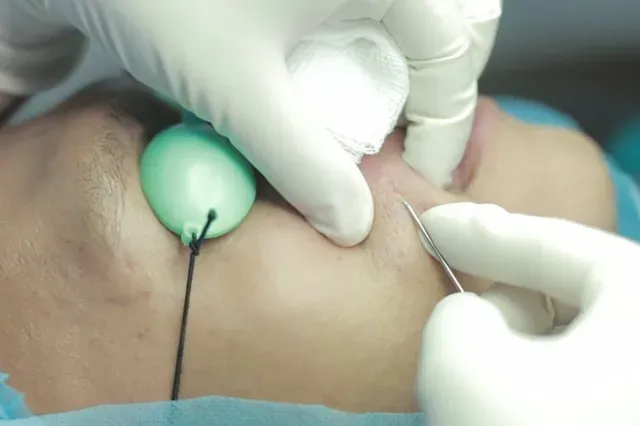
Subcision (scar release)
A specialised needle is passed parallel under the skin, brought beneath the scar floor, and used to cut the fibrous bands tethering it. Wherever a band releases, the surface lifts, and the small space this opens fills with new connective tissue over the following weeks. That regeneration, not the cut itself, is what makes the scar shallower. Usually 1–3 sessions, almost always paired with PRP or laser afterwards. You are numbed first, so the sensation is pressure rather than sharp pain; expect mild bruising for 3–5 days. Cost: 500,000đ–2,900,000đ by severity.

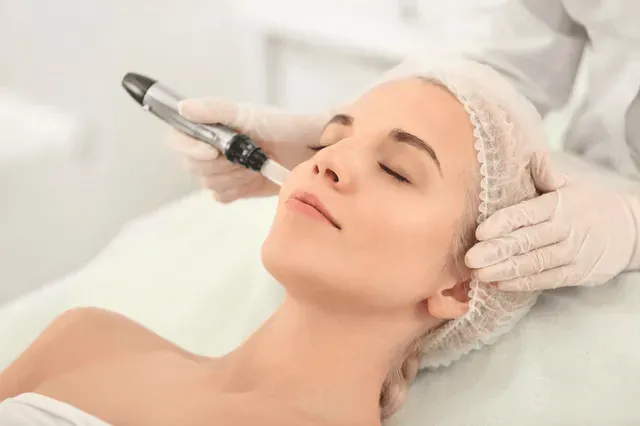
Microneedling / RF microneedling
Thousands of fine needles create controlled micro-injuries into the dermis. The skin reads them as a repair signal: fibroblasts reactivate and weave new collagen across the whole treated field rather than one scar at a time. RF microneedling adds radiofrequency heat at dermal depth, contracting existing collagen while driving stronger new production. Cost: from 890,000đ for one area up to 5,900,000đ full face; RF microneedling from 2,800,000đ.
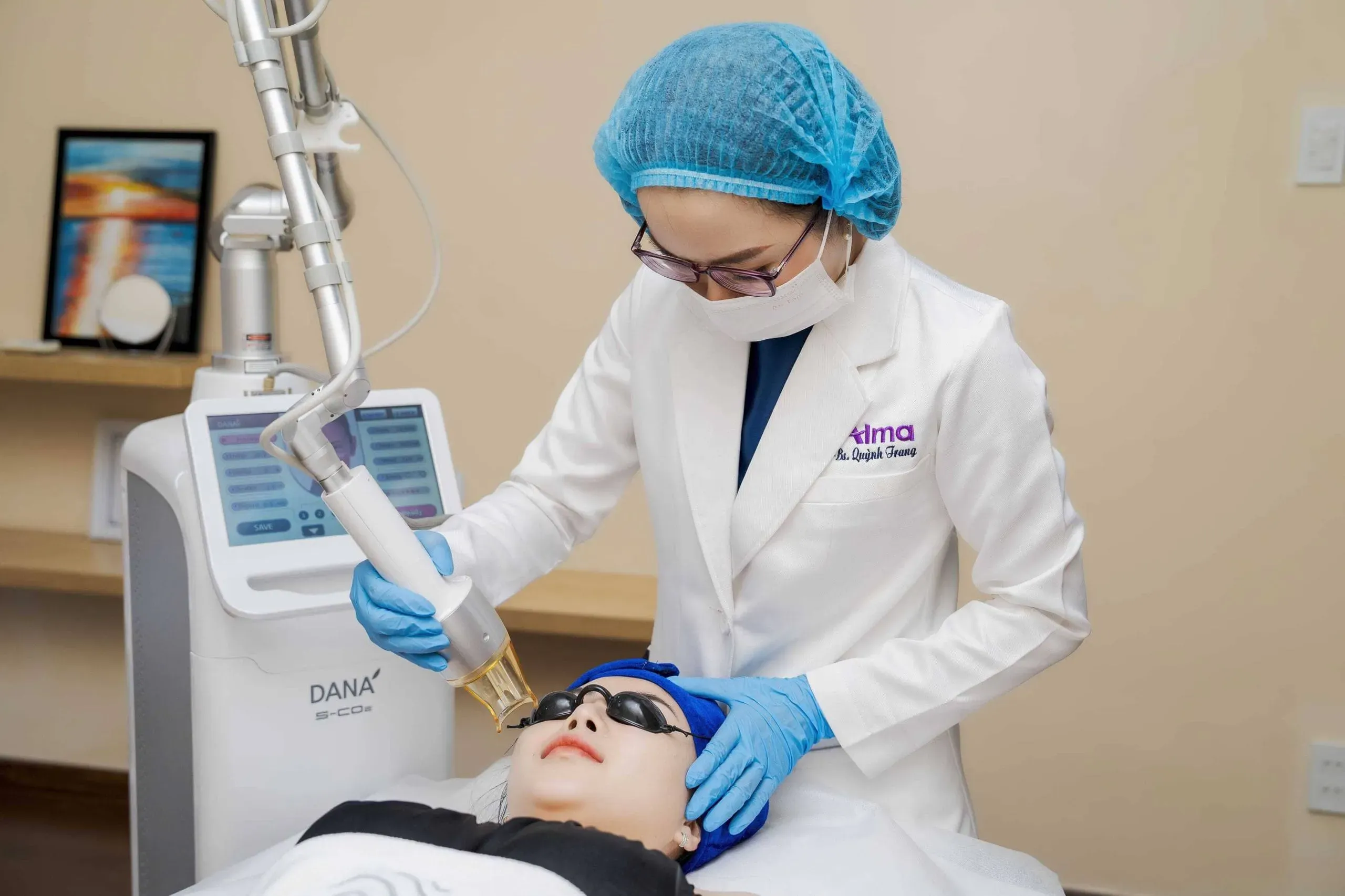
Fractional CO2 / Erbium laser
The beam is split into thousands of microscopic columns that vaporise tissue vertically and leave healthy skin standing between them. That untreated skin is the cell reservoir that heals the area quickly, while every treated column stimulates collagen. Course of 2–4 sessions spaced 4–8 weeks apart; the skin forms a fine grid of light scabbing that sheds in 7–10 days, so plan your calendar around it. Cost: 1,500,000đ–3,500,000đ per scar area, 4,900,000đ–7,800,000đ full face. Where a gentler pass suits better, your dermatologist may choose Erbium to refine scar edges at 700,000đ–1,500,000đ
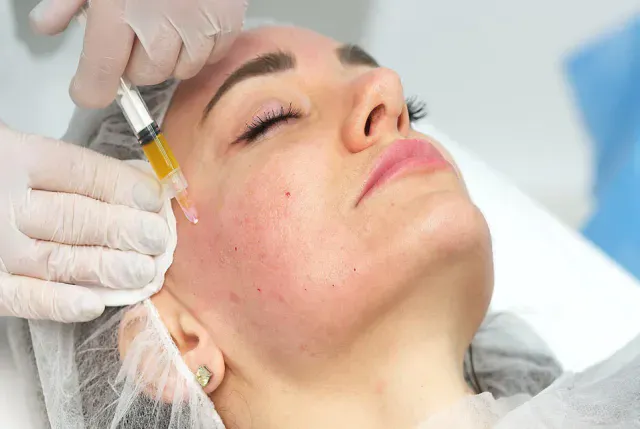
PRP (platelet-rich plasma)
A small volume of your own blood is drawn and spun to concentrate the platelets, then returned to the area just treated. Platelets store the body's growth factors; released while the skin is actively healing, they shorten the inflammatory phase and push regeneration harder. PRP does not fill a scar by itself - it improves the result of what subcision, laser or microneedling has already started. Cost: 2,900,000đ–4,900,000đ depending on the procedure it accompanies.

Scar mesotherapy
Very small amounts of a restorative, hydrating solution are micro-injected into the dermis around the scarred area, spread across many points rather than concentrated in one. The aim is not to injure and rebuild, as laser does, but to feed: better hydration, thickness and elasticity, so the more aggressive sessions land on healthy tissue and heal faster. 950,000đ per 5cm² area, 1,900,000đ–4,900,000đ full face by coverage.
Why choose this treatment
Treatments & pricing
100% of treatments are performed by dermatology specialists. Prices do not include 8% VAT. Contact us for a direct assessment and an exact quote based on your skin, severity and target area.
| Treatment | Price |
|---|---|
TCA CROSS for ice-pick scars and enlarged pores | 500.000 - 1.500.000 VND |
Scar mesotherapy / scar recovery, 5cm² area | 950.000 VND |
Subcision, mild to severe, releasing contracted scar tissue | 500.000 - 2.900.000 VND |
Subcision to stimulate atrophic scar filling | 3.900.000 VND |
Subcision for widespread atrophic scar filling | 5.900.000 VND |
Microneedling for scar resurfacing and filling (area to full face) | 890.000 - 5.900.000 VND |
RF microneedling to support scar remodeling and skin firmness | from 2.800.000 VND |
Erbium laser for scar base refinement and edge smoothing | 700.000 - 1.500.000 VND |
Fractional CO2 laser, scar area | 1.500.000 - 3.500.000 VND |
Fractional CO2, full face — resurfacing, atrophic scar filling, pore reduction | 4.900.000 - 7.800.000 VND |
PRP (platelet-rich plasma) — collagen stimulation, faster scar filling | 2.900.000 - 4.900.000 VND |
Mesotherapy for scars — recovery and collagen stimulation, full face | 1.900.000 - 4.900.000 VND |
8 steps, clinically led
Step 1: Exam & scar assessment
Your dermatologist reads the skin under raking light and stretches each area to separate tethered scarring from wall damage, recording scar type and scar age region by region.
Step 2: Personalized treatment planning
From that scar map, your dermatologist selects the techniques, sequences the sessions, estimates how many you need, and quotes the full protocol cost before you decide.
Step 3: Skin cleansing
Makeup removal and deep cleansing of the treatment area, clearing oil and residue to reduce the risk of irritation once micro-injuries are created.
Step 4: Numbing
Topical anaesthetic is left on for its full working time - the step that decides how comfortable the session feels, particularly for TCA CROSS and subcision, so it is never cut short.
Step 5: Numbing removal & disinfection
The anaesthetic is wiped off, the area disinfected, and the scar map checked against the plan one last time before any instrument touches the skin.
Step 6: Treatment per your protocol
Your dermatologist performs the planned technique in each area, often two in one visit — for example subcision across the cheeks followed by TCA CROSS on individual ice pick scars.
Step 7: Aftercare instructions & online care group
You are talked through aftercare day by day for the crusting phase, then added to a private chat group where you can send photos and ask questions between visits.
Step 8: Scheduled follow-up
Standardized photos are compared, response assessed area by area, and the next session adjusted if one group of scars is moving more slowly than expected. These eight steps are part of WeDo's clinical treatment journey, which applies to every service we offer.
Make results last
Sun protection is the single most important thing you do afterwards. For the first 2 days use physical cover – a mask, dark thick clothing —-then apply SPF 30+ consistently from day 2 onward, indoors included, because freshly resurfaced skin pigments easily.
Do not pick at crusts or peeling skin after TCA CROSS or laser. That crust is the biological dressing your body built over new tissue; lifting it early reopens an unhealed wound and is exactly how you end up with a worse mark than the original scar. Let it shed on its own over 5–10 days.
Keep skincare gentle while you recover, and pause chemical exfoliants and strong actives until your dermatologist clears you to restart them. Healing skin reacts very differently from everyday skin.
Follow the hydration and barrier-repair instructions you are given, and keep your follow-up appointments: intervals between sessions are set by the collagen remodelling cycle, so moving them arbitrarily distorts the whole course.
Still have questions?
Do acne scars go away on their own?
How much does acne scar treatment cost in Vietnam?
What is subcision?
Is TCA CROSS effective for ice-pick scars?
Does RF microneedling work for acne scars?
How long until I see results?
Shine with confidence in clear, radiant skin
Start your skin story.
Schedule your diagnostic session. Our doctors will map your unique skin biology to build a lifelong protocol for health.