What is RF Needling for acne scars? How does it work? RF Needling is an important component of multimodal treatment protocols for atrophic acne scars. Let’s take a closer look at RF Needling in this article.
Quick answer: RF Needling (fractional RF) is a minimally invasive treatment that uses microneedles to deliver radiofrequency (RF) energy into the dermis, promoting collagen and elastin production while improving skin texture, firmness, and the appearance of atrophic acne scars.
How does RF Needling work?
RF Needling uses microneedles to deliver RF energy into the skin, generating controlled thermal effects in the dermis. The RF energy stimulates collagen remodeling and neocollagenesis, while the microneedles create controlled micro-injuries that trigger the skin’s natural healing response. Together, these effects promote skin regeneration and improve firmness, helping reduce the appearance of atrophic acne scars.
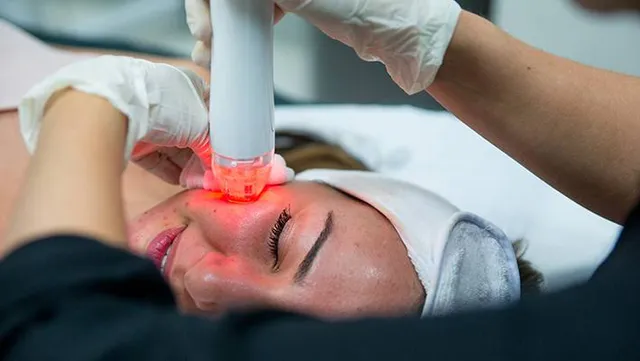
Beyond skin rejuvenation and scar treatment, RF Needling is also used to address other skin concerns, including:
- Inflammatory and comedonal acne: Reduces sebaceous gland activity, helps clear the hair follicles, and improves the skin environment, supporting the treatment of inflammatory acne, whiteheads, and comedonal acne while helping prevent recurrence.
- Chronic skin redness and inflammation: Through its anti-inflammatory and soothing effects, RF Needling may help reduce persistent redness associated with conditions such as atopic dermatitis and rosacea.
- Syringomas and milia: RF Needling can precisely target areas affected by syringomas or milia, helping flatten and gradually reduce these lesions without surgery.
- Seborrhea: RF Needling targets the sebaceous glands in the dermis to reduce sebum production and support effective oil control, particularly in oily or acne-prone skin.
Comparing RF Needling with other acne scar treatments
RF Needling – microneedling
| Criteria | Traditional Microneedling | RF Needling |
|---|---|---|
| Mechanism of action | Creates controlled micro-injuries in the skin using fine needles | Combines microneedling with radiofrequency (RF) energy |
| Thermal effect | Does not use RF energy | RF energy is delivered through the needles, generating heat within the targeted skin layers |
| Depth of action | Primarily affects the superficial skin layers | Can reach deeper skin layers through controlled needle penetration and RF energy |
| Collagen & elastin stimulation | Stimulates collagen production through the skin’s natural wound-healing response | Stimulates collagen production through both mechanical micro-injuries and RF-induced thermal energy |
| Deep wrinkles | Limited effect on deeper wrinkles | May be used to address deeper wrinkles by delivering energy into deeper skin layers |
| Scar treatment | Suitable for certain types of acne scars | May provide enhanced scar improvement by combining controlled needle penetration with RF energy |
| Customizability | Primarily adjusted by needle depth | Both needle depth and RF energy can be adjusted according to the treatment area and skin condition |
| Treatment versatility | Suitable for basic skin resurfacing and collagen stimulation | Offers greater flexibility when deeper dermal remodeling is required |
RF Needling – Laser CO2

| Criteria | RF Needling | Fractional CO₂ Laser |
|---|---|---|
| Mechanism of action | Delivers RF energy through microneedles, generating controlled thermal energy within the targeted tissue | Uses fractional CO₂ laser energy to create microscopic thermal columns in the skin |
| Depth of action | Needle penetration depth and RF energy can be adjusted according to the scar and treatment goals | Treatment depth is determined by the selected laser parameters |
| Effect on tissue | Generates controlled thermal energy within the dermis, stimulating collagen remodeling | Creates microscopic thermal injuries that stimulate skin regeneration and collagen production |
| Treatment control | Allows control of needle depth and RF energy | Allows adjustment of energy, treatment density, and penetration depth |
| Effect on the skin surface | Generally causes less direct surface ablation | Produces more pronounced effects on the skin surface due to fractional laser ablation |
| Scar treatment | May be suitable when deeper dermal remodeling and collagen stimulation are required | May be suitable for skin resurfacing and improving scar texture and surface irregularities |
| Invasiveness | Minimally invasive, combining needle penetration with RF energy | Fractional laser treatment creates controlled microscopic thermal injuries in the skin |
| Treatment area | Allows precise control over needle placement and treatment depth | Delivers laser energy across the selected treatment area according to the chosen density and parameters |
| Post-treatment response | Generally causes less superficial skin disruption | May cause more noticeable erythema, swelling, and a longer recovery period |
| Treatment selection | May be considered when deeper tissue remodeling and controlled thermal stimulation are desired | May be considered when skin resurfacing and improvement of scar texture are the primary goals |
Advantages and disadvantages of RF Needling for acne scars
Every acne scar treatment has its own advantages and limitations, and RF Needling is no exception. A dermatologist will assess each case individually and may combine RF Needling with other treatments to maximize its benefits while addressing its limitations.
Advantages
- Versatile applications: RF Needling can be used for various skin concerns, including skin rejuvenation, enlarged pores, acne and acne scars.
- Favorable safety profile: When performed using appropriate technique and parameters, RF Needling is minimally invasive and generally well tolerated across different skin tones.
- Short recovery time: Because RF Needling does not remove the skin surface in the same way as ablative laser resurfacing, recovery is generally relatively short. Temporary redness, swelling or discomfort may still occur.
- Gradual improvement: Collagen remodeling occurs progressively after treatment, so improvements in skin texture and acne scars may become more noticeable over time. The number of sessions required varies depending on the individual’s skin condition and treatment response.
Disadvantages
- Temporary discomfort: Some patients may experience mild pain, warmth, redness or stinging after treatment. These effects are generally temporary.
- Requires appropriate aftercare: Proper post-treatment skin care is important to support recovery and reduce the risk of complications. Specific instructions should be provided by the treating dermatologist.
- Risk of post-inflammatory hyperpigmentation (PIH): Although RF Needling generally has a favorable pigmentary safety profile, PIH can still occur, particularly when inappropriate treatment parameters or inadequate aftercare are involved.
Conclusion
RF Needling can be an effective option for skin rejuvenation and atrophic acne scars. However, it should not be expected to completely correct acne scars on its own. Acne scar treatment often requires a multimodal approach based on scar type, depth, skin condition and treatment response. A dermatologist should assess the skin and determine the appropriate treatment combination and parameters.
Follow the Knowledge section for more useful dermatology information.
Frequently asked questions about RF Needling
1. Can RF Needling really treat atrophic acne scars?
Yes. RF Needling combines controlled microneedling with radiofrequency energy to stimulate collagen remodeling and improve the appearance of acne scars. The American Academy of Dermatology notes that radiofrequency microneedling can make acne scars less noticeable, while a 2025 systematic review found that fractional RF microneedling may be effective as a standalone treatment for acne scars.
However, RF Needling does not completely eliminate acne scars after a single treatment. Results vary depending on scar type, severity, skin condition and the treatment protocol.
2. Which types of atrophic acne scars are suitable for RF Needling?
RF Needling can be used to improve atrophic acne scars, including ice pick, boxcar and rolling scars. However, treatment should be tailored to the specific scar type. Rolling scars with fibrous bands tethering the scar to deeper tissue may require subcision to release these bands, potentially followed by or combined with other treatments.
3. Can RF Needling cause post-treatment hyperpigmentation?
Post-inflammatory hyperpigmentation (PIH) remains a possible adverse effect, although RF Needling generally has a favorable pigmentary safety profile. A 2026 randomized split-face trial comparing RF Needling with fractional CO₂ laser reported fewer PIH events with RF Needling.
This does not mean that RF Needling is completely free of pigmentation risk. Treatment parameters, skin type, individual response and post-treatment care can all affect the risk of PIH.
4. Does RF Needling require a long recovery period?
Usually, RF Needling has a relatively short recovery period, but it should not be considered completely downtime-free. Temporary redness, swelling, pain or superficial crusting may occur. In a 2026 randomized split-face trial, RF Needling was associated with shorter durations of erythema, pain, swelling and crust detachment than fractional CO₂ laser.
5. Can RF Needling completely replace fractional CO₂ laser?
Not necessarily. RF Needling and fractional CO₂ laser work through different mechanisms and have different recovery profiles. Both have been shown to improve atrophic acne scars, but study findings do not establish one treatment as universally superior.
For example, a 2026 randomized split-face trial found significant improvement with both RF Needling and fractional CO₂ laser, with no significant difference in scar improvement between the two groups. RF Needling was associated with a shorter recovery period and fewer PIH events in that study.
Therefore, the choice between RF Needling, fractional CO₂ laser or a combination of treatments should be based on scar type, scar depth, skin condition, PIH risk and the patient’s recovery needs.
Related articles: