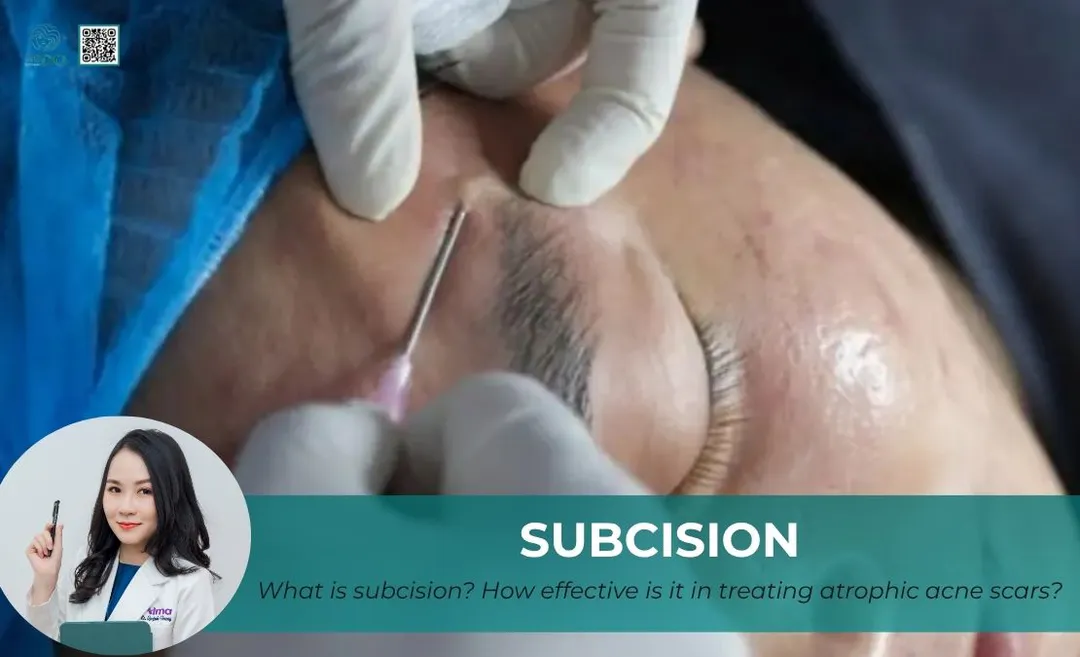
What is TCA Cross? How is the procedure performed, and what role does it play in the treatment of acne scars? This article explores the mechanism, benefits, advantages, and limitations of TCA Cross.
Quick answer: TCA Cross (TCA application) is a widely used method for acne scar treatment, using high-concentration trichloroacetic acid (TCA) to stimulate scar remodeling and improve depressed scar surfaces under the supervision and care of a dermatologist.
Mechanism and benefits of TCA Cross
A dermatologist uses a wooden applicator to apply high-concentration trichloroacetic acid (50–100%) directly to the base of the scar, causing controlled protein coagulation and triggering a localized inflammatory response. This response stimulates collagen production as part of the healing process, helping raise the depressed scar base. High-concentration trichloroacetic acid causes significant exfoliation and therefore requires professional application to minimize potential risks and complications. When used at the appropriate concentration and with proper technique, TCA Cross promotes rapid healing without affecting the surrounding tissue.
TCA Cross can be combined with other treatments, such as laser therapy, microneedling, and mesotherapy, to enhance acne scar treatment outcomes.
Advantages & limitations of TCA Cross

TCA Cross is suitable for ice pick scars and boxcar scars. The method has the following advantages and limitations:
Advantages:
- Short healing time.
- Can be used on various skin types with appropriate concentration adjustment.
- Lower cost than other treatment methods such as laser therapy.
- Can treat ice pick scars, which are among the more challenging types of acne scars.
Limitations:
TCA application may cause a stinging or burning sensation. This usually subsides quickly and is not overly intense. However, this is only the case when TCA Cross is applied at the appropriate concentration and precisely to the scar base. If performed incorrectly, complications can be significantly more severe, including:
- Irritation and redness in the treated area.
- Infection.
- Injury to mucosal surfaces, ulceration, and potential scarring if TCA remains on areas such as the lips, nostrils, conjunctiva, or cornea.
- Temporary post-inflammatory hyperpigmentation or permanent hypopigmentation.
- Connecting adjacent scars and creating a larger scar.
To minimize these risks, you should visit a clinic/hospital for examination, treatment planning, and care by a qualified dermatologist. The dermatologist will assess your skin condition and scar severity to determine the appropriate TCA concentration and any complementary treatments, while closely monitoring the skin’s response after TCA application to make timely adjustments.
Factors affecting the scar-filling effect of TCA Cross
The effectiveness of TCA application depends on several factors:
- Scar severity (whether the scars are new or old, as well as their depth and width)
- The patient’s skin condition
- Complementary treatments used
- Selected TCA concentration
- The practitioner’s expertise
- Post-treatment skin care
Post-treatment skin care after TCA application
After TCA application, the dermatologist will provide specific skin care instructions for each stage, prescribe oral medications and recommend topical products as needed. In general, you should follow these key principles:
- Follow the dermatologist’s instructions and prescribed medications.
- Avoid sun exposure and always use sunscreen with SPF 50 or higher.
- Do not pick or peel the scabs; allow them to shed naturally.
- Wash your face with a gentle cleanser.
There are also several additional precautions to keep in mind:
- For 3 days after treatment: avoid spas, saunas, sunbathing, and exfoliation.
- Do not use products containing retinoids, tretinoin, or acne treatments containing Retin-A, doxycycline, AHAs, etc.
- Avoid activities that increase body temperature and cause sweating during the first 2–3 days.
- Limit stimulants and alcohol-containing products such as beer, alcoholic beverages, and tobacco.
- Drink 1.5–2 liters of water per day.
- Maintain a healthy diet rich in vegetables and fruits containing vitamin C and fiber.
Conclusion
TCA Cross is widely used to treat ice pick scars and boxcar scars. Because the procedure involves high-concentration trichloroacetic acid, you should never perform it at home and should seek treatment at a reputable medical facility for appropriate care.
Follow the Knowledge section for more useful information!
FAQ
1. What types of acne scars are suitable for TCA Cross?
TCA Cross is particularly suitable for ice pick scars and may also be used for some deep boxcar scars. It is less suitable for extensive rolling scars, so accurate scar classification is essential before treatment.
2. Can TCA Cross completely fill depressed acne scars?
No. TCA Cross stimulates collagen remodeling at the base of the scar, helping to narrow and gradually improve its depth over time. The degree of improvement depends on the type, depth, and number of scars; many cases require combination treatments to address different scar types.
3. Can TCA Cross cause darkening or peeling of the skin?
It can. Redness, scab formation/mild peeling, and post-inflammatory pigmentary changes may occur after treatment, with post-inflammatory hyperpigmentation (PIH) being one of the commonly reported adverse effects. Therefore, the TCA concentration, application technique, and post-treatment care should be appropriately tailored to each skin type.
4. How much does TCA Cross treatment cost?
The cost depends on the number of scars and the treatment area. At Wedo Skin Clinic, the current published price for TCA Cross is 500,000–1,500,000 VND per session.
5. Where can TCA Cross be performed?
Wedo Skin Clinic in Ho Chi Minh City is one option, offering TCA application for acne scar treatment with dermatologist examination and scar assessment before developing an individualized treatment plan.
Related articles: