

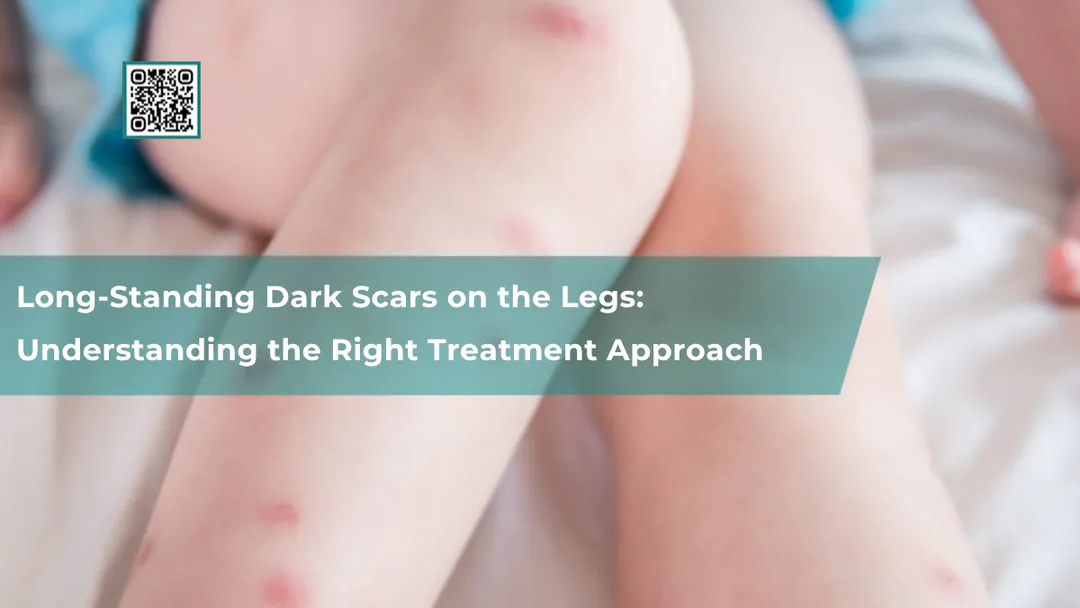
To improve long-standing dark scars on the legs, the first step is to determine whether the marks are simply areas of discoloration or scars involving changes in skin texture. A flat brown spot left after an insect bite may require a different approach from an indented scar caused by an injury. In some cases, both scarring and hyperpigmentation may be present in the same area.
Therefore, before choosing a topical product or laser treatment, consider the primary goal: do you want to lighten the discoloration, improve the skin’s texture, or address both concerns?
Distinguishing Dark Marks from True Scars
In everyday conversation, people often use the term “dark scars” to describe any marks that remain after skin damage. However, this can lead to unrealistic expectations that a single cream will improve both discoloration and changes in skin texture, such as indentations or raised areas.
Post-inflammatory hyperpigmentation (PIH) typically develops where the skin has previously experienced inflammation or injury. The discoloration can range from light brown to dark brown. In contrast, when the skin shows noticeable changes in elevation, indentation, or firmness, the presence of scar tissue may also need to be assessed. [1]
You can observe your skin under natural lighting and note which areas show only discoloration and which have raised or indented textures. This information can help you prepare for a consultation, but it is not a substitute for professional diagnosis. A photograph taken from a distance may not clearly capture both characteristics.
If you want to understand whether dark marks can fade naturally, you can also read our article on whether dark scars fade on their own. For marks on the legs, the original cause of inflammation and the specific characteristics of the affected area should also be considered.
Why Do New Dark Marks Keep Appearing on the Legs?
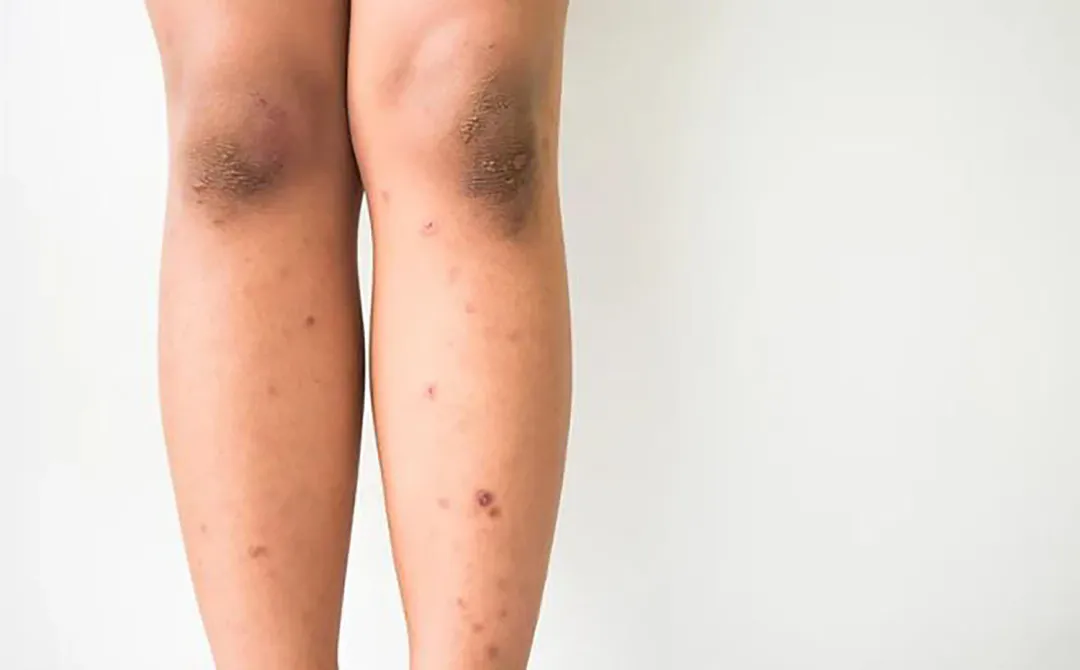
If new spots appear before older marks have faded, it is worth investigating whether the underlying cause of skin irritation or injury is still present. Pay attention to where new spots develop, whether they itch, and whether they are associated with shaving, physical activity, or skincare products.
For example, folliculitis can cause red bumps or pustules around hair follicles, and the legs are one area where it may occur. Possible causes include infection, irritation, and blocked follicles. Not every case requires the same medication or treatment. [2]
If new inflammatory bumps continue to appear, the priority should be identifying and managing the underlying condition. A treatment plan that focuses only on lightening existing marks may not meet expectations if new lesions continue to develop.
Avoid scratching, picking scabs, or squeezing inflamed bumps. If itching keeps recurring, seek advice on addressing its underlying cause rather than enduring the discomfort until scratching damages the skin.
Not All Dark Patches on the Legs Are Caused by Post-Inflammatory Hyperpigmentation
Darkened skin around the ankles accompanied by swelling, a feeling of heaviness in the legs, or prominent veins should be evaluated separately. Chronic venous insufficiency can cause skin discoloration due to hemosiderin deposition, a pigment associated with the breakdown of red blood cells. This mechanism differs from the post-inflammatory hyperpigmentation that may follow acne-like lesions or other skin inflammation. [3]
Important information to share during a medical consultation includes when your legs tend to swell, whether the symptoms change after prolonged standing, and how the discolored areas have spread over time. If you have ulcers, pain, or fluid discharge, do not start with skin-lightening products.
These signs are not enough to confirm a vascular condition on their own. However, they are reasons for a healthcare professional to consider further evaluation before recommending cosmetic treatment.
Skincare for Healed Skin
For areas where the skin has fully healed and there is no active inflammation, skincare should focus on preventing irritation and protecting exposed areas of the legs from sunlight. Wear suitable protective clothing and apply sunscreen to exposed skin. Sun protection will not make dark marks disappear immediately, but it can help reduce factors that contribute to further darkening. [1]
Maintain a consistent skincare routine so that you can monitor your skin’s response more easily. Avoid adding multiple products simply because the marks have persisted for a long time. If you have been prescribed medication, ask about the application area, recommended duration, and what to do if irritation or peeling occurs. Do not switch from spot treatment to applying a product over the entire lower leg without appropriate guidance.
You can keep a simple record of when you start each product, where you apply it, and any reactions that occur. When changing your skincare routine, take photographs under consistent lighting conditions to avoid misjudging progress simply because one image appears brighter or darker than another.
Can Topical Products and Laser Treatment Remove Long-Standing Dark Scars?

It is important to distinguish between two treatment goals. Pigmentation treatments aim to reduce differences in skin color, while scar treatments focus on improving structural changes in the skin. If a mark involves both discoloration and scarring, a staged treatment plan may be necessary.
For actual scars, laser treatment may help make them less noticeable, but complete removal cannot be guaranteed. The appropriate approach depends on the type of scar, skin tone, and the individual’s health. Results also take time to assess, so you should not draw conclusions immediately after a procedure, when the treated area may still be swollen or discolored. [4]
Before committing to a treatment course, consider asking the following questions:
- Is the primary goal of the treatment to improve pigmentation or scar texture?
- Why is this treatment suitable for the affected area on my legs?
- When will the results be evaluated, and under what circumstances might the treatment plan need to change?
- What precautions should I take if my work involves frequent sun exposure or prolonged standing?
- Does the quoted price include follow-up appointments and post-treatment care?
A quotation that simply states “dark spot removal” does not fully explain the scope of treatment. Before comparing clinics, make sure you understand the treatment area, intended outcomes, and any associated conditions or additional costs.
When Should You Seek Professional Evaluation?
Consider consulting a dermatologist if the dark marks have persisted for a long time and concern you, if you are unsure whether they are scars or pigmentation, or if multiple skincare products have failed to improve their appearance. Areas with recurring inflammation, leg swelling, ulcers, or unusual changes should be evaluated to identify the underlying cause first.
If you would like a consultation, you can contact WeDo Skin Clinic and prepare photographs showing how the affected areas have changed over time, along with a list of products you have used. Clearly explaining whether your goal is to lighten pigmentation, improve scar texture, or address both concerns can help make the consultation more focused.
Frequently Asked Questions
Can long-standing dark scars on the legs still be improved?
Improvement may be possible, but the type of skin change must first be identified. The length of time a mark has been present alone is not enough to predict the outcome accurately.
Can scar treatment creams eliminate all dark marks?
You should not expect every product to work for every type of mark. Check which skin concern the product is designed to address, and consult a dermatologist if you cannot distinguish between pigmentation and scarring.
What is the fastest way to treat dark scars on the legs?
There is no single fastest method that works for everyone. Treatment decisions should be based on an appropriate assessment, the desired outcome, and the ability to follow post-treatment care instructions.
Should I use an abrasive scrub or strong exfoliant to remove dark marks?
Avoid aggressive scrubbing on areas with existing skin damage. If your skin becomes irritated, scratched, or inflamed, stop the irritating practice and reassess your skincare routine.
Can I start a dark scar treatment course if I still have pustules on my legs?
It is advisable to have the inflamed bumps evaluated first. Treating the underlying cause of new lesions and addressing existing dark marks may need to be coordinated in the appropriate order.
References
[1] DermNet. Post-inflammatory hyperpigmentation.
https://dermnetnz.org/topics/postinflammatory-hyperpigmentation
[2] DermNet. Folliculitis.
https://dermnetnz.org/topics/folliculitis
[3] DermNet. Venous insufficiency.
https://dermnetnz.org/topics/venous-insufficiency
[4] American Academy of Dermatology. 10 Things to Know Before Having Laser Treatment for Your Scar.
https://www.aad.org/public/cosmetic/scars-stretch-marks/laser-treatment-scar


