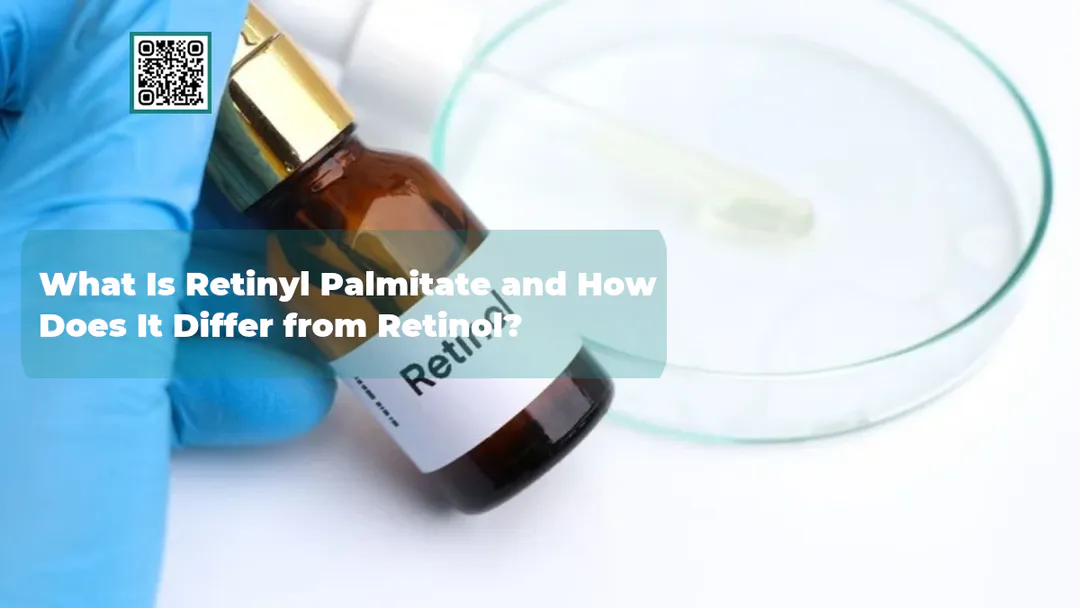
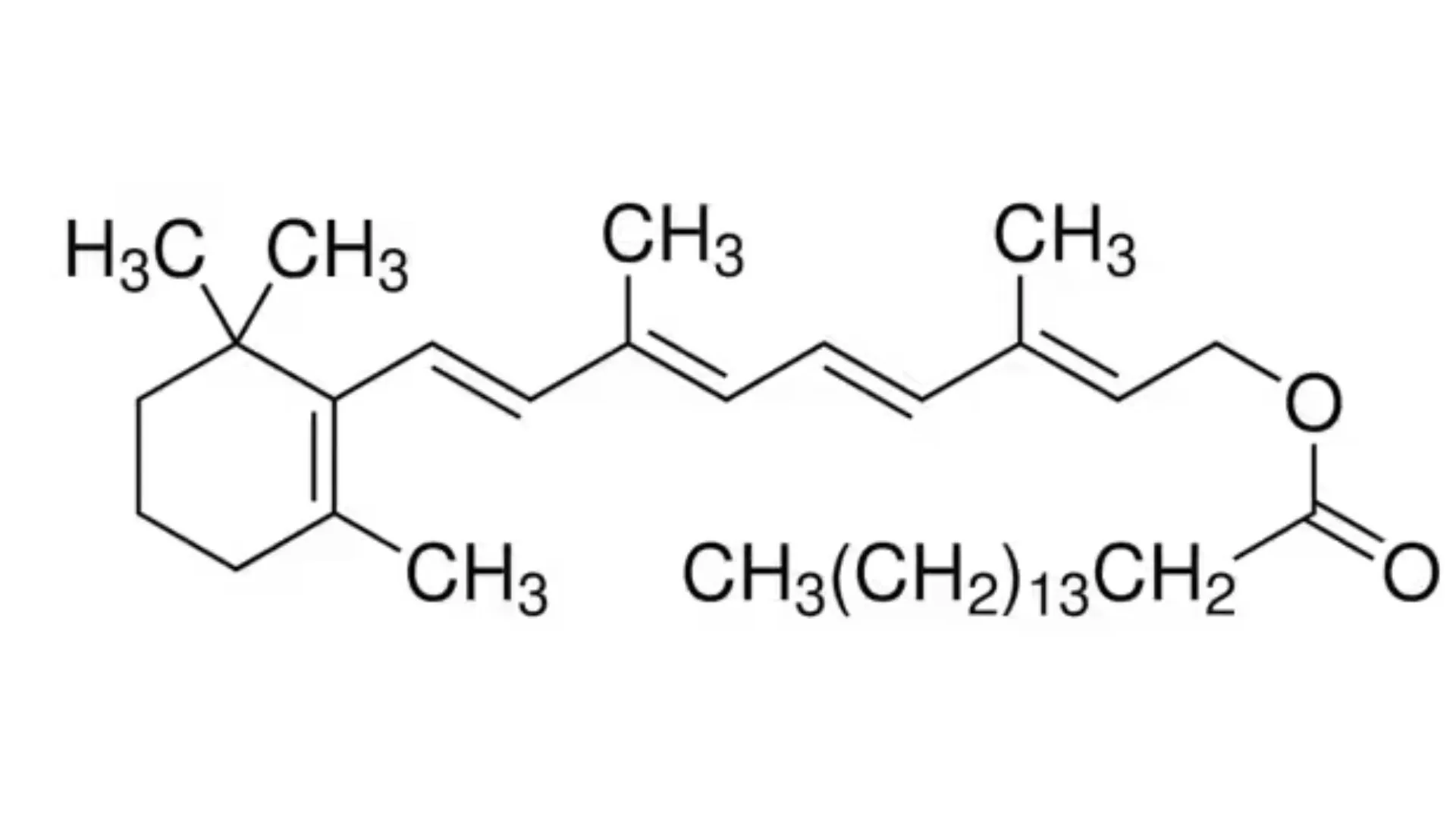
Retinyl palmitate is an ester of retinol and a vitamin A derivative commonly found in skincare products. It is related to retinol through the skin’s metabolic processes, but the two are not the same active ingredient and should not be compared directly based solely on the concentrations listed on product labels. [1]
If you are choosing an anti-aging product, consider its formulation, intended use, and supporting evidence. The presence of retinyl palmitate in an ingredient list is not enough to conclude that a product will treat acne, eliminate wrinkles, or be suitable for every sensitive skin type.
Where Retinyl Palmitate Fits Within the Vitamin A Family
Retinoid is a broad term for substances related to vitamin A. Retinol, retinal, and tretinoin are commonly encountered names, but each has distinct characteristics and uses. The American Academy of Dermatology (AAD) clearly distinguishes retinol products from prescription retinoids used for specific indications. [2]
The conversion pathway of retinyl palmitate in the skin can be described in the following sequence: retinyl palmitate, retinol, retinal, and then retinoic acid. Tretinoin is retinoic acid. [1]
This pathway helps explain why not all vitamin A products should be considered equivalent. However, it is not a formula for calculating how much retinol or tretinoin a particular concentration of retinyl palmitate would equal in human skin.
What Should You Consider When Comparing Retinyl Palmitate with Retinol?
Retinyl palmitate requires additional metabolic steps compared with retinol. However, its actual performance also depends on the formulation, stability, ability to deliver the active ingredient into the skin, and other ingredients used alongside it. [1]
Therefore, a product with a higher stated concentration does not necessarily produce stronger results. You should also distinguish the concentration of an individual active ingredient from the percentage of a vitamin A complex containing multiple ingredients.
When reading a product label, check the following:
- Whether the main active ingredient is retinyl palmitate, retinol, or a combination of ingredients.
- Which substance the stated concentration refers to, if the manufacturer provides this information.
- Whether the product is described as a general skincare product or as one intended to support a specific skin concern.
- The recommended frequency of use, application areas, and storage instructions.
If the information is unclear, do not attempt to convert the concentration yourself or use more product to achieve an assumed equivalent effect to another formula.
How Should You Interpret the Evidence for Anti-Aging Benefits?

A 2023 study on retinyl palmitate investigated mechanisms associated with UVB-induced skin photoaging using cell and animal models. Such findings contribute valuable scientific knowledge, but they do not directly demonstrate that a particular bottle of skincare product will reduce wrinkles in people after a specific number of weeks. [1]
A clinical trial published in 2022 compared tretinoin with a combination formulation containing retinol, retinyl acetate, and retinyl palmitate over 24 weeks. Because the study formulation contained several vitamin A derivatives, the overall results cannot be attributed to retinyl palmitate alone. [3]
When you encounter claims that a product is “clinically proven,” check whether the research evaluated an individual ingredient or the finished product, whether the ingredient was used alone or in combination, and which outcomes were measured. An improvement in a laboratory measurement is different from a visible change in the skin of people using the product.
For a product you are considering, useful questions include whether data are available for that specific formulation and whether the expected results are realistic for your skin concern. A product does not necessarily need its own clinical trial to be worth considering, but you should avoid expectations that go beyond the available evidence.
Can Retinyl Palmitate Replace Acne Medication?
You should not replace a prescribed medication with a cosmetic product containing retinyl palmitate simply because both are related to vitamin A. Retinoids used to treat acne have their own indications and supporting evidence. [4]
If your primary concern is inflammatory acne, recurring breakouts, or the risk of scarring, discuss your treatment plan with a healthcare professional first. A skincare product may have a supportive role in your routine, but it is important to understand the specific purpose it is intended to serve.
Similarly, if you are being treated for melasma or hyperpigmentation, do not add a vitamin A product on your own in an attempt to accelerate results. Introducing several active ingredients at once can make it difficult to identify the cause if a skin reaction occurs.
Is Retinyl Palmitate Suitable for Sensitive Skin?
You cannot guarantee that a formulation will be suitable simply because it contains retinyl palmitate. Your skin may react to the active ingredient or to other components in the product. If your skin is noticeably red, peeling, irritated, or inflamed, have it assessed before starting a new product. [2][4]
If a skincare professional recommends using the product, follow the instructions for that specific formulation and monitor your skin’s tolerance. Keeping the rest of your routine stable during the initial period can help you determine whether the new product causes discomfort.
Persistent burning or extensive peeling should not be considered necessary signs that a product is working. If your reaction becomes more severe, stop using the suspected product and consult a dermatologist rather than continuing to increase the frequency of application.
Precautions During Pregnancy and When Combining Skincare Products
The AAD recommends avoiding retinoids during pregnancy. If you are pregnant or planning to become pregnant, do not choose retinyl palmitate on your own simply because it is advertised as “mild.” Show your healthcare professional the complete ingredient list so they can help you select an appropriate option. [5]
If you already use retinol, tretinoin, or exfoliating products, review your entire skincare routine before adding another vitamin A derivative. The goal is to create a routine that is easy to monitor and that your skin can tolerate, rather than simply accumulating more active ingredients.
Sun protection and moisturization should also be maintained according to your skin’s needs. Anti-aging products do not replace the need to protect your skin from everyday sun exposure.
Choosing a Product Based on Your Skin Concerns
If you are new to anti-aging skincare, start by identifying your main concern: dry skin, fine lines, uneven pigmentation, or acne. Each concern may require a different approach, and retinyl palmitate is not necessarily the best solution for all of them.
Read WeDo’s guide to safe anti-aging with retinol and tretinoin to learn more about using related active ingredients. During a consultation, bringing the product name and a photo of its label will be more helpful than simply saying that you use “vitamin A.”
Frequently Asked Questions
Is retinyl palmitate the same as retinol?
No. Retinyl palmitate is an ester of retinol. Although the two are related through the skin’s metabolic processes, they are not identical ingredients and should not be treated as interchangeable on product labels.
Can you compare retinyl palmitate concentrations with tretinoin?
You should not convert them directly. Differences in formulation, metabolism, and supporting evidence mean that a comparison based only on percentages does not provide a complete or meaningful assessment.
Is retinyl palmitate guaranteed not to cause irritation?
No. There is no such guarantee. The entire product formulation and the individual user’s skin response need to be considered.
How long does it take to see improvements?
There is no single timeline that applies to every formulation or skin concern. Consider the product’s available evidence, how it is used, and the assessment schedule agreed upon with your skincare professional.
Do you need to use retinol in addition to retinyl palmitate?
Not necessarily. Combining them should have a clear purpose and take skin tolerance into account. Avoid adding multiple products that serve essentially the same role without a well-considered plan.
References
[1] Shu P. et al. Efficacy and mechanism of retinyl palmitate against UVB induced skin photoaging. Frontiers in Pharmacology, 2023.
[2] American Academy of Dermatology. Retinoid or retinol.
[3] Chien AL. et al. Biomarkers of Tretinoin Precursors and Tretinoin Efficacy in Patients With Moderate to Severe Facial Photodamage: A Randomized Clinical Trial. JAMA Dermatology, 2022.
[4] DermNet. Topical retinoids.
[5] American Academy of Dermatology. Dermatologist-approved pregnancy skin care.