

Toner and rose water are not exactly the same thing. Toner is a category of skincare products typically used after cleansing. Rose water can refer to water derived from roses, but in everyday usage in Vietnam, the term is also commonly used to describe various toner products.
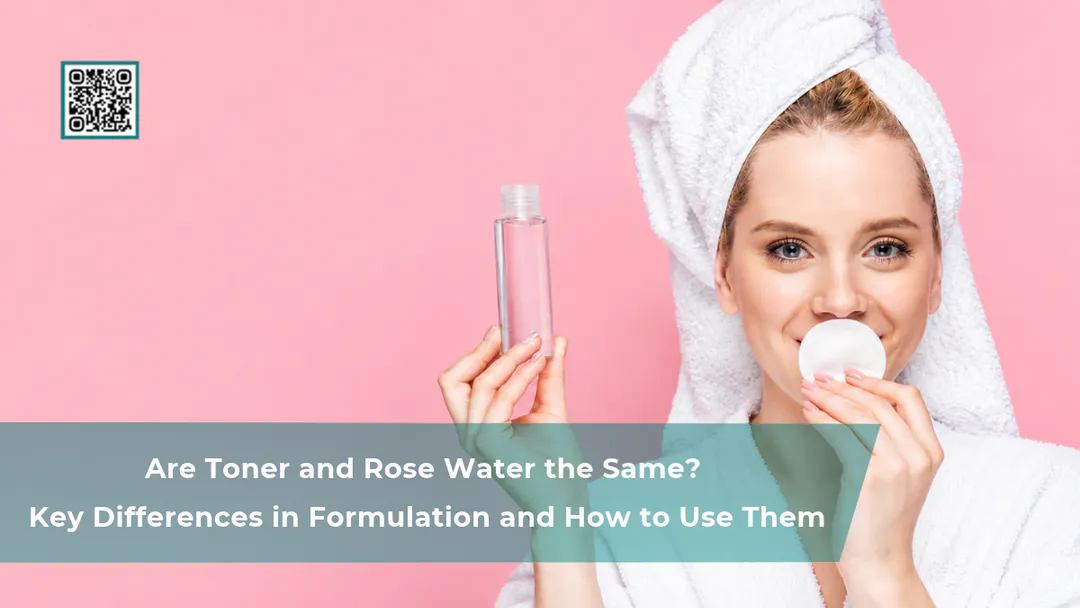
Therefore, to determine whether two products are different, you need to examine their ingredient lists and usage instructions. The name on the packaging alone is not enough to establish a product’s benefits, gentleness, or suitability for your skin.
What Is Toner Used For?
Toner is usually water-based and is applied between cleansing and moisturizing. Formulations vary widely: some products focus on hydration, while others contain exfoliating acids or ingredients designed to address specific skincare concerns. [1]
A toner containing glycerin is different from one containing salicylic acid, even though both have a lightweight, liquid texture. When choosing a product, start with the concern you want to address: tight, dry skin, a need for additional hydration, or the desire to incorporate an active ingredient into your skincare routine.
You do not need to look for a product that simultaneously promises to “balance,” “tighten pores,” “deep-cleanse,” and “repair” your skin simply because these claims appear together in an advertisement. Each benefit should be evaluated based on the complete formulation and how the product is used.
Rose Water Can Be an Ingredient or a Product Name
In its ingredient-related meaning, rose water is the water obtained through the distillation of roses. On an ingredient list, you may see the name Rosa Damascena Flower Water. The Cosmetic Ingredient Review (CIR) has published an assessment describing rose water ingredients and related rose-derived extracts. [2]
A toner may contain rose water, but it may also be formulated without it. Conversely, a product labeled “rose water” should still be evaluated based on its complete formulation, as it may contain preservatives, solvents, or other ingredients.
An easy way to distinguish products is to check three things: the product name, the INCI ingredient list, and the directions for use. If a product is labeled “rose water” but its instructions describe an exfoliating toner, you should use it according to the characteristics of its actual formulation.
Should You Use Toner or Rose Water?
Choose according to your skin’s needs rather than the product names. In a basic skincare routine, cleansing, moisturizing, and sun protection should be prioritized. Toner is not a mandatory step in every skincare regimen. [3]
If your skin feels comfortable and your current products are working well, you do not need to add toner simply because you think your serum will not work without it. If you want to introduce a new product, identify exactly how it is expected to benefit your skin.
For example, if your skin feels tight and dry after washing, first review your cleanser and cleansing technique. Adding several layers of toner while continuing to use a cleanser that causes discomfort may make it harder to identify the underlying problem.
For sensitive skin or skin undergoing treatment for a dermatological condition, prioritize a routine that is easy to monitor. Introducing products one at a time makes it easier to identify reactions than replacing your entire skincare regimen in a single day.
How to Read Ingredients and Avoid Choosing the Wrong Product
You do not need to memorize every chemical name. Start by considering the product’s stated purpose and some commonly used ingredient groups:
- Humectants, such as glycerin or hyaluronic acid, are commonly found in products designed to hydrate the skin.
- AHAs or BHAs indicate that a product may function as an exfoliant, so the recommended frequency of use is important.
- Fragrance and fragrance-related ingredients deserve extra consideration if you have previously reacted to scented skincare products.
- Instructions for rinsing or leaving the product on the skin determine how it should be used. Do not infer the correct method from its liquid texture alone.
The word “natural” does not guarantee that a product will not cause irritation. If a formulation causes persistent itching, redness, or burning, do not continue using it simply because you assume plant-derived ingredients are always gentle.
You should also avoid using an ingredient’s position on the list to calculate its exact concentration. If you need this information to determine how to combine active ingredients, check the product’s official information or consult a qualified skincare professional.
How to Incorporate Toner Into Your Skincare Routine

If you choose a conventional leave-on toner, it is generally used after cleansing and before moisturizing. However, the product’s specific instructions should take priority, particularly for formulations containing acids or treatment-oriented active ingredients. [1]
Apply an appropriate amount and avoid repeatedly rubbing your skin with a cotton pad. When trying a new product, keep the rest of your routine stable so that you can identify any reactions more easily. You do not need to use toner, rose water, and essence simultaneously if they serve the same purpose.
For toners containing acids, consider how many exfoliating products you already use each week. If you also use retinoids, at-home peels, or multiple active ingredients, discuss how to combine them rather than increasing the frequency yourself in an attempt to achieve faster results.
If irritation develops, temporarily stop using the suspected product and monitor your skin. If the reaction persists or you experience swelling or fluid discharge, seek medical evaluation to identify the cause. Repeatedly switching between toners may make the situation more difficult to assess.
Common Misconceptions About Toner and Rose Water
Toner does not replace sunscreen. A product containing rose water does not automatically become a treatment for acne, melasma, or dermatitis.
A cooling, fragrant, or slightly tight sensation immediately after application does not prove that a product is suitable for your skin. Consider how your skin feels afterward and whether you can continue using the product without discomfort.
If you want to build a simple, easy-to-monitor skincare routine, explore basic skincare services at WeDo. During your consultation, bring photos of product labels and a list of the products you currently use to avoid adding steps with overlapping functions.
Frequently Asked Questions
Does toner always contain rose water?
No. Toner is categorized by its product type and intended use. Its formulation may contain no rose-derived ingredients at all.
Do I need to use both toner and rose water?
Not necessarily. If both products serve the same purpose, using them together may only make your routine longer without providing a clear additional benefit.
Will skipping toner affect my skincare results?
You can still build an appropriate skincare routine around the basic steps. Whether you need toner depends on your actual skin concerns and how well your skin tolerates the product.
Can rose water replace makeup remover?
You should not assume that it can. Use a product to remove makeup only if it is specifically formulated and labeled for that purpose.
Should I apply toner to red, irritated skin to help it recover faster?
Do not repeatedly apply a product of uncertain suitability in an attempt to speed up recovery. Review the possible cause of irritation and seek professional assessment if symptoms do not improve.
References
[1] Cleveland Clinic. Do You Need a Face Toner?
[2] Cosmetic Ingredient Review. Safety Assessment of Rosa damascena-Derived Ingredients.
[3] Cleveland Clinic. The Correct Order for Skin Care Products.


