

Laser facial hair removal should be considered based on your hair type and the specific area you want to treat. Dark, coarse hairs on the chin or upper lip may require a different approach from the fine hair covering the cheeks. You should not decide to treat your entire face simply because you want your skin to look brighter when wearing makeup.
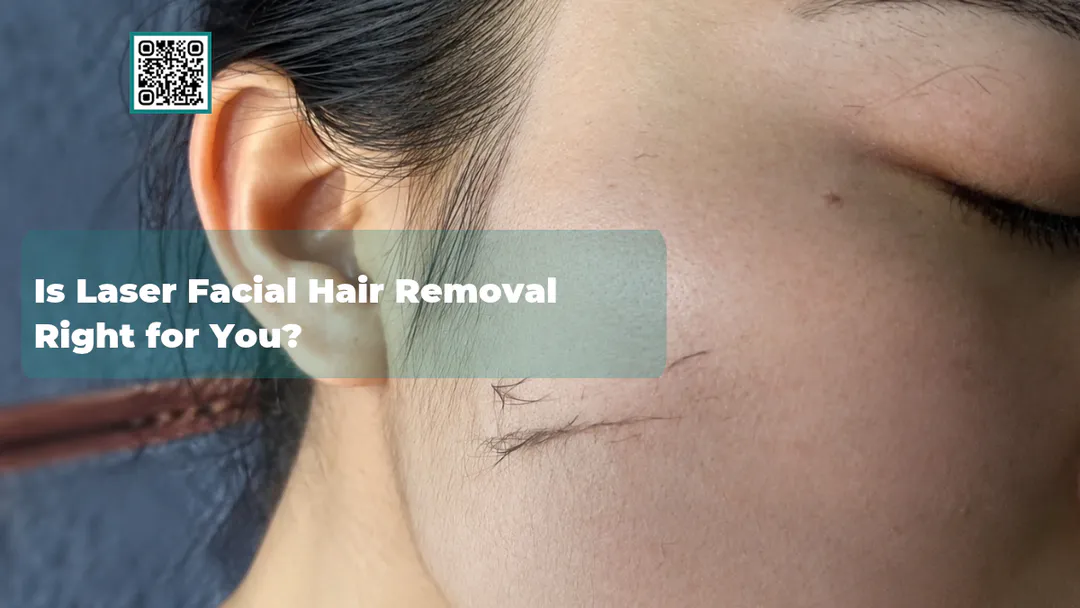
Facial hair removal also requires careful consultation about the possibility of regrowth. The American Academy of Dermatology (AAD) notes that hormonal factors can affect facial hair removal results in women, meaning repeat treatments may be necessary when hair grows back. [1]
Distinguishing Fine Hair from Coarse Hair Before Treatment
Fine hair is usually thin, soft, and difficult to see without close inspection or light shining from the side. Coarse hair on the chin, upper lip, or jawline may be more noticeable and lead to frequent shaving. These two conditions should not be treated as the same indication.
During your consultation, identify the areas that bother you in everyday life. If you only notice a very fine layer of hair under magnification, you may want to take more time to consider the decision before undergoing treatment over a large area.
Your goals should also be specific: reducing coarse hairs, shaving less frequently, or improving how your skin feels when applying makeup. Defining your needs helps the dermatologist determine whether laser treatment offers an appropriate benefit or whether another hair-removal method may be sufficient.
The Risk of Paradoxical Hair Growth Should Be Discussed
Paradoxical hypertrichosis is an unwanted increase in hair growth following laser or light-based treatment. A 2021 systematic review and meta-analysis found that this phenomenon was more clearly associated with treatment of the face and neck. The studies included in the review varied considerably, so the overall reported rate cannot be used to predict an individual’s exact risk. [2]
This does not mean that everyone who undergoes facial laser hair removal will experience increased hair growth. However, it is an important issue to discuss before treatment, particularly if you are considering removing fine hair over a large area.
Ask the dermatologist how the treatment area will be selected, how your baseline hair growth will be documented, and how the clinic will assess any increase in hair thickness or spread. Do not increase the energy settings of an at-home device yourself if you suspect this reaction.
Progress photos should include both the treated area and the adjacent skin. Compare images taken at similar intervals after shaving to avoid confusing longer hair with an actual increase in hair density.
When Should You Investigate Possible Hormonal Causes?
Women should seek medical evaluation if facial hair increases rapidly or appears alongside irregular menstrual periods, a noticeable increase in acne, hair loss on the scalp, or voice changes. Hirsutism can be associated with androgen activity, but a few isolated chin hairs are not enough to diagnose a hormonal disorder. [3]
Record when the changes began, how quickly they have progressed, and which medications you are taking. If you have older photos, they may help illustrate the changes more accurately than relying on the memory that you have noticed “more hair recently.”
Local hair reduction and treatment of an underlying cause may need to be combined when medically indicated. Continued hair growth is not necessarily caused by the quality of the device alone; your overall health and treatment history should also be considered.
Does Facial Hair Removal Get Rid of Acne?
Laser hair removal should not be considered a substitute for acne treatment. Bumps that appear after shaving also need to be distinguished from acne, folliculitis, and irritation.
If you have numerous inflamed lesions, pustules, or peeling and burning skin, have your skin assessed first. Do not stop all your acne medications on your own before hair removal. Instead, provide the names of your medications and ask how treatment can be coordinated appropriately.
You can explore dermatological condition treatment at WeDo if your main concern is a rash, itching, or an undiagnosed skin lesion. Identifying the underlying cause helps prevent you from pursuing a treatment that only targets hair.
Areas That Require Particular Caution
Laser hair removal should not be performed on the eyelids, eyebrows, or around the eyes because of the risk of eye injury. Tattoos and cosmetic tattooing should also be disclosed beforehand so the provider can determine which areas to avoid. [4]
If you want to treat the upper lip, chin, or cheek area near the sideburns, agree on the treatment boundaries before the session. A package labeled “full face” does not replace the need to mark out safe treatment areas.
People with a history of cold sores, abnormal scarring, or strong reactions to cosmetic procedures should disclose this information during the consultation. If you have recently undergone a chemical peel or laser procedure, or are using products that cause skin peeling, ask when it is appropriate to proceed with treatment.
What Should You Do After Facial Hair Removal?
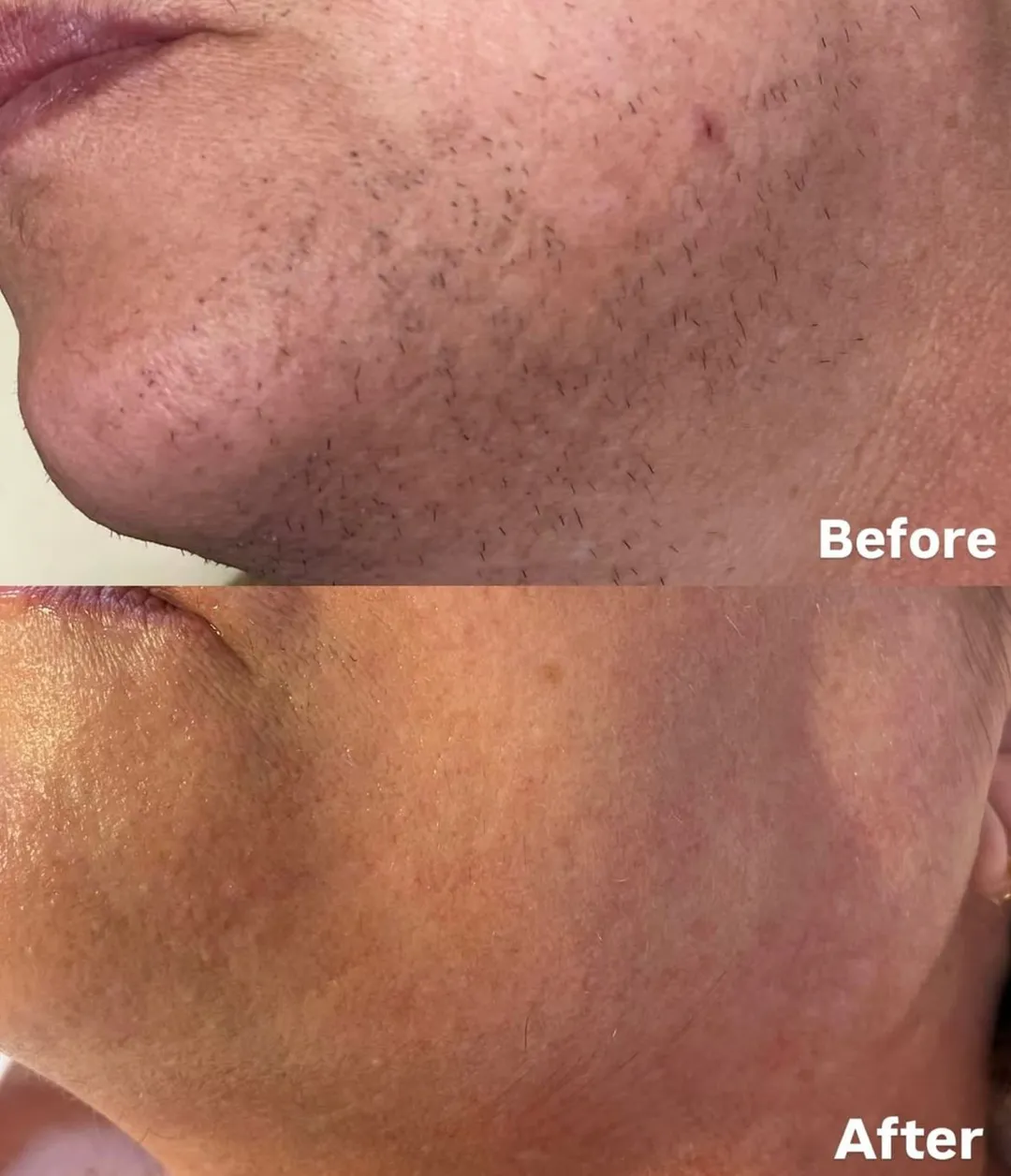
Post-treatment care should be tailored to your skin’s reaction. Cleanse gently, use the recommended skincare products, and protect your skin from sunlight. Avoid introducing multiple brightening ingredients or exfoliants at once simply because you want to take advantage of the post-treatment period.
If you need to wear makeup, ask when you can resume based on your skin’s condition. Report symptoms such as blistering, increasing pain, fluid discharge, or noticeable changes in skin color to the treatment provider.
When contacting the clinic, provide clear photos, the time when symptoms began, and a list of products you have applied. This information is more useful than simply saying that your face feels “slightly irritated” without explaining when the reaction started.
How to Read Reviews and Choose a Treatment Service
A facial hair removal review is useful as a reference only when it explains the person’s hair type, treatment area, follow-up period, and any methods used previously. Results for someone with coarse chin hair may not directly apply to someone with only fine hair on the cheeks.
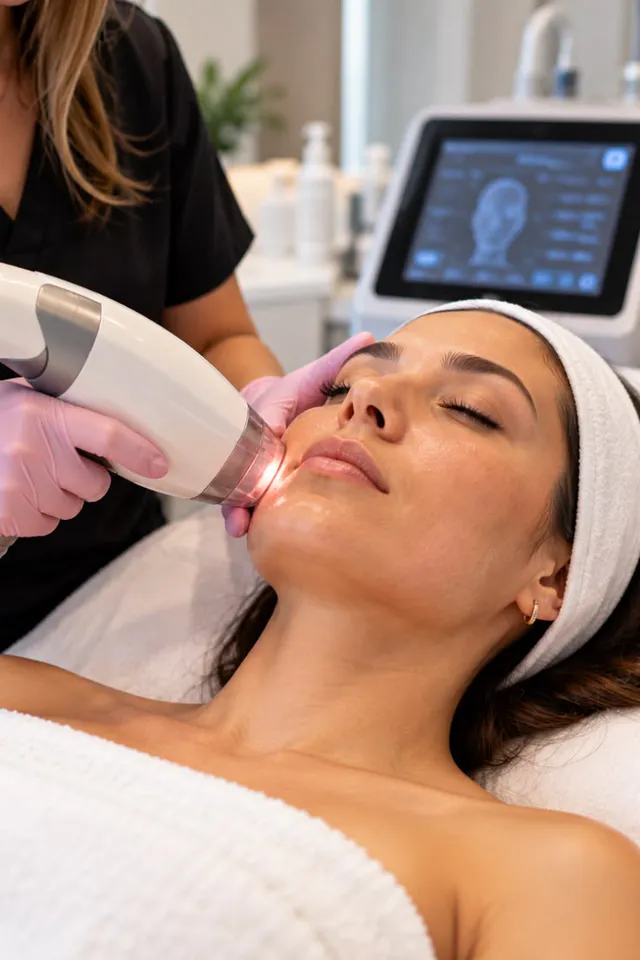
Ask about the device being used, who assesses treatment suitability, how eye protection is provided, and what the plan is for managing unexpected reactions. Also distinguish the goal of hair reduction from additional services advertised alongside it, such as skin brightening or rejuvenation.
On WeDo’s advanced hair removal service page, the upper lip, hair around the mouth, and facial areas are listed under separate service categories. When booking, describe the exact area you want treated so the clinic can advise you on the appropriate treatment scope and cost. [5]
Frequently Asked Questions
Should I remove all the fine hair on my face?
Not necessarily. The expected benefits and potential risks should be assessed according to your hair type, skin area, and the specific treatment method.
Does facial hair removal make the skin lighter?
Hair reduction and pigmentation improvement are two different goals. A change in how light reflects off the skin should not be considered proof that melasma or dark spots have been treated.
Is facial hair regrowth caused by hormones?
Hormones may play a role, but regrowth alone cannot establish the cause. The pattern of change, accompanying symptoms, and treatment history should all be considered.
Is laser facial hair removal harmful?
There are risks that should be discussed before treatment, including skin reactions and paradoxical hair growth. Suitability should be assessed before the procedure.
Can I use a body hair removal device on my face?
Only if the manufacturer specifically permits facial use and you meet the device’s safety requirements. Never use the device close to the eyes or expand the treatment area simply because it works on your arms or legs.
References
[1] American Academy of Dermatology. Laser Hair Removal Overview.
[2] Snast I. et al. Paradoxical Hypertrichosis Associated with Laser and Light Therapy for Hair Removal: A Systematic Review and Meta-analysis. 2021.
[3] DermNet. Hirsutism.


