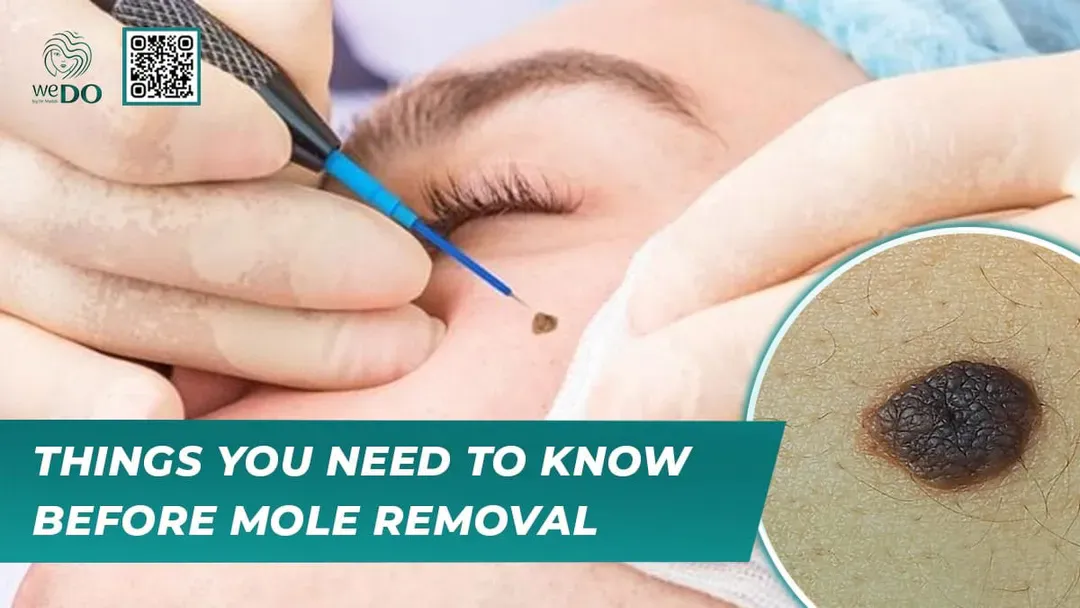
Moles on the face are one of the most common aesthetic concerns and can sometimes make people feel less confident. Before deciding to remove them, you should carefully review the following information to avoid being unprepared when undergoing mole removal.
Does mole removal hurt?
Yes, mole removal can cause pain, but the level of discomfort varies in each case. Before the procedure, doctors usually apply topical anesthesia or inject local anesthetic around the mole area to minimize discomfort. For small, superficial moles, the pain is usually mild, like a needle prick, and disappears quickly—often in less than a minute. In contrast, for larger or deeper moles, you may feel more heat and pain, but it remains tolerable thanks to the effect of anesthesia.

Will mole removal leave scars?
Normally, mole removal does not leave scars. For small, shallow moles, there is usually only a faint pink mark after the procedure, which gradually fades and leaves little to no trace. However, for larger or deeper moles, there is still a chance of scarring, typically appearing as a pale pink mark.
Will moles grow back after removal?
Yes, moles can grow back after removal. With small, shallow moles, usually only one treatment is enough to remove them permanently without recurrence. However, larger or deeper moles in the dermis layer are more likely to grow back, especially if the root of the mole is not completely destroyed during the procedure. Additionally, individual skin characteristics can also influence whether a mole reappears.

Can you eat freely after mole removal?
No. After mole removal, you cannot eat freely right away—you need to avoid certain foods to prevent scarring and help the skin heal quickly. Specifically, you should avoid water spinach, as it stimulates excess tissue growth that may cause raised scars; avoid beef, chicken, and sticky rice, as they may cause dark scars or keloids; and limit seafood, as it can cause itching and slow down healing. Instead, you should eat more green vegetables, fruits rich in vitamin C, and drink plenty of water to promote skin regeneration and brighten the treated area.
Is mole removal dangerous?
No, mole removal is not dangerous when performed at a reputable clinic such as Wedo Skin Clinic. At Wedo, all procedures are performed directly by dermatologists, ensuring both safety and accuracy. Advanced laser technology allows effective mole removal with precise targeting, without damaging the surrounding skin. A sterile procedure and high-quality anesthetics also minimize pain, reduce the risk of infection, and limit scarring.

Conclusion
Mole removal is an effective choice for eliminating moles that affect appearance or daily life. The procedure is generally not very painful, carries minimal risks, and provides quick results when performed at a trusted dermatology clinic using modern technology. However, you should still undergo an examination to rule out any abnormal signs and carefully follow aftercare instructions. When done correctly, mole removal will give you smoother, more confident skin while ensuring safety for your health.
Related Articles
Does laser mole removal leave scars?
How much does it cost to remove a mole? Detailed price list for mole removal services
Frequently Asked Questions About Mole Removal
What is the safest technology for mole removal?
Can I wear makeup after mole removal?
Can children undergo mole removal?
Yes, but only if prescribed and carefully considered by a dermatologist, especially for abnormal-looking moles.
Can I go swimming or to the beach after mole removal?
No, it is not recommended for at least 2–4 weeks to prevent infection and pigmentation from sun exposure or pool chemicals.
Can mole removal be combined with other procedures?
Yes. For example, combining with PRP, laser therapy, microneedling, or mesotherapy can improve scar treatment and rejuvenate the skin.