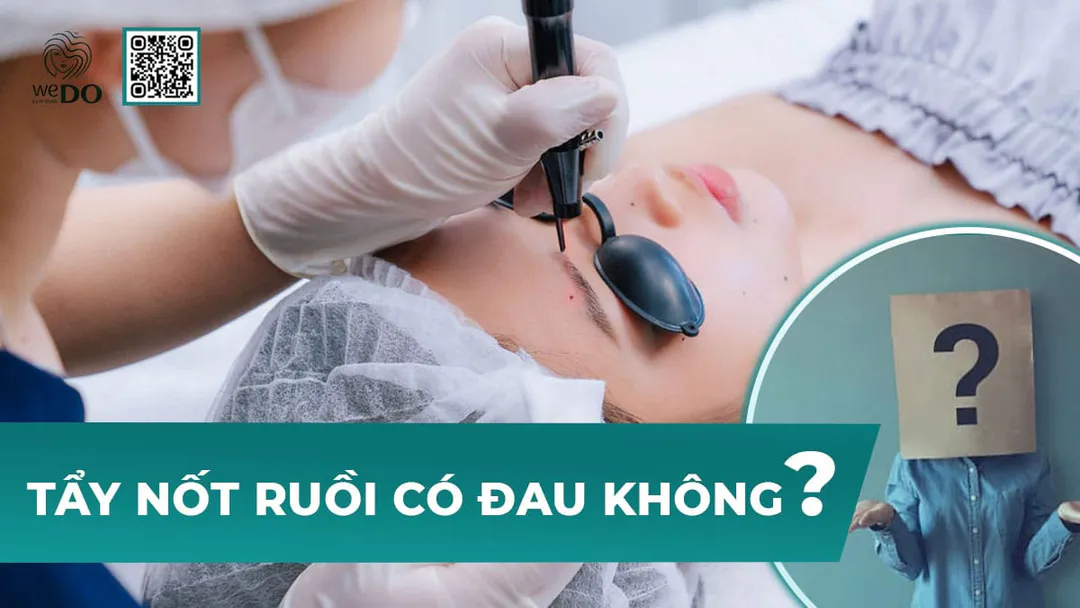
Many people want to remove moles to avoid affecting their health, aesthetics, etc., but hesitate due to fear of pain. If you find yourself in this situation, refer to this article for answers to the question “Does mole removal hurt?”.
Overview of Mole Removal Methods
The application of technology in the beauty industry is rapidly advancing, offering users a variety of options.
– Laser mole removal:
Modern laser technology is favored by doctors and clients for its effectiveness and high safety. In this method, a doctor uses a laser beam to target the mole, eliminating pigment cells on the skin’s surface and deep beneath it. The laser is applied precisely and focused, minimizing the affected skin area, thoroughly removing the mole while promoting quick skin recovery.
Among laser technologies, Laser Fractional CO2 is one of the most advanced mole removal methods, trusted by many for its ability to penetrate deep into the skin while remaining “gentle” to surrounding tissue.

– Electrocautery mole removal:
In this method, an electric current is used to target and destroy the mole’s tissue. To completely eliminate the mole, multiple sessions may be required. However, if performed by an untrained individual, it can easily damage the skin.
– Minor surgery for mole removal:
For larger moles with rough surfaces or those deeply embedded in the skin, a biopsy is needed to determine if they are benign or malignant. If benign, the doctor will proceed with surgical removal.
– Chemical mole removal:
This method is typically used for small, benign moles. In practice, chemical use is not recommended, or if used, it must be supervised by a professional. Incorrect dosage or concentration can cause skin burns, leading to scarring.
Does Mole Removal Hurt?
Whether mole removal hurts depends on whether the mole is benign or malignant and the chosen method. Benign moles are usually small and maintain their shape and size over time. If the removal is performed at reputable dermatology clinics, it is generally painless (or causes only a slight stinging sensation if you have a low pain tolerance).
Additionally, the level of pain varies between methods. Laser mole removal is the least painful, as the laser targets only the mole itself.

When Should You Remove a Mole?
Mole removal is typically a personal choice. However, in some cases, a doctor may recommend removal if there are signs of melanoma, a type of skin cancer. Though it accounts for only about 1% of all skin cancers, melanoma is responsible for most skin cancer deaths. Initially, it may resemble a benign, harmless mole, but gradually becomes irregular in structure and size increases. The risk is higher in individuals with many moles, especially those with over 100 moles across their bodies.
Warning signs of a mole potentially developing into cancer include:
– Asymmetry.
– Indistinct borders.
– Irregular coloration.
– Size larger than 6mm.
– Changes in size, shape, or color over time.
Moles with uneven coloring—darker in the center and lighter at the edges—are more likely to become malignant. Studies show that individuals with more than 10 such moles have a 12 times higher risk of developing malignant moles compared to the average person.
Post-Mole Removal Care to Avoid Complications and Scarring
Without proper care, the treated area may become infected, leading to complications like keloid or pitted scars.
To ensure quick skin recovery after mole removal, you should:
– Clean the treated area: Use only saline solution or Betadine when changing dressings. Avoid hydrogen peroxide, as it can negatively affect wound healing.
– Use topical medication only after the wound has healed and with a doctor’s prescription.
– Be cautious with your diet to avoid foods that increase the risk of keloid scarring or irritation that may cause itching at the treated site.
– Avoid scratching or rubbing the wound vigorously.
– Minimize exposure to cosmetics and sunlight until the wound has fully healed.

Related Questions
Question 1. What factors affect the pain level during mole removal?
The pain level depends on the type of mole (benign or malignant), the chosen treatment method, and the facility performing the procedure. At reputable dermatology clinics using advanced technologies like lasers, the pain is typically minimal or negligible.
Question 2. What makes laser technology stand out for mole removal?
Laser technology, particularly Laser Fractional CO2, precisely targets the mole while protecting surrounding tissue. This method effectively removes pigment cells, reduces scarring risks, and shortens recovery time.
Question 3. What risks arise from improper mole removal?
If performed incorrectly or at an unreliable facility, mole removal can lead to infections, keloid or pitted scars, or long-term skin damage, especially with uncontrolled chemical or electrocautery methods.
Question 4. Which moles are easily mistaken for cancerous signs?
Moles that are asymmetrical, have indistinct borders, irregular colors, are larger than 6mm, or show unusual changes over time can be mistaken for signs of skin cancer, particularly melanoma.
Question 5. Is special care needed after mole removal?
Yes. Proper post-removal care is crucial to avoid scars and complications. This includes gentle cleaning, avoiding irritants, protecting from sunlight, refraining from scratching, and maintaining a suitable diet during recovery.
Conclusion
Mole removal may cause concern about pain, but in reality, the discomfort is minimal or negligible if performed correctly at reputable facilities. With the support of modern technologies like laser or anesthetized minor surgery, the process is quick, safe, and causes little discomfort. Understanding your mole’s condition and choosing the appropriate method will help you feel more confident during treatment.