
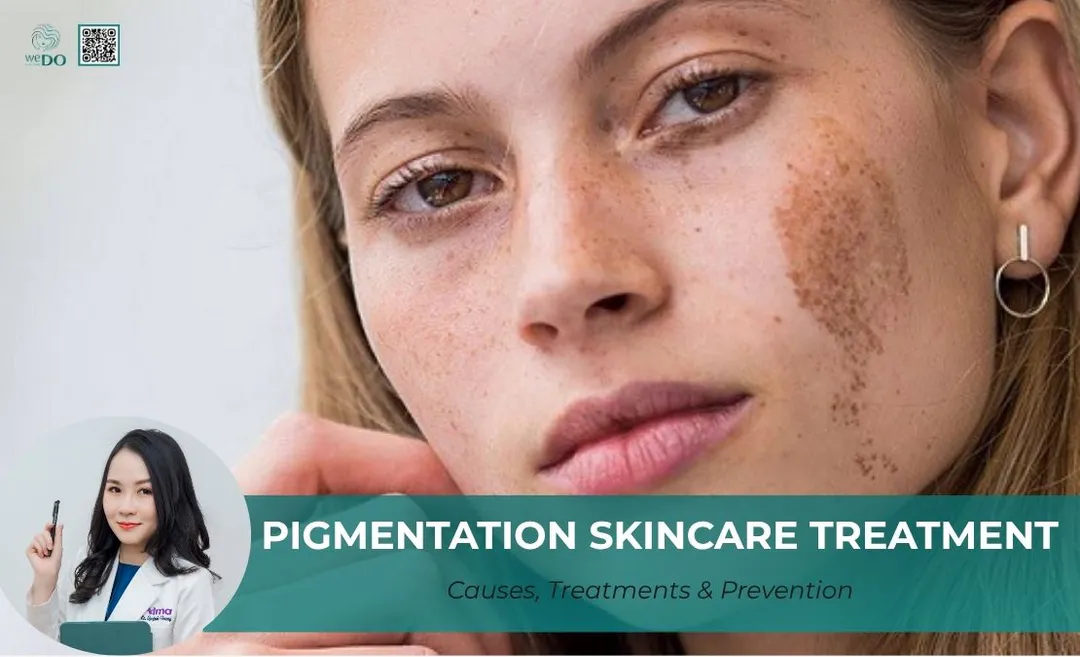
Is your pigmentation skincare routine really working? Learn why some dark spots fade while others persist, and discover the treatments that can help you achieve a clearer, more even complexion.
What is skin pigmentation?
Skin pigmentation refers to the natural color of your skin, which is primarily determined by melanin—a pigment produced by specialized cells called melanocytes. Besides giving skin its color, melanin helps protect the skin by absorbing part of the sun’s ultraviolet (UV) radiation, reducing cellular damage caused by sun exposure.
Pigmentation becomes a concern when melanin is produced in excess or distributed unevenly, resulting in hyperpigmentation. Instead of an even complexion, the skin develops darker patches, brown spots, or areas of discoloration that may gradually become more noticeable over time.

Although hyperpigmentation can affect people of all skin tones, it is more frequently observed in individuals with Fitzpatrick skin types III–VI because their melanocytes produce more melanin in response to inflammation or ultraviolet exposure.
Because different pigmentation disorders develop through different biological mechanisms, identifying the correct diagnosis is the first step toward choosing an effective treatment plan.
Types of pigmentation
Hyperpigmentation is not a single condition but a group of pigment disorders with different causes, clinical characteristics, and treatment approaches. Understanding the underlying cause allows dermatologists to recommend more targeted and effective treatment.
| Type | Common causes | Typical appearance |
|---|---|---|
| Melasma | Hormonal changes, pregnancy, oral contraceptives, UV exposure | Symmetrical brown or gray-brown patches on the cheeks, forehead, nose, or upper lip |
| Post-inflammatory hyperpigmentation (PIH) | Acne, eczema, burns, cosmetic procedures, or skin injuries | Flat brown, gray, or dark marks that remain after inflammation heals |
| Solar lentigines (sun spots) | Long-term ultraviolet exposure and skin aging | Well-defined brown spots commonly found on the face, hands, and shoulders |
| Freckles (ephelides) | Genetic predisposition combined with sun exposure | Small light-brown spots that become darker after sun exposure |
Melasma

Melasma is one of the most common facial pigmentation disorders. It is closely associated with hormonal fluctuations, chronic UV exposure, pregnancy, and oral contraceptive use. The condition usually appears as symmetrical brown patches on sun-exposed areas of the face and is known for its tendency to recur if the underlying triggers are not well controlled.
Post-inflammatory hyperpigmentation (PIH)

Post-inflammatory hyperpigmentation develops after the skin has experienced inflammation or injury. Acne is one of the leading causes, although eczema, burns, allergic reactions, and certain cosmetic procedures may also trigger excess melanin production during the healing process. Depending on its depth within the skin, PIH may gradually fade over several months or persist much longer without appropriate treatment.
Solar lentigines

Often referred to as sun spots or age spots, solar lentigines develop after years of cumulative ultraviolet exposure. Unlike freckles, these spots usually remain visible year-round and become increasingly common with age, particularly in people who spend significant time outdoors without adequate sun protection.
Freckles

Freckles are primarily influenced by genetics but become darker and more noticeable after sun exposure. Unlike melasma or PIH, freckles are generally harmless and do not result from skin inflammation or damage, although regular sun protection can help reduce their appearance.
Although these pigmentation disorders may appear similar, they do not respond equally to treatment. Some superficial discoloration can improve with a consistent skincare routine and sun protection, while deeper or recurrent pigmentation often requires professional dermatological treatment. So, can skin care alone remove pigmentation?
Can skincare alone remove pigmentation?
The short answer is it depends on the type and depth of pigmentation.
A well-designed skincare routine can gradually improve certain forms of superficial pigmentation, particularly recent post-inflammatory hyperpigmentation (PIH) or mild sun damage. However, pigmentation caused by hormonal changes, long-term UV exposure, or deeper melanin deposits often requires professional treatment to achieve noticeable and lasting improvement.
Rather than expecting a single cream or serum to erase pigmentation, dermatologists usually recommend a combination of daily sun protection, evidence-based skincare ingredients, and medical treatments when appropriate.
When skincare can help?
Consistent skincare plays an important role in managing mild pigmentation by reducing melanin production, accelerating skin cell turnover, and preventing new discoloration from forming. While results are gradual, using clinically supported ingredients can significantly improve overall skin tone over time.
Some of the most widely recommended ingredients include:
| Ingredient | Primary benefit |
|---|---|
| Vitamin C | Helps reduce oxidative stress and brighten uneven skin tone |
| Niacinamide | Inhibits melanin transfer while strengthening the skin barrier |
| Azelaic acid | Improves post-inflammatory hyperpigmentation and melasma |
| Retinoids | Increase cell turnover and gradually fade discoloration |
| Tranexamic acid | Helps reduce excess pigmentation, particularly in melasma |
These ingredients work best when used consistently for several weeks or months and should always be paired with daily sunscreen. Even the most effective brightening products cannot deliver optimal results if the skin continues to receive excessive ultraviolet exposure.
References: American Academy of Dermatology – Melasma treatment;
Why skincare has its limitations?
One of the biggest misconceptions is that pigmentation can always be removed with skincare products alone. In reality, the effectiveness of topical products depends on where the pigment is located and why it developed in the first place.
For example, melasma is influenced not only by ultraviolet exposure but also by hormonal factors, genetics, and chronic inflammation. Even if pigmentation fades temporarily, it may return if the underlying triggers are not addressed.
Similarly, some pigment deposits extend into deeper layers of the skin where topical ingredients have limited penetration. In these cases, creams and serums may help lighten the surface appearance but are unlikely to remove pigmentation completely.
Another important consideration is time. Many over-the-counter products require 8 to 12 weeks of consistent use before visible improvement becomes noticeable, while more stubborn pigmentation may take several months to respond.
References: American Academy of Dermatology – Melasma treatment; DermNet NZ – Melasma.
When should you consider professional treatment?
If pigmentation has remained unchanged after several months of consistent skincare, continues to worsen, or repeatedly returns despite using appropriate products, it may be time to consult a dermatologist.
Professional treatments can target pigment more precisely than topical skincare alone and are often combined to achieve better outcomes. Depending on the type of pigmentation, your dermatologist may recommend laser therapy, chemical peels, mesotherapy, or a personalised combination of treatments designed to address both the visible pigmentation and its underlying causes.
Rather than replacing skincare, professional treatment works alongside it. Daily skincare helps maintain the skin barrier and reduce the risk of recurrence, while clinical procedures can accelerate pigment reduction that topical products alone may not be able to achieve.
Professional pigmentation treatment at Wedo Skin Clinic

While some pigmentation concerns can improve with consistent skincare, others require a personalized treatment plan designed by experienced dermatologists. Accurate diagnosis is especially important because conditions such as melasma, post-inflammatory hyperpigmentation, and sun spots may appear similar but respond differently to treatment.
At Wedo Skin Clinic, every treatment begins with a comprehensive skin assessment and consultation with a dermatologist. Rather than relying on a single procedure, the medical team develops an individualized treatment plan based on your pigmentation type, skin condition, medical history, and treatment goals.
Personalized treatment for different pigmentation concerns
Successful pigmentation treatment often requires combining different modalities instead of depending on one technology alone. According to the treatment plan recommended by the dermatologist, Wedo may incorporate procedures such as:
- Q-switched Nd:YAG laser to target excess melanin while minimizing damage to surrounding tissue.
- Mesotherapy to deliver active ingredients directly into the skin and support pigment regulation.
- Fractional CO₂ laser in selected cases where skin renewal may improve both pigmentation and overall skin texture.
- Combination therapy, integrating multiple treatment methods with medical-grade skincare to achieve more comprehensive and longer-lasting results.
Each treatment plan is tailored to the patient’s skin condition rather than following a one-size-fits-all approach.
Why patients choose Wedo Skin Clinic?
Choosing the right clinic is just as important as choosing the right treatment. At Wedo Skin Clinic, patients benefit from a combination of dermatological expertise, evidence-based treatment protocols, and advanced technologies designed to improve both safety and treatment outcomes.
Some of Wedo’s strengths include:
- Consultations and treatment plans provided by qualified dermatologists.
- A personalized approach based on each patient’s skin condition instead of standardized treatment packages.
- FDA-, CE-, and KFDA-cleared technologies used according to clinical indications.
- Modern diagnostic equipment that supports comprehensive skin assessment before treatment.
- English-speaking support, making consultations and follow-up care more convenient for international patients.
Rather than focusing only on removing visible pigmentation, the clinic aims to identify contributing factors, reduce the risk of recurrence, and help patients maintain healthier, more even-toned skin over the long term.
Conclusion
An effective pigmentation skin care routine can help improve mild discoloration and support long-term skin health, but skincare alone is not always enough. The best treatment depends on the type, depth, and underlying cause of the pigmentation.
If dark spots persist or continue to recur, seeking professional advice from a qualified dermatologist can help you receive an accurate diagnosis and a personalized treatment plan. At Wedo Skin Clinic, our dermatologists combine evidence-based treatments with advanced technologies to help patients achieve healthier, clearer, and more even-toned skin through safe, individualized care.
FAQ
1. Can pigmentation disappear on its own?
It depends on the cause. Mild post-inflammatory hyperpigmentation may gradually fade over several months, but conditions such as melasma or sun spots are less likely to resolve without appropriate treatment and ongoing sun protection.
2. How long does it take to see results from pigmentation treatment?
Most topical skincare products require at least 8–12 weeks of consistent use before noticeable improvement. Professional treatments such as laser therapy or chemical peels may produce faster results, although the number of sessions varies depending on the type and severity of pigmentation.
3. Is laser treatment safe for pigmentation?
When performed by qualified dermatologists using appropriate technology, laser treatment is generally considered safe and effective for many types of pigmentation. However, not every pigmentation disorder responds to the same laser, making an accurate diagnosis essential before treatment.
4. Can pigmentation come back after treatment?
Yes. Pigmentation may recur if underlying triggers—such as UV exposure, hormonal changes, or ongoing skin inflammation—are not well controlled. This is why long-term sun protection and maintenance skincare remain important even after successful treatment.
5. When should I see a dermatologist?
You should consider consulting a dermatologist if pigmentation persists despite several months of consistent skincare, becomes darker or more widespread, or affects your confidence and quality of life. Early assessment allows for a more accurate diagnosis and a personalized treatment plan.
Related articles:


