Laser leg hair removal aims to provide long-term hair reduction and make leg care more convenient. Before treatment, you should identify the areas to be treated, assess your current skin condition, and determine your desired level of hair reduction. The term “permanent leg hair removal” should not be interpreted as a guarantee that hair will never grow back. [1]
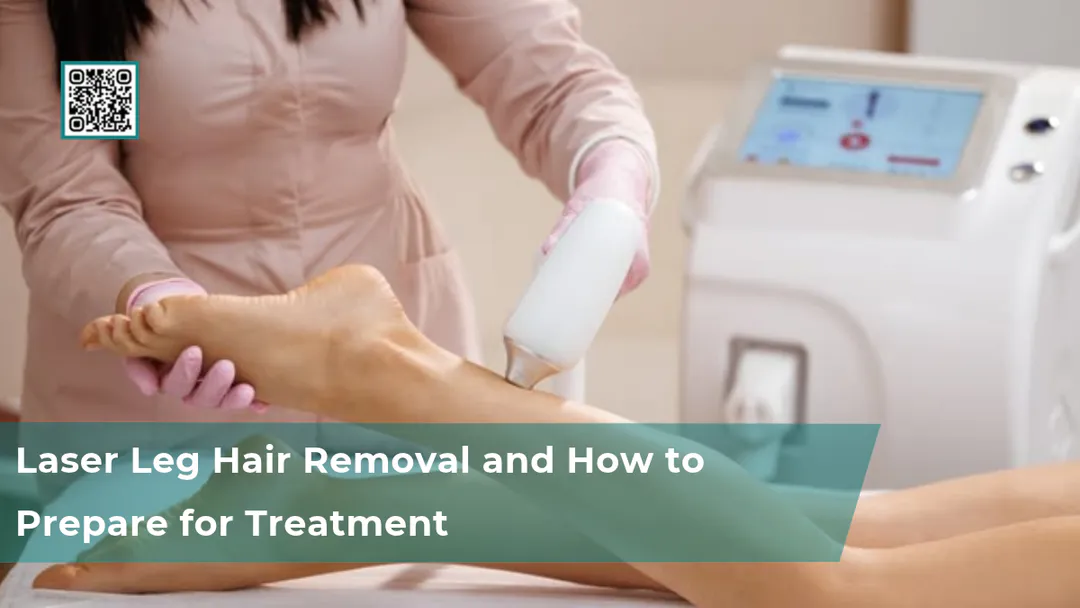
For leg hair removal, choosing between half-leg and full-leg treatment directly affects the treatment area and cost. You should also distinguish hair-reduction goals from other concerns, such as dark spots, scars, or bumps around hair follicles.
When Should You Consider Leg Hair Removal?
You may consider treatment if you shave frequently, want to reduce hair density, or find it inconvenient to remove hair repeatedly. If you have only a small area of sparse hair, a temporary hair-removal method may already meet your needs.
Try describing your desired results in terms of observable changes: longer intervals between shaving, reduced hair density, or less frequent hair removal on your lower legs. This helps give your consultation a clear objective.
If your legs have numerous red bumps, pustules, or persistent itching, consider getting them examined before treating hair removal as a general solution. The appearance of rough skin on the legs can have several causes and may require an in-person assessment.
Men may also wish to reduce leg hair. However, the appropriate treatment plan cannot be determined by gender alone. Hair density, hair characteristics, and individual preferences regarding which areas to retain or reduce should all be considered.
Choosing Between Half-Leg and Full-Leg Treatment
The term “half-leg” usually refers to a portion of the leg, but the exact boundaries must be confirmed with the clinic. The knees, tops of the feet, and toes may be included differently in different packages.
Before making a payment, agree on the treatment area through a written description or clearly marked diagram. Confirm the following:
- Whether treatment covers the area below or above the knee.
- Whether the knees and areas near the ankles are included.
- Whether the tops of the feet and toes are included or charged separately.
- Whether both legs are covered by one price or charged individually.
If the hair on your thighs is very fine but the hair on your lower legs is darker, you should not automatically assume that full-leg treatment is the better option. The provider should explain the expected benefits for each area before expanding the treatment scope.
What Does the Leg Hair Removal Procedure Involve?
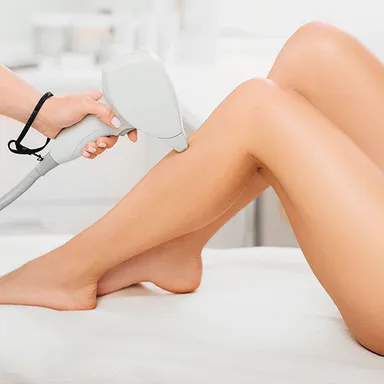
The consultation should document your previous hair-removal treatments, methods you currently use, and any previous skin reactions. You should disclose current medications, a history of scarring, recent tanning, and any recent procedures. This information helps the provider determine an appropriate treatment time and approach. [2]
Once the treatment area has been agreed upon, the skin is prepared according to the device’s protocol. The practitioner should explain how to protect your eyes and how to communicate if you experience unusual sensations. If pain or heat becomes more intense than explained, notify the practitioner immediately so the situation can be assessed.
After the session, you should receive aftercare instructions and guidance on how to contact the clinic if a reaction occurs. A well-documented treatment plan should record the session date, areas treated, and next assessment date. If you change devices or clinics, provide your previous treatment records instead of simply saying that you have already had a few sessions.
How to Prepare Before Your Appointment
Do not wax or pluck your hair immediately before laser treatment. Ask when you should shave, and avoid scratching or damaging your skin during preparation. Mayo Clinic also recommends avoiding sun exposure and not performing laser hair removal directly over tattoos. [1]
If you have recently been to the beach or frequently wear shorts outdoors, inform the clinic. Your skin tone should be assessed based on its current condition rather than relying on photographs or an earlier consultation.
If your legs have scars, moles, or patches of discoloration, point out each area. You do not need to determine whether these skin changes are dangerous yourself. The important thing is to help the practitioner identify them during the examination.
How to Evaluate Results After Multiple Sessions
Laser hair removal requires multiple sessions, and the schedule should be adjusted according to the treatment area and your response. Cleveland Clinic describes a typical course of approximately 6–8 sessions. This is general guidance, not a guarantee for every person undergoing leg hair removal. [3]
You can use before-and-after photos to monitor progress, but the photography conditions should remain consistent. Photograph the same part of your legs under similar lighting, without filters, and record how much time has passed since your last shave.
In addition to photos, track whether regrowth has become sparser and how often you need to shave. If several consecutive sessions produce little noticeable change, discuss your hair type, device, and treatment goals with the provider before purchasing additional sessions.
Do not use a reduction in hair growth to conclude that dark spots or scars will also disappear. These concerns require separate treatment goals and assessments, even if they are advertised as part of the same skincare package.
Daily Activities and Aftercare Following Leg Hair Removal
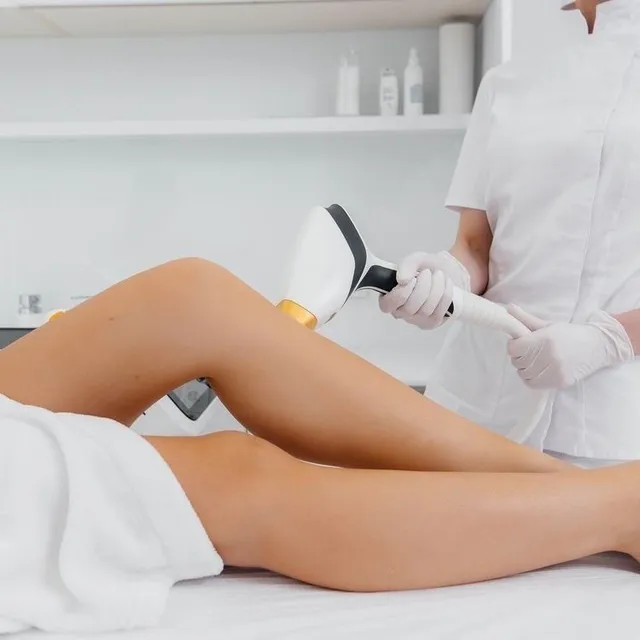
Cleanse and moisturize your skin according to the clinic’s instructions. If tight clothing or sports activities cause heat or discomfort in the treated area, ask when it is appropriate to return to your usual routine.
Limit sun exposure and monitor your skin for unusual changes. Reactions such as blistering, crusting, or changes in pigmentation can occur after laser treatment and should be assessed appropriately. [3]
Avoid adding strong exfoliating products on your own in an attempt to make your legs look “cleaner” more quickly. If a new reaction develops, take photographs and record when it began. This information can help the clinic assess the situation more accurately.
Half-Leg and Full-Leg Hair Removal Costs at WeDo
According to WeDo’s price list, checked on October 23, 2026, OTP Light SHR is listed at VND 350,000 per session for half-leg treatment and VND 600,000 per session for the full-leg/back category. Alma laser treatment, which includes skin rejuvenation and brightening, is listed at VND 1,100,000 and VND 2,100,000 per session, respectively. Prices exclude VAT. [4]
These categories list different technologies and service descriptions. When comparing prices, confirm the exact leg area and included services rather than simply choosing the lowest price on the list.
You can review WeDo’s hair removal price list and schedule an assessment of your legs before deciding on a treatment plan.
Frequently Asked Questions
Should I get leg hair removal if I only want to make my hair less dense?
You can discuss a hair-density reduction goal with your provider. However, the exact degree of thinning shown in a reference photo cannot be guaranteed simply by choosing a certain number of sessions.
Do men need more leg hair removal sessions than women?
This cannot be determined by gender alone. Hair characteristics, treatment areas, and your response at each stage should all be assessed.
Do before-and-after photos prove that the treatment is effective?
Photos can be useful when taken under comparable conditions and accompanied by information about timing. Photos taken immediately after shaving do not show how the hair will grow back.
Can I use an at-home hair removal device on my entire legs?
Only if the device is approved for those areas and you meet its usage requirements. Treating a larger area does not make instructions about skin tone, tattoos, or skin conditions any less important.
If a few hairs remain after the treatment course, does that mean it has failed?
Your results should be evaluated against your original goals, the degree of hair reduction, and the pattern of regrowth. A few remaining hairs are not enough on their own to determine the overall outcome.
References for Article VN12
[1] Mayo Clinic. Laser Hair Removal.
[2] American Academy of Dermatology. Laser Hair Removal Preparation.
[3] Cleveland Clinic. Laser Hair Removal.
[4] WeDo Skin Clinic. Hair Removal Services and Price List.