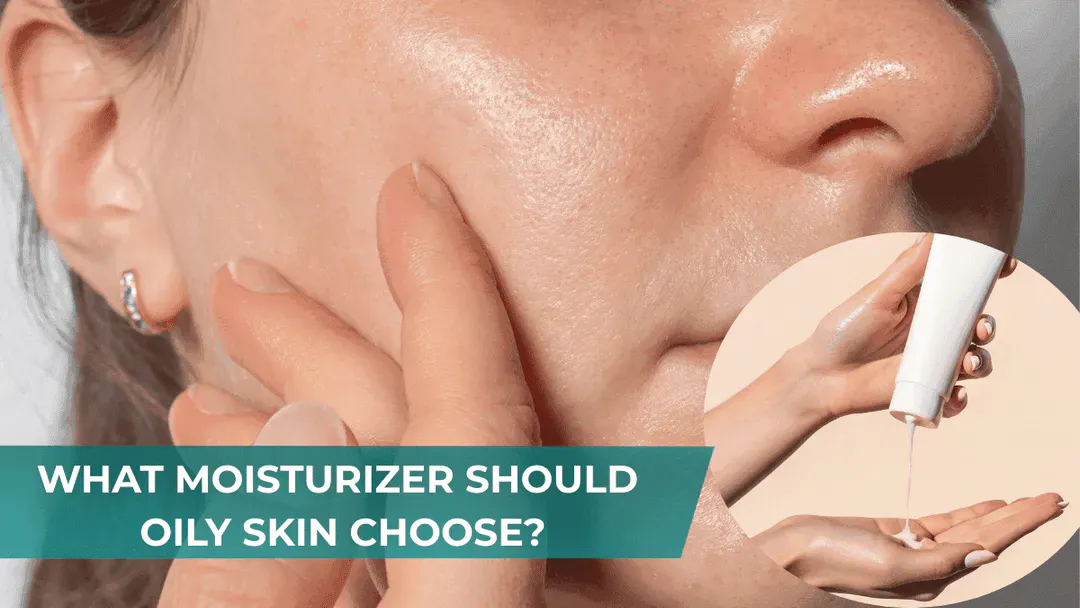
Many people mistakenly believe that oily skin does not require moisturization, assuming that the shiny layer of oil on the surface equates to hydration. In reality, the opposite is true: oily skin needs moisture even more. However, choosing a moisturizer for oily skin requires careful consideration of various factors, such as ingredients and texture, to avoid clogged pores and breakouts.
Identifying Oily Skin
Oily skin is characterized by overactive sebaceous glands that produce more sebum than usual, particularly in the T-zone and cheeks. Visibly, the skin often appears shiny with enlarged pores. To check, gently press your fingers on your T-zone and cheeks—if oil is present in both areas, you likely have oily skin. If only the T-zone is oily while the cheeks remain dry, you may have combination skin with an oily tendency.
In most cases, oily skin is influenced by genetics. Less commonly, it may result from hormonal fluctuations or other bodily changes.
Why Does Oily Skin Need Moisturizer?

Sebum production is often the skin’s response to dryness, creating a protective “film” to soothe this condition. The less hydrated the skin is, the more oil it produces. Conversely, when the skin receives adequate moisture, excess oil secretion can be significantly reduced as sebaceous glands no longer need to overcompensate.
Moisturizers also help calm irritation and relieve itching, which can occur when oily skin is stripped with excessive oil-control products. By replenishing hydration, moisturizers restore comfort and barrier function.
In addition, for those using acne treatments such as retinoids, salicylic acid, or benzoyl peroxide—which are inherently drying—moisturizers act as a protective shield, minimizing irritation and supporting the skin’s recovery.
What Type of Moisturizer Is Best for Oily Skin?
When selecting a moisturizer for oily skin, prioritize products that regulate oil production, prevent clogged pores, and maintain breathability. Beneficial ingredients include:
-
Agaric Acid: Tightens pores, reduces shine, and provides a fresh, clean feeling.
-
Salicylic Acid (BHA): Penetrates pores, removes excess oil and sebum, unclogs pores, reduces inflammation, and helps prevent acne.
-
Glycerin: A powerful humectant that attracts and retains water, improving elasticity and maintaining a healthy skin barrier without causing irritation.
-
Dimethicone: A lightweight silicone that forms a protective layer, prevents transepidermal water loss, and reduces surface oiliness, leaving skin smooth.
-
Silica: A natural mineral that absorbs excess oil and minimizes shine.
-
Xylitol & Mannitol: Sugar alcohols that provide hydration without clogging pores.
-
Hyaluronic Acid, Vitamin B3 (Niacinamide), Vitamin B5 (Panthenol): Deliver immediate and long-lasting hydration while balancing oil production.
Key Considerations When Choosing a Moisturizer for Oily Skin

-
Avoid oil-based products: Ingredients like lanolin, mineral oil, or vitamin E may stimulate sebaceous glands and exacerbate oiliness.
-
Opt for water-based, non-comedogenic formulas: Lightweight gel-based moisturizers are preferred over heavy creams or lotions to prevent pore blockage.
-
Choose fragrance-free, gentle options: Products free from added fragrance and potential irritants help reduce the risk of sensitivity.
Conclusion
Oily skin does not mean the skin is adequately hydrated—on the contrary, it is prone to imbalance if not cared for properly. Choosing the right moisturizer—lightweight, oil-regulating, and barrier-supportive—will help maintain skin health, reduce excess shine, and minimize breakouts. An effective solution for oily skin goes beyond moisturizers alone, combining proper skincare routines with a balanced lifestyle.
For individuals with severe oiliness and acne, consultation at a trusted dermatology clinic is recommended. Physicians can provide a personalized treatment plan to address acne triggers and minimize pore size. Incorporating advanced technologies such as Celluma, Photo Care, Fractional CO2 Laser, or Radiofrequency (RF) can further accelerate results and enhance treatment efficacy.
Frequently Asked Questions
1. Should moisturizers be skipped if the skin is already oily?
No. Oil and hydration are not the same. Oily skin can still lack water, and skipping moisturizers may increase sebum production, leading to clogged pores and acne.
2. Should daytime and nighttime moisturizers for oily skin be different?
Yes. In the morning, opt for a lightweight, fast-absorbing formula, ideally with sun protection. At night, a slightly richer moisturizer can support skin repair and recovery.
3. Can moisturizers be combined with serums or treatments for oily skin?
Absolutely. Moisturizers help “lock in” hydration and enhance the efficacy of active ingredients such as retinoids, BHA, or niacinamide, while reducing irritation.
4. What are the warning signs that a moisturizer is unsuitable for oily skin?
Persistent clogged pores, unusual shine, or breakouts within 1–2 weeks may indicate an incompatible formula—likely too heavy or pore-clogging. Switching to a lightweight, non-comedogenic product is recommended.
5. Should moisturizers be adjusted according to seasonal changes
Yes. In summer, lightweight gel textures help avoid heaviness. In winter or in dry environments, opt for slightly more hydrating formulas to maintain balance.