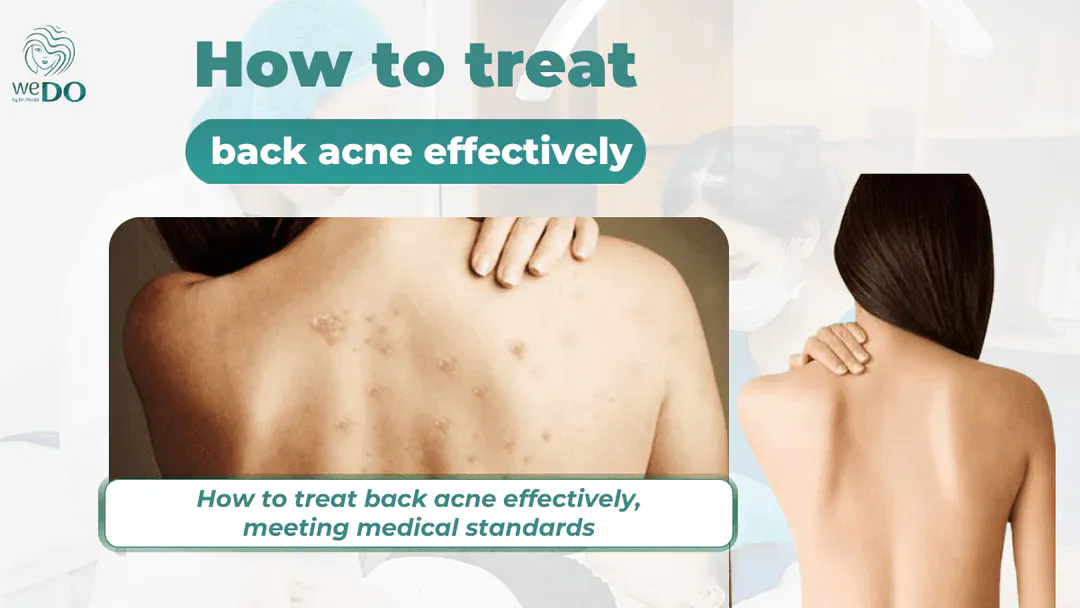
Back acne scars are a common condition that occurs after inflammatory or cystic acne on the back heals, leaving behind dark pigmented spots that affect appearance. Therefore, you need to apply the correct methods for treating back acne scars to minimize hyperpigmentation, helping to restore an even, smooth skin surface.
Mechanism of Back Acne Scar Formation
After skin damage from acne inflammation, melanocyte cells, responsible for producing melanin pigment, can become overstimulated. Prolonged inflammation releases pro-inflammatory cytokines and free radicals, leading to increased melanin production and deposition under the epidermis or deeper in the dermis. This results in dark brown or reddish-brown spots, known as post-inflammatory hyperpigmentation (PIH).
The skin on the back is typically thicker and has highly active sebaceous glands, making it prone to severe inflammatory acne and deep cysts. Additionally, the back is harder to care for compared to the face, leading to prolonged inflammation and an increased risk of post-acne hyperpigmentation. Furthermore, the back is less exposed to direct sunlight but is more susceptible to friction from clothing, sweat, and dirt. These factors stimulate inflammation and prolong pigment recovery time.
The persistence of back acne scars is influenced by the following factors:
- Genetic factors: A predisposition to darker skin or hyperpigmentation increases the risk of scar formation.
- Sun exposure: UV rays stimulate melanin production, making scars darker and harder to fade.
- Friction and irritation: Tight, non-breathable clothing or physical activities cause friction damage to the epidermis, promoting inflammation and scarring.
- Improper skin care: Using harsh cleansing products or improper acne extraction techniques damages the skin, increasing the risk of scars.
- Hormonal imbalances and overall health: Hormones, stress, and underlying health conditions can disrupt skin function, prolonging pigment recovery.

Medical-Grade Methods for Treating Back Acne Scars at Clinics
While home treatments for back acne can be effective, they may not fully address scarring. If home treatments for post-acne scars do not yield desired results, you should consult a dermatologist for advanced treatments to tackle unsightly scars at their root. Modern technology targets the epidermis and dermis, stimulating regeneration and effectively lightening melanin pigmentation.
Professional Chemical Peels
Chemical peels use acid solutions with tailored concentrations and types to remove dead skin cells, exfoliate damaged skin, and stimulate new cell growth. This process fades acne scars by promoting continuous epidermal turnover. Depending on scar severity, dermatologists may use glycolic acid, salicylic acid, or lactic acid.
Learn more about the benefits of chemical peels for acne to understand this method and decide if it’s right for you.
Laser Scar Treatment
Laser therapy uses light energy with appropriate wavelengths to break down concentrated melanin under the skin while stimulating collagen and elastin production for even-toned, healthier skin. Dermatologists may choose Q-switched lasers, fractional CO2 lasers, or others based on the nature and severity of scars.
Microneedling
Microneedling uses tiny needles to create micro-injuries on the skin’s surface, triggering the skin’s natural healing process. This method promotes collagen and elastin production while improving uneven pigmentation and reducing post-acne scars. Microneedling can be combined with targeted serums to enhance treatment outcomes.
Mesotherapy
Mesotherapy involves micro-injections of nutrients, vitamins, or skin-brightening agents directly into the dermis, enhancing the effectiveness of scar treatment. This method promotes cell regeneration, improves melanin pigmentation, and boosts the absorption of active ingredients.
The medical-grade acne treatments mentioned above require thorough consultation, assessment, and evaluation by dermatologists to develop a personalized treatment plan. This ensures safety, minimizes complications, and achieves long-term results in treating back acne scars.

Ways to Maintain Effective Back Acne Scar Treatment Results at Home
In addition to medical-grade scar treatments, you can maintain results with the following home care practices:
Chemical Exfoliation (BHA, AHA)
Chemical exfoliants like Beta Hydroxy Acid (BHA) and Alpha Hydroxy Acid (AHA) remove dead skin cells, cleanse pores, and promote cell turnover. BHA’s oil-soluble nature allows it to penetrate deep into follicles, reducing inflammation and controlling acne effectively. AHA supports skin brightening by stimulating collagen production and fading scars. Use the correct concentration and follow instructions to avoid irritation.
Use Skin-Brightening Products with Vitamin C
Vitamin C, a powerful antioxidant, inhibits the tyrosinase enzyme, reducing melanin synthesis. Products with Vitamin C brighten scars, even out skin tone, and protect against free radical damage. For optimal results, use Vitamin C consistently and pair it with proper sun protection.
Use Other Melanin-Inhibiting Ingredients (Niacinamide, Arbutin)
Niacinamide (Vitamin B3) inhibits melanin transfer from melanocytes to keratinocytes, reducing post-inflammatory scarring. Arbutin, a hydroquinone derivative, suppresses tyrosinase activity, decreasing melanin production. Both ingredients are commonly found in safe skincare products suitable for prolonged scar treatment.
Broad-Spectrum Sunscreen
Ultraviolet (UV) light strongly stimulates melanin production, making scars darker and harder to fade. Using a broad-spectrum sunscreen with SPF 30 or higher, offering UVA/UVB protection, is essential for protecting the back during scar treatment. Apply sunscreen evenly, in adequate amounts, and reapply every 2-3 hours when sweating or exposed to water.
While applying home care and scar treatment methods, some cases may not achieve desired results due to deep skin damage or complex causes. In such cases, consulting and receiving advanced treatment at a reputable dermatology clinic is the optimal solution. Experts will accurately assess your skin condition, using modern technology and tailored treatments to address scars effectively, quickly, and safely.

Ways to Effectively Prevent Back Acne Scars
Preventing back acne scars requires consistent, science-based skin care practices focused on controlling acne causes and protecting skin from damage, including:
- Cleanse the back daily with suitable products to remove excess oil, dirt, and bacteria, preventing clogged pores.
- Exfoliate periodically with BHA or AHA products to remove dead skin cells and support skin regeneration.
- Use broad-spectrum sunscreen with an appropriate SPF to protect skin from UV damage and prevent melanin hyperpigmentation.
- Minimize mechanical irritation like scratching, picking, or squeezing acne to avoid skin damage and secondary inflammation.
- Maintain a balanced diet rich in vitamins C, E, and antioxidants to promote skin regeneration and scar lightening.
- Manage stress and ensure quality sleep to support comprehensive skin recovery.

Treating back acne scars is a process requiring patience and adherence to a scientific regimen. For optimal and safe results, customers should seek dermatologists at WEDO Skin Clinic. Here, you will receive thorough consultations and modern treatment methods tailored to your skin condition, helping restore naturally radiant, healthy skin.
WeDo District 1 – Tran Doan Khanh Street
- Hotline/Zalo/Whatsapp: 0898898875
- Address: 11 Tran Doan Khanh Street, Da Kao Ward, District 1, HCMC
WeDo District 2 – Thai Thuan Street
- Hotline/Zalo/Whatsapp: 0707196622
- Address: 17 Thai Thuan Street, An Phu Ward, Thu Duc City, HCMC