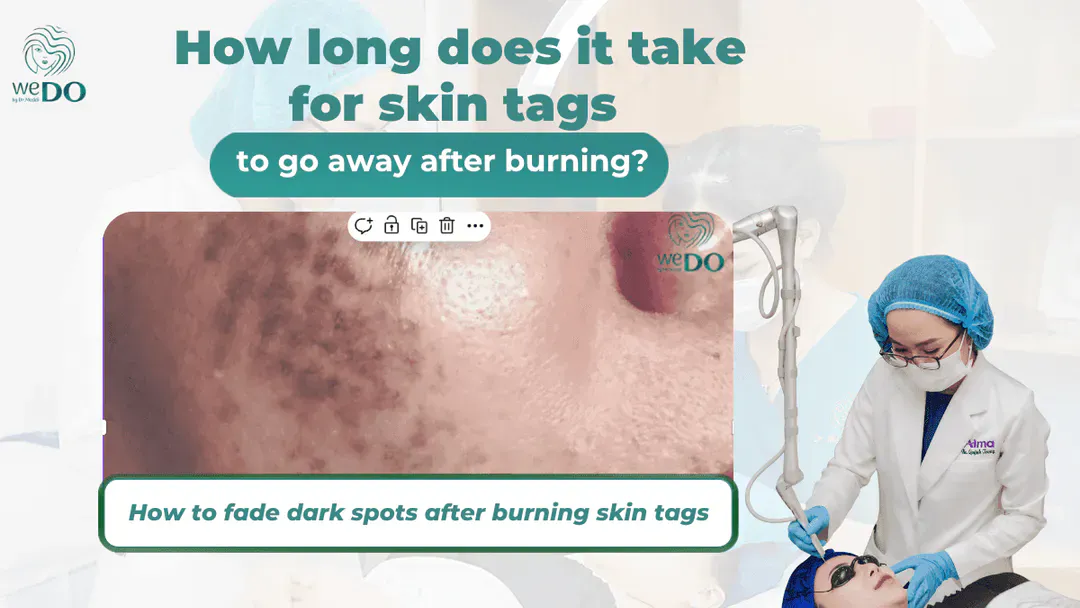
Hyperpigmentation on the skin is a common issue for those who undergo laser skin tag removal. However, these dark spots are not permanent and can fade over time. So, how long does it take for hyperpigmentation to fade after skin tag removal?

Causes of hyperpigmentation after laser skin tag removal
After laser skin tag removal, hyperpigmentation in the treated area is quite common, known as post-inflammatory hyperpigmentation. This is not a dangerous complication but rather a part of the skin’s natural protective and healing mechanism.
Simply put, when the laser targets and removes skin tags, the body responds to this injury by triggering an inflammatory response to eliminate damaged cells, initiating the healing process.
During inflammation, melanocyte pigment cells (typically located in the epidermis) are overstimulated, leading to excessive melanin production. This excess melanin is transported to the upper skin layers and deposited in the affected area, resulting in dark or discolored spots on the skin’s surface, commonly referred to as post-laser hyperpigmentation.
Besides post-inflammatory hyperpigmentation, several other factors contribute to the risk and severity of hyperpigmentation after skin tag removal, including:
- Sunlight (UV rays): UV rays strongly stimulate melanin production, making dark spots more pronounced and harder to fade.
- Skin type and predisposition: Individuals with naturally darker skin tones or those prone to hyperpigmentation are at higher risk of post-laser darkening. This is a natural bodily response to any skin injury.
- Improper post-treatment care: Neglecting hygiene, prematurely peeling scabs, or using unsuitable products can exacerbate damage and hyperpigmentation in the lasered area.
- Treatment technique: If the laser skin tag removal procedure is not performed correctly, it can cause deep damage to the treated area, leading to prolonged hyperpigmentation or even scarring. Therefore, when choosing a facility for skin tag removal, opt for reputable dermatology clinics to ensure safety, effectiveness, and minimal post-treatment hyperpigmentation.
>>> If left untreated with modern methods, do skin tags disappear on their own?

How long does it take for hyperpigmentation to fade after skin tag removal?
Typically, hyperpigmentation caused by post-inflammatory hyperpigmentation will gradually fade and disappear within about 2 weeks, depending on the individual’s skin type and post-treatment care.
Specific timelines for hyperpigmentation fading after skin tag removal
| Time to fade | Characteristics |
| 2 – 4 weeks | – Mild hyperpigmentation
– Light skin tone – Strict skin care regimen |
| 1 – 3 months | – Moderate hyperpigmentation
– Skin prone to hyperpigmentation – Relatively good skin care |
| 3 – 6 months | – Persistent, dark hyperpigmentation
– Dark skin tone – Improper or inconsistent skin care |
Factors affecting the time for hyperpigmentation to fade
The time it takes for hyperpigmentation to fade after skin tag treatment is not fixed and is influenced by several factors:
- Skin predisposition: A good skin predisposition helps hyperpigmentation fade quickly.
- Natural skin tone: Individuals with darker skin tones, such as golden or brown, or those prone to hyperpigmentation, tend to experience more pronounced and prolonged post-laser darkening.
- Extent of damage from skin tag removal: If the laser technique causes widespread damage, the treated area requires more time to heal, leading to prolonged hyperpigmentation.
- Type of laser used: Different lasers have varying mechanisms of action, affecting the inflammatory response and the likelihood of hyperpigmentation.
- Post-treatment skin care: Those who follow proper post-treatment care, such as protecting skin from sunlight, maintaining hygiene, moisturizing, avoiding scab picking, and using skin-brightening products, will experience faster fading of hyperpigmentation.
- Size and location of skin tags: Larger skin tags typically leave more noticeable and longer-lasting dark spots compared to smaller ones. Additionally, hyperpigmentation in thin skin areas or regions frequently exposed to sunlight may take longer to fade.

Ways to help skin recover quickly from hyperpigmentation after laser skin tag removal
Hyperpigmentation after laser skin tag removal is a natural skin response and can be managed to speed up recovery. By following proper care methods and specialized treatments, your skin can quickly regain its even tone and smoothness. Below are ways to help your skin recover from hyperpigmentation after laser skin tag removal:
- Using Nd: YAG Laser technology: Nd: YAG Laser technology uses light wavelengths of 1064 nm and 532 nm, which penetrate deep into the skin, particularly the dermis. When absorbed, this energy breaks down pigment particles into tiny fragments. The body’s immune system then identifies and eliminates these micro-melanin particles through natural metabolic processes, effectively fading dark spots and resulting in brighter, more even-toned skin safely.
- Brightening skin with Alma Dye VL AFT Laser technology: This technology focuses on emitting high-intensity pulsed light in the 500-600 nm wavelength range, optimized for selective absorption by melanin and hemoglobin. The light converts to thermal energy, breaking down pigment particles into smaller fragments that are then eliminated through the body’s natural metabolic process.
- Chemical peel: After full recovery, dermatologists may recommend medical-grade chemical peels using mild acid solutions like AHA or BHA to remove the dead skin cell layer containing melanin pigments, stimulating the regeneration of brighter new skin.
- Electroporation with skin-brightening serums: This treatment delivers skin-brightening ingredients like vitamin C, niacinamide, or tranexamic acid deep into the skin, inhibiting melanin production and accelerating the fading of dark spots.
- Specialized masks and serums: Specialized recovery and skin-brightening masks and serums are used to soothe the skin, provide nutrients, and support hyperpigmentation reduction.
Note: All the above skin-brightening treatments are performed under the direct examination, consultation, and prescription of specialized dermatologists.
>>> In addition to the skin-brightening methods above, it’s crucial to equip yourself with tips for skin tag removal to prepare for effective treatments and minimize post-treatment hyperpigmentation and melasma.

Guide to at-home skin care after laser skin tag removal
This is the “core” step in quickly fading hyperpigmentation. To achieve effective results, follow these steps:
- Protect your skin from sunlight, especially the new skin after laser skin tag removal, by using sunscreen with SPF 30-50+ and PA+++. Apply daily, even indoors or on cloudy days, and reapply every 2-3 hours if outdoors or sweating. Additionally, use wide-brimmed hats, masks, and sunglasses when going outside to shield the skin from UV rays.
- Gently clean the treated area with saline or a doctor-prescribed antiseptic solution, avoiding excessive rubbing.
- Use skin tag removal medications such as recovery creams and zinc-based creams as directed by your doctor to soothe the skin, reduce inflammation, and promote cell regeneration. Once the scabs have fallen off and new skin is exposed, apply moisturizer to maintain hydration and keep the skin soft.
- Allow scabs to fall off naturally. Never pick or squeeze them to avoid prolonging healing time and increasing the risk of hyperpigmentation or scarring.
- Avoid foods that may cause scarring or hyperpigmentation, such as beef, water spinach, seafood, sticky rice, or stimulants. Increase intake of green vegetables, fruits rich in vitamin C, and drink sufficient water to promote skin regeneration from within.

Frequently asked questions about hyperpigmentation after skin tag removal
1. Will hyperpigmentation after skin tag removal completely fade on its own?
Most hyperpigmentation will gradually fade and disappear over time, especially with proper skin care and sun protection.
2. Does using Vitamin C help hyperpigmentation fade faster?
Yes, Vitamin C is a powerful antioxidant that brightens the skin and inhibits melanin production, effectively supporting the fading of dark spots.
3. Does everyone experience hyperpigmentation after skin tag removal?
Not everyone experiences hyperpigmentation; it depends on factors like skin predisposition, skin type, extent of damage, and post-treatment care.
4. What to do if hyperpigmentation doesn’t fade after several months?
If hyperpigmentation persists after a few months, consult a dermatologist for advanced treatments such as pigment-targeting lasers or chemical peels.
5. What foods should be consumed to support hyperpigmentation reduction?
Incorporate foods rich in Vitamins C and E and antioxidants, such as dark green vegetables and fruits. These support the healing process and reduce hyperpigmentation from within.
We hope this article has clarified how long it takes for hyperpigmentation to fade after skin tag removal and how to expedite the process. In practice, with proper skin care and skin-brightening technologies, hyperpigmentation can be significantly reduced, resulting in brighter, smoother, and more even-toned skin.
WeDo District 1 – Tran Doan Khanh Street
- Hotline/Zalo/Whatsapp: 0898898875
- Address: 11 Tran Doan Khanh Street, Da Kao Ward, District 1, HCMC
WeDo District 2 – Thai Thuan Street
- Hotline/Zalo/Whatsapp: 0707196622
- Address: 17 Thai Thuan Street, An Phu Ward, Thu Duc City, HCMC