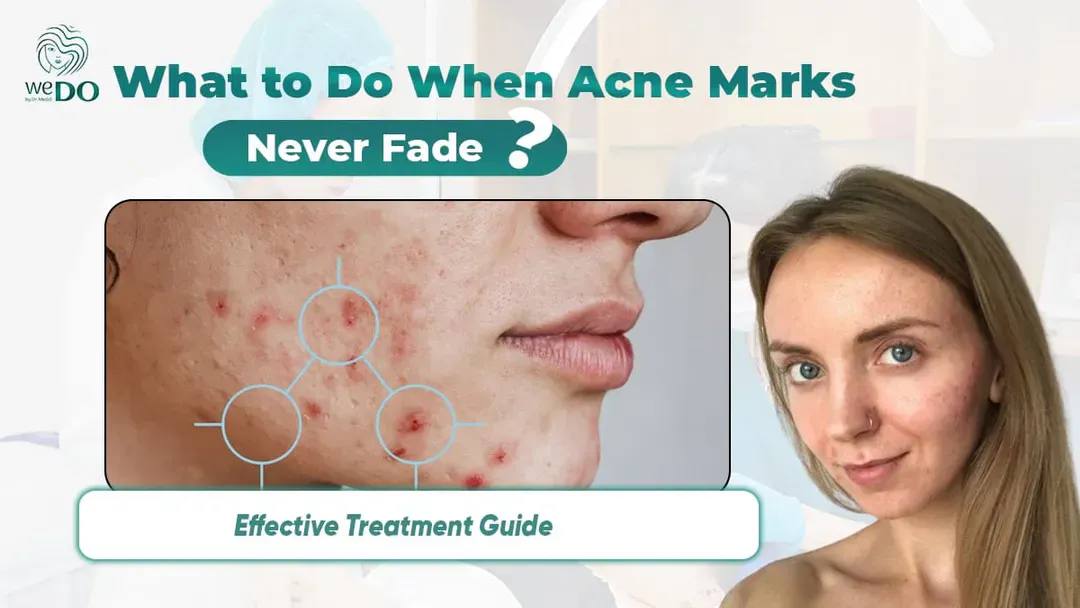
Persistent acne marks can leave your skin dull, lifeless, and significantly affect your self-confidence. Many people try countless skincare products or home remedies, yet those dark spots seem to never fade. So, what to do when acne marks never fade? Let’s explore the root causes and effective dermatological treatments with Wedo Skin Clinic.
Causes of Persistent Acne Marks
To effectively treat acne marks, it is essential to understand the underlying causes. These marks typically form as a result of inflammation or skin trauma, which stimulates the overproduction of melanin—the pigment responsible for the darkened appearance that tends to linger over time.
For example, melanin is the main culprit behind post-acne hyperpigmentation. Even seemingly harmless habits, when repeated, can disrupt melanin regulation and prolong the fading process of acne marks.
Popping pimples incorrectly causes deep skin damage
Using unclean hands or non-sterile tools to squeeze pimples can lead to severe inflammation and damage the dermis. As a defense mechanism, the skin produces more melanin, resulting in dark spots. Furthermore, if pimples are popped before they are fully mature or with too much force, the wound becomes deeper and healing time is significantly extended.
Inadequate sunscreen use
Sunlight is the number one enemy of pigmented skin. UVA and UVB rays stimulate melanocyte activity, causing excessive melanin production and making dark spots darker and more resistant to fading. Many people skip sunscreen or use the wrong type, which worsens pigmentation and causes it to spread.

Delaying professional treatment
Many individuals believe that acne marks will fade on their own over time. However, if left untreated for 3 to 6 months, melanin becomes embedded in the skin, making it much harder to remove. At this stage, regular at-home skincare may no longer be effective, and professional intervention is often required.
Genetic tendency to develop post-inflammatory hyperpigmentation (PIH)
This condition is common among people of Asian descent. After skin trauma, the body naturally increases pigment production to protect the affected area. However, those with a PIH-prone skin type tend to overproduce melanin, resulting in stubborn dark patches that are more difficult to treat. As a result, they are more prone to post-acne marks than others, even with proper skincare.
What to Do When Acne Marks Never Fade? Dermatologist-Approved Solutions
When pigmentation persists with no sign of fading, it’s time to reconsider your current regimen. Here are the top dermatologist-recommended solutions:
DYE-VL Shining Recover – Fade Pigmentation and Even Out Skin Tone
DYE-VL Shining Recover is a next-generation pulsed light technology that effectively targets deep melanin clusters responsible for post-acne pigmentation. This selective light energy breaks down melanin without damaging surrounding tissues, making the treatment safe, non-invasive, and requiring no downtime. In addition to fading dark spots, DYE-VL enhances natural brightness and evens out overall skin tone. It is especially effective for long-standing pigmentation or post-inflammatory dark patches.

IPL – Soothe Redness After Inflammatory Acne
IPL (Intense Pulsed Light) is a high-energy light-based technology that helps reduce persistent redness and discoloration following inflammatory acne. It works by gently targeting the dilated blood vessels under the skin, calming inflammation and accelerating skin recovery. IPL also stimulates collagen production, which improves skin firmness and helps even out the complexion. It is particularly suitable for sensitive skin types prone to redness after acne.

Chemical Peel – Dermalogica – Safe Skin Resurfacing and Pigment Lightening
This medical-grade chemical peel uses a professionally formulated blend of AHA/BHA acids to exfoliate the skin, fade dark spots, and promote cell renewal without causing intense peeling. The controlled acid concentration helps remove dead skin cells, stimulate the formation of new ones, and visibly improve skin texture and pigmentation with minimal irritation.
LED CellumaR – Anti-Inflammatory, Healing, and Brightening Support
CellumaR is an FDA-cleared LED light therapy device that uses blue, red, and purple wavelengths to reduce inflammation, increase blood circulation, and accelerate post-acne healing. When combined with treatments like laser, peels, or iontophoresis, it significantly shortens recovery time and boosts treatment efficacy. Red and purple light also brighten the skin and stimulate collagen production for a naturally even tone.

Vitamin C Iontophoresis – Deep Infusion of Brightening Actives
This advanced step enhances post-acne scar treatment by delivering Vitamin C or Alpha Arbutin deep into the dermis—where melanin pigment resides—using a gentle ionized electric current. Compared to topical application, this method speeds up pigment breakdown by up to 5 times. It not only brightens the skin but also strengthens its defense system, prevents pigmentation recurrence, and supports recovery after peel or laser treatments
Recommended Skincare Products for Acne Scars
For mild to moderate hyperpigmentation—especially PIH—dermatologist-formulated topicals with active ingredients like Azelaic Acid, Vitamin C, Niacinamide, Kojic Acid, and Hydroquinone can be highly effective.
At Wedo, dermatologists tailor routines to each skin type and pigmentation level. Some recommended products include:
- Paralapiel Spot Correcting Cream
Contains Tranexamic Acid & Niacinamide to fade pigmentation and restore skin barrier. - Fixderma Face21 Face Cream
Brightens skin using Arbutin, Kojic Acid, and Lactic Acid; gentle enough for sensitive skin. - Fixderma Skarfix-TX Cream
Targets PIH with Tranexamic Acid, Kojic Acid & Niacinamide for visible results in weeks. - Ezanic Gel 20% (Azelaic Acid)
Reduces dark spots, inflammation, and acne-causing bacteria while regulating skin cell turnover. - Uriage Depiderm Anti-Dark Spot Serum
Vitamin C + AHA-based serum to brighten complexion and prevent future pigmentation.
These products require consistent and correct use. Overuse or improper combinations can irritate the skin. Sunscreen is non-negotiable during treatment to prevent UV-induced pigmentation from worsening.
Important Reminders During Acne Scar Treatment
Never pop pimples at home, especially with dirty hands or unsterile tools.
Don’t overload your routine with too many strong actives—this may damage your skin barrier.
Always apply sunscreen, even indoors or while working on a computer.
Be patient. Fading hyperpigmentation can take 4–8 weeks or longer, depending on your skin type.
Stick to a consistent skincare routine and follow professional guidance.
Discontinue products if irritation occurs and consult a dermatologist promptly.
Conclusion
What to do when acne marks never fade? Don’t give up—persistent pigmentation is treatable. The key is to understand the root cause, select the right solution, and follow a well-structured regimen guided by skin experts. At Wedo Skin Clinic, we are here to help you regain clear, radiant skin with personalized care.