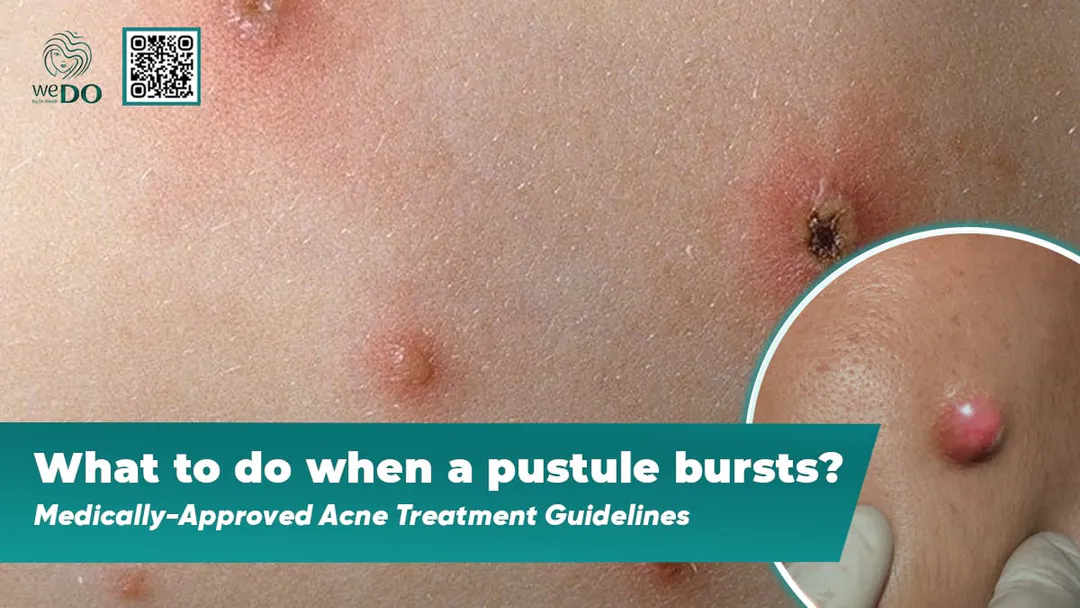
Pustules may burst due to facial impact while cleansing, the habit of touching your face, or improper pimple extraction. When this happens, the broken skin becomes highly vulnerable to bacterial infection, leading to inflammation, hyperpigmentation, and scarring. To prevent such complications, it’s crucial to follow the correct skincare protocol immediately after the pustule breaks.
In this article, Wedo Skin Clinic shares medical insights on the nature of pustules, the risks of an untreated rupture, and a step-by-step guide to managing the situation at home safely and effectively.
What Is a Pustule?
A pustule is an inflamed acne lesion filled with white or yellow pus. It forms when pores become clogged with excess oil, dead skin cells, and P. acnes bacteria. This is considered a more severe stage of blackheads or whiteheads, in which the bacteria penetrate deeply into the follicle and cause a visible, pus-filled breakout.
Pustules typically appear as red, swollen, painful bumps on oil-prone areas like the forehead, nose, chin, back, and chest. Since they contain infectious fluid, improper handling after a pustule bursts can lead to the spread of bacteria and new acne lesions.

What to Do When a Pustule Bursts?
Yes. If not treated properly, a burst pustule can cause significant skin damage. The released pus carries bacteria, oil, and dead skin cells that may spread to nearby areas, triggering new breakouts and inflammation. The open wound becomes more susceptible to environmental bacteria, potentially resulting in prolonged redness, swelling, or even serious infections.
Additionally, habits like touching or squeezing the wound further can lead to hyperpigmentation or permanent scarring, negatively affecting both skin health and appearance. For this reason, it’s essential to treat the affected area carefully and follow the proper aftercare routine.

6 Dermatologist-Approved Steps to Treat a Burst Pustule at Home
Step 1: Clean your hands thoroughly
Use antibacterial soap and wash for at least 20 seconds. Dry with a clean tissue or disposable towel. Optionally, apply 70% alcohol hand sanitizer afterward.
Step 2: Gently clean the affected area
Use a cotton pad or sterile gauze soaked in saline solution (NaCl 0.9%) or a mild antiseptic like chlorhexidine. Gently remove pus or blood. Avoid harsh rubbing.
Step 3: Absorb remaining pus and stop any bleeding
Use clean gauze or tissue to dab away residual pus. If bleeding occurs, apply light pressure for 1–2 minutes. Do not use reused towels or bare hands.
Step 4: Disinfect the wound with a gentle antiseptic
Apply povidone-iodine (Betadine) or 0.05% chlorhexidine with a cotton swab or clean gauze. Do not pour directly onto skin or overuse it during the day.
Step 5: Cover and protect the area if needed
If exposed to dirt, sweat, or sunlight, apply a hydrocolloid acne patch or antibacterial dressing. Change every 12 hours or 1–2 times per day.
Step 6: Do not touch or squeeze the wound again
Avoid any further squeezing or picking. Let your skin heal naturally and focus on soothing and repairing the area.
⚠ Note: Do not use 90% rubbing alcohol directly on the wound as it can cause skin dryness and burning. If you notice persistent swelling, pus, bleeding, or an unusual odor, visit a dermatologist for professional care.
How to Care for Skin After a Pustule Bursts
Post-treatment care is essential to accelerate healing and prevent scarring:
-
Use skin-repair creams: Look for products with panthenol (Vitamin B5), madecassoside, or allantoin to support regeneration and reduce inflammation.
-
Avoid cosmetics and active ingredients: For the first 1–2 days, avoid makeup and products containing alcohol, AHA/BHA, or retinol.
-
Keep the skin hydrated: Choose fragrance-free moisturizers with gentle ingredients to support the skin barrier.
-
Sun protection is a must: Healing skin is prone to hyperpigmentation. Use a broad-spectrum SPF 30+ daily, even indoors.
-
Don’t pick at scabs or flakes: Let the skin heal on its own. Picking at scabs can lead to scarring.
-
Visit a dermatologist if signs of infection appear: If the area remains swollen, painful, or continues to ooze pus after 1–2 days, seek medical attention.

Final Thoughts
A burst pustule is not something to ignore — without proper care, it can lead to long-term skin issues. We hope this guide from Wedo Skin Clinic has equipped you with the right steps to manage and protect your skin effectively. If you frequently experience inflamed or recurring acne, don’t hesitate to consult with a dermatologist for safe, tailored treatment.