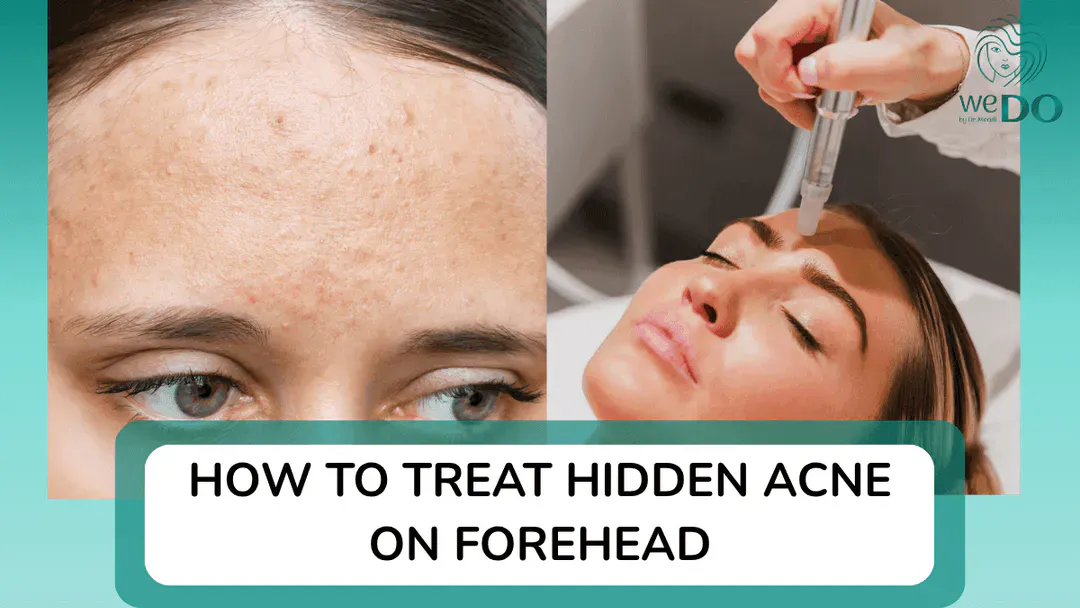
Closed comedones are a common dermatological condition, particularly prevalent on the forehead, where sebaceous glands are highly active. Over time, if not treated properly, closed comedones on the forehead can become inflamed, leading to consequences such as cystic acne, hyperpigmentation, and scarring. So, how can you effectively and scientifically treat closed comedones on the forehead? The following article will help you accurately identify your skin condition and choose the right method to treat closed comedones on the forehead, suitable for your skin type and level of damage.
How to Identify Closed Comedones on the Forehead
Closed comedones on the forehead are typically not red or painful like inflammatory acne, but they still cause discomfort due to the rough, uneven skin surface, diminishing its natural smoothness. Common signs to recognize closed comedones include:
– Rough skin surface: When viewed under angled lighting, you’ll notice tiny bumps without distinct white or black heads.
– Clustered appearance: Closed comedones often appear in small patches, primarily on the forehead and temples.
– Non-inflammatory but persistent: These comedones are painless but long-lasting and can spread if not treated properly.
– Reaction to improper care: The skin may become sensitive or develop inflammatory acne if you attempt to extract them or use overly harsh exfoliants.

Guide to Treating Closed Comedones at Home
For mild to moderate cases of closed comedones without widespread inflammation, you can apply home treatment methods to control clogging and help bring the acne core to the surface. Below are the steps to treat them correctly, as recommended by dermatology experts:
Proper skin cleansing to maintain the skin barrier
Cleansing is the cornerstone of treating closed comedones. However, improper cleansing or using overly harsh products can damage the skin barrier, exacerbating the condition. Recommendations include:
– Choose a gentle, sulfate-free cleanser with a balanced pH (around 5.0 – 5.5).
– Cleanse the skin twice daily, especially after sweating or exposure to dirt and oil.
– Exfoliate with products containing Salicylic Acid (BHA) 1-2 times per week to deeply cleanse pores and help expel the acne core.
In some cases, cleansing and removing makeup daily but still getting acne can be a serious issue. So, what’s the reason?
Using suitable active ingredients for closed comedones
Certain active ingredients have proven effective in controlling closed comedones, promoting skin renewal, and clearing internal blockages:
– Retinoids (Retinol, Adapalene, Tretinoin): Help remove dead skin cells, push out acne cores, and regulate keratinization, but should be used at appropriate concentrations and paired with strict sun protection.
– BHA (Salicylic Acid 1-2%): Penetrates oil to cleanse follicles, reduce mild inflammation, and improve skin texture.
– Niacinamide (4-5% concentration): Regulates oil production, soothes the skin, and supports barrier repair.
Note: Test for skin sensitivity before use and prioritize dermatologically tested products.
Proper moisturizing to support skin recovery
Many people treating acne skip moisturizing, but this is a common mistake. When the skin lacks hydration, sebaceous glands work harder to compensate, prolonging closed comedones. Experts recommend using non-comedogenic moisturizers free of mineral oils, with ingredients like ceramide, panthenol, or hyaluronic acid to support skin recovery.
Supporting treatment with proper home remedies
In addition to the above, you can apply supportive methods to enhance results:
– Steam the face with natural essential oils (lemongrass, green tea) once a week to open pores and aid deep cleansing.
– Use clay masks 1-2 times per week to absorb excess oil and impurities.
– Avoid self-extracting acne to prevent inflammation, infection, or scarring.

Many people are unaware of whether closed comedones should be extracted and often leave them untreated, resulting in less natural-looking skin. In such cases, it’s important to know safe ways to address mild closed comedones at home without needing a spa.
6 Ways to Thoroughly Treat Closed Comedones on the Forehead
Closed comedones on the forehead are challenging to treat with surface-level methods alone. To address them thoroughly, combine medical-grade treatments with intensive skincare to deeply cleanse, promote skin renewal, and prevent recurrence. Here are 6 expert-recommended ways to treat closed comedones on the forehead:
Medical-grade comedone extraction
Extracting the acne core is the first step to completely remove deep-seated closed comedones, reduce inflammation, and prevent further acne development. This procedure should be performed by a skilled dermatologist or technician using sterile tools to avoid infection or scarring. Proper extraction helps clear pores and supports skin recovery.
After extraction, you should also know what to do after extracting acne to avoid hyperpigmentation and scarring, keeping the skin smooth and free of closed comedones.
Chemical peels
Chemical peels use gentle acids like AHA, BHA, or a combination with TCA at appropriate concentrations to remove dead skin, unclog pores, reduce closed comedones, and stimulate collagen production. This method also improves skin texture, brightens, and evens out the forehead’s tone. Chemical peels should be performed periodically under professional supervision to achieve optimal results and avoid damage.
Laser and light therapy
Laser and light therapies (IPL, fractional laser) target deep into the epidermis and dermis, eliminating acne-causing bacteria while stimulating collagen and elastin production to firm and rejuvenate the forehead’s skin. This method is especially suitable for severe closed comedones with scarring or hyperpigmentation. Laser treatments must be customized to the skin condition and performed by a dermatologist.

Electroporation nutrient delivery
Electroporation uses gentle electric currents to deliver active ingredients like vitamin C, B5, hyaluronic acid, or anti-inflammatory and antioxidant compounds deep into the skin. This method enhances the effectiveness of closed comedone treatment, nourishes the skin from within, and restores the natural protective barrier. Electroporation is often combined with intensive acne skincare regimens.
Mesotherapy
Mesotherapy involves injecting nutrients, vitamins, and enzymes directly into the skin’s dermis to improve acne, enhance blood circulation, and stimulate new skin cell regeneration. This modern method reduces closed comedones and scarring while nourishing the skin from within. Mesotherapy must be performed by a dermatologist in a sterile environment.
LED light therapy
LED therapy uses blue and red light wavelengths to kill bacteria, reduce inflammation, and promote skin regeneration. Blue light directly targets P. acnes bacteria, reducing inflammation, while red light enhances circulation and collagen production. This safe, non-invasive therapy can be performed regularly for long-lasting results.

Preventing Recurrence of Closed Comedones on the Forehead
Closed comedones on the forehead are prone to recurrence without thorough care and prevention. Maintaining a scientific skincare routine and a healthy lifestyle can significantly reduce the risk of new acne forming. Specific measures include:
– Maintain a suitable daily skincare routine: Gently cleanse, use toner, and moisturize properly to keep pores clear.
– Choose non-comedogenic cosmetics: Opt for products labeled “non-comedogenic” to avoid clogging pores.
– Avoid touching the forehead: Refrain from touching your face to reduce the spread of bacteria and dirt.
– Regularly clean personal items: Wash pillowcases, clean phones, and sanitize hats to limit bacterial contact with the skin.
– Manage stress: Stay relaxed and avoid prolonged stress, as it increases oil production and triggers acne.
– Adopt a healthy diet and lifestyle: Eat nutrient-rich foods, limit greasy or sugary foods, and get enough sleep to improve overall skin health.

Closed comedones on the forehead, while not severely inflammatory, are persistent and can cause aesthetic damage if not treated properly. Understanding the causes, accurately identifying the acne type, and applying methods to treat closed comedones on the forehead scientifically, combined with a proper skincare and lifestyle regimen, will significantly improve your skin condition and prevent long-term recurrence.
WEDO Skin Clinic, a specialized dermatology and aesthetic clinic with experienced dermatologists and state-of-the-art medical-grade equipment, is committed to providing personalized treatment plans for each case of closed comedones. Book a free skin consultation and examination at WEDO Skin Clinic today to receive proper guidance and treatment, helping you regain smooth, healthy, flawless skin.
WeDo District 1 – Tran Doan Khanh Street
- Hotline/Zalo/Whatsapp: 0898898875
- Address: 11 Tran Doan Khanh Street, Da Kao Ward, District 1, HCMC
WeDo District 2 – Thai Thuan Street
- Hotline/Zalo/Whatsapp: 0707196622
- Address: 17 Thai Thuan Street, An Phu Ward, Thu Duc City, HCMC