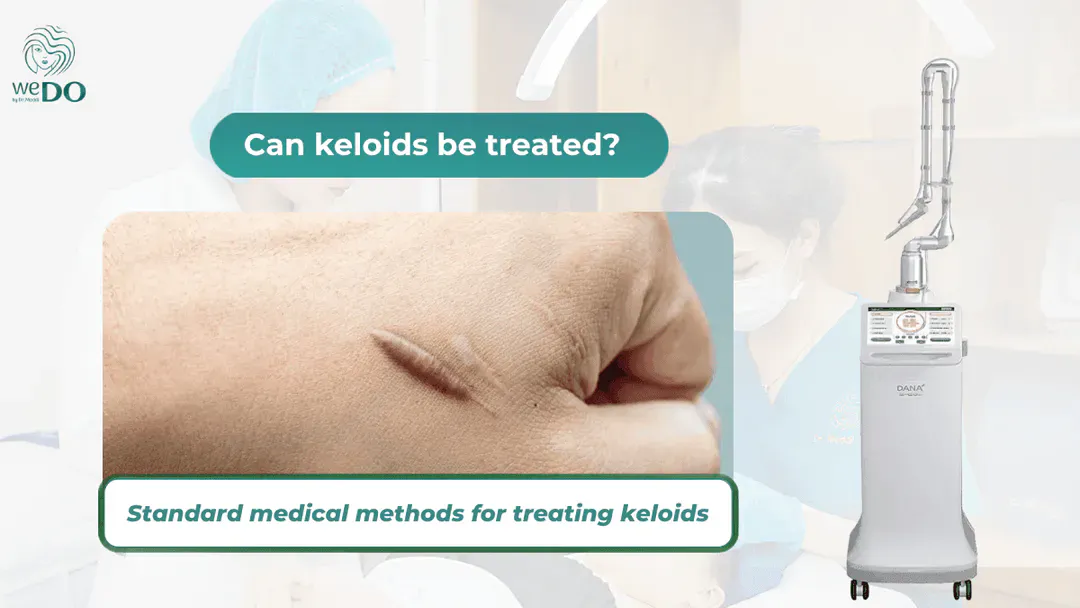
Known as a difficult-to-treat type of scar, keloid scars are often accompanied by post-inflammatory hyperpigmentation, causing uneven skin tone and significantly affecting aesthetics. So, can keloid scars be treated? Let’s explore this with WEDO Skin Clinic in the article below.
What Are Keloid Scars? Causes of Keloid Scars
Keloid scars are a pathological type of scar characterized by excessive growth of collagen fibrous tissue after skin injury. Instead of healing within the boundaries of the original wound, keloids protrude above the skin’s surface, may spread beyond the injured area, and continue to grow over time. They often appear red, pink, brown, or purple, with a smooth or rough surface, and can sometimes cause itching, pain, or tightness.
Keloid scars form due to a disruption in the body’s natural healing process, leading to excessive collagen production. Although the exact mechanism is still under research, the following are identified as primary causes and risk factors:
- Genetic predisposition: This is the most significant factor. Individuals with a family history of keloid scars are at a much higher risk. Keloids are more common in people with darker skin tones, such as those of African or Asian descent, due to differences in skin structure and biological responses.
- Skin injuries: Any injury that breaks the skin can lead to keloid scars, including tears, cuts, burns, acne/inflammatory acne, piercings, tattoos, vaccinations, chickenpox, insect bites, etc.
- Prolonged inflammation: Excessive or prolonged inflammation at the wound site can stimulate fibroblasts to continuously produce collagen without stopping, leading to collagen accumulation and keloid formation.
- Scar location: Certain skin areas are more prone to keloid formation due to frequent tension or pressure, such as the chest, shoulders, upper back, earlobes, or sternum.
- Age: Keloid scars are most common between the ages of 10 and 30, when the body’s collagen synthesis is most active.
Many people also wonder, “Should you treat scars while still having acne?” If you have the same question, click the article to find the exact answer!

Can Keloid Scars Be Treated?
Keloid scars can absolutely be treated, but they cannot heal or disappear completely on their own without intervention. Why?
This is because the body lacks a mechanism to naturally eliminate the excess collagen responsible for keloid scars, requiring external intervention to flatten, fade, and improve their aesthetic appearance.
Keloid scars result from excessive collagen fibrous tissue growth beyond the original wound’s boundaries. Since the body cannot effectively eliminate this excess collagen, external intervention is necessary to flatten, fade, and enhance the scar’s appearance.
Medical-Standard Keloid Scar Treatment Methods
Keloid scars are a challenge in dermatology, requiring specialized treatment plans to achieve optimal results. Below are common medical-standard methods, along with their mechanisms and effectiveness:
1. Intralesional Corticosteroid Injections – Treatment for Newly Formed Keloid Scars
This method involves injecting corticosteroids (typically triamcinolone acetonide) directly into the keloid tissue. Corticosteroids have strong anti-inflammatory properties, inhibiting fibroblast proliferation and excessive collagen synthesis while constricting blood vessels that supply the scar. This reduces blood and nutrient flow to the scar, causing it to gradually shrink, soften, and flatten.
Effectiveness: The success rate for flattening scars can range from 50-100%. However, keloid scars may recur in 9-50% of cases within 5 years.

2. Laser Treatment – A Popular, Highly Effective, and Safe Method for Keloid Scars
Laser technology is widely used for keloid scar treatment, with various laser types targeting specific aspects, including:
- Fractional CO2 Laser: This technology emits micro-thermal laser beams that penetrate deep into keloid tissue, breaking down dense collagen fibers. Additionally, Fractional CO2 Laser stimulates new collagen regeneration and smooths the scar’s surface. In terms of effectiveness, it helps flatten, reduce the size, and improve the texture of keloid scars. Currently, this method is applied at WEDO Skin Clinic, delivering high effectiveness and safety for many clients requiring treatment.
- Pulsed Dye Laser (PDL): This technology is selectively absorbed by the proliferative blood vessels within the scar, reducing the blood supply that nourishes it. This helps reduce the scar’s redness and protrusion.
PDL is highly effective in reducing redness, inflammation, and softening keloid scars, especially those with a bright red color.
>>> Unsure about the cost of laser scar removal? Choosing a reputable facility can optimize costs significantly compared to other scar treatment locations.

3. Surgical Scar Excision
In this method, the doctor surgically removes the keloid tissue using a scalpel. The wound is then closed with aesthetic suturing techniques.
Effectiveness: Provides immediate aesthetic improvement by removing the scar mass instantly. However, surgical excision has a high recurrence rate if not combined with supportive methods like corticosteroid injections, radiation therapy, or compression bandaging post-surgery. This method is typically considered for large keloids or those unresponsive to non-surgical treatments.
4. Cryotherapy
Cryotherapy uses liquid nitrogen at extremely low temperatures (approximately -196°C) to freeze and destroy fibrous cells in the keloid scar. Repeated freezing and thawing cycles damage the cells, reducing the scar’s size and protrusion.
Effectiveness: Suitable for small keloids and can be combined with corticosteroid injections for enhanced results. However, this method may cause side effects such as hypopigmentation (loss of skin pigment) in the treated area.
Post-Keloid Scar Treatment Skin Care
- Keep the scar area clean to prevent infection and support the healing process.
- Avoid sun exposure to the scar area to prevent hyperpigmentation and protect fragile new skin.
- Moisturize and use doctor-prescribed recovery products to support skin regeneration, soften scars, and reduce itching.
- Avoid foods that may promote keloid or hyperpigmented scar formation, such as water spinach, beef, soy sauce, or seafood, to limit excessive collagen stimulation and prevent hyperpigmentation.
- Avoid mechanical impact on the scar to prevent further injury, reducing the risk of scar expansion or recurrence.
Frequently Asked Questions About Keloid Scars
1. Does the itching or pain from keloid scars persist?
Itching, pain, or tightness in keloid scars typically occurs during their growth phase and may subside as the scar stabilizes, though it can occasionally recur with weather changes.
2. How large can keloid scars grow?
Keloid scars can grow significantly beyond the original wound’s boundaries and continue increasing in size for months or even years if untreated.
3. Can keloid scars affect body movement?
Yes, keloid scars in joint areas or skin prone to stretching can cause tightness, limit range of motion, and affect physical function.
4. What precautions should people prone to keloid scars take?
Individuals prone to keloid scars should be cautious with any skin injuries, avoid unnecessary invasive procedures, and consult a doctor for preventive measures from the outset.
Thus, this article has answered the question, “Can keloid scars be treated?” for many people. Although they are challenging to treat, choosing the right method can help you achieve smooth, flawless skin. Most importantly, select a reputable dermatology clinic for treatment to avoid worsening the scar.
WeDo District 1 – Tran Doan Khanh Street
- Hotline/Zalo/Whatsapp: 0898898875
- Address: 11 Tran Doan Khanh Street, Da Kao Ward, District 1, HCMC
WeDo District 2 – Thai Thuan Street
- Hotline/Zalo/Whatsapp: 0707196622
- Address: 17 Thai Thuan Street, An Phu Ward, Thu Duc City, HCMC