Plantar warts are a common dermatological condition. While not dangerous, they can cause discomfort and directly affect walking. Many people tend to overlook them, allowing warts to grow larger and spread. So, what causes plantar warts, and how can they be treated safely?
What Are Plantar Warts?
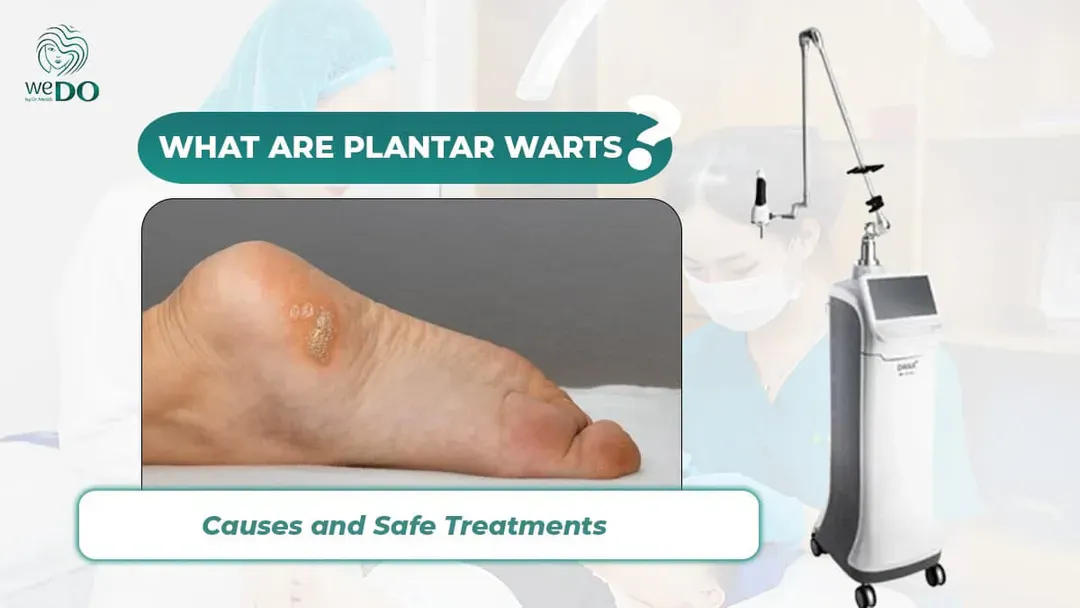
Plantar warts usually appear as small bumps with a flat or rough surface, often found on the top or heel of the foot—areas that bear heavy pressure when walking. The main cause is the HPV virus, which enters through small cuts or abrasions on the sole.
In many cases, plantar warts may disappear on their own without treatment, especially in children under 12. However, if not completely treated, they can cause pain, discomfort, and affect quality of life—even though the condition itself is not life-threatening.

Causes of Plantar Warts
Plantar warts often arise from silent factors you may overlook. So, what exactly causes this troublesome condition?
Through Cuts or Abrasions
When the skin is cut or scratched, HPV can directly enter the epidermis. This creates a gateway for infection, leading to wart development. Children—who are active, play outdoors, and often neglect personal hygiene—are particularly susceptible to HPV infection this way.
Metabolic Disorders and Weakened Immunity
People with chronic conditions such as diabetes, dyslipidemia, or weak immune systems (HIV patients, pregnant women, infants, post-surgery patients, or those taking immunosuppressants) face a higher risk of developing plantar warts. With weakened defenses, HPV can thrive, making it harder for warts to resolve on their own.
Direct Contact with Infected Persons
Warts can spread from person to person through direct contact with infected skin. People in occupations with frequent skin contact, such as manicurists, are at higher risk if not adequately protected.
Additionally, HPV can spread sexually, appearing on the genitals, mouth, neck, or face depending on the point of contact.
Self-Spreading on the Body
Small warts can spread to nearby skin areas or to other parts of the body that touch them. Over time, these individual warts may cluster into larger groups, making treatment more difficult and cosmetically concerning.

Are Plantar Warts Dangerous?
No. Warts are considered benign and not life-threatening. However, this does not mean they are harmless. In reality, warts can spread between people through direct contact with wart fluid or by sharing personal items like towels, razors, toilets, or bathtubs. They can also spread to other parts of the same body, causing greater discomfort.
If scratched, picked, or improperly treated, warts may become inflamed, infected, and lead to complications. While not dangerous, they still require timely treatment to protect health and quality of life.

Treatments for Plantar Warts
Plantar warts, especially those on the soles, may sometimes disappear on their own. However, in many cases, they grow larger, become painful, and hinder walking. Early detection and treatment are therefore crucial. Doctors commonly recommend these safe and effective treatments:
- Salicylic Acid Treatment: This substance gradually erodes keratin cells, peeling away dead skin and removing the wart. When combined with cryotherapy, results are enhanced.
- Cryotherapy: Using liquid nitrogen to freeze the wart, causing a blister to form underneath. After about a week or more, the wart peels off. Repeated sessions are often required for optimal results, especially when combined with salicylic acid. Side effects may include pain, blistering, or skin discoloration.
- Electrocautery: For small warts (under 1 cm), high-frequency electric currents destroy the wart tissue. This method works quickly, but wounds must be cared for properly to prevent infection.
- Minor Surgery: Under local anesthesia, the doctor surgically removes the wart. However, due to scarring risk—particularly on the soles—this method is reserved for resistant cases. Scars on the sole may cause lasting pain.
- Laser Therapy: Laser beams vaporize wart tissue and cut off its blood supply, causing necrosis and detachment. Though effective, recurrence is possible, requiring multiple treatments.
Conclusion
Plantar warts are considered a chronic dermatological condition. Therefore, once symptoms appear, patients should seek medical attention at reputable clinics. A proper diagnosis and tailored treatment from a doctor will help control the condition and reduce recurrence risk.
Related Articles
Do warts go away on their own? What should I do if I have warts?
What foods should you avoid when treating warts? Nutritional regimen to support wart treatment
Where to burn warts in Ho Chi Minh City? Safe and reputable address for burning warts
Is laser wart removal good? How long does it take to heal?
Are warts contagious? Are they dangerous?
FAQs About Plantar Warts
Why do plantar warts hurt when walking?
Because they grow in pressure-bearing areas (soles, heels), thickened skin presses on nerves, causing pain similar to stepping on stones.
Are plantar warts the same as calluses or corns?
No. Warts have a rough surface with tiny black dots inside (clotted blood vessels), while calluses/corns are smooth, caused by friction or pressure—not by a virus.
Should I cut or pick off warts at home?
No. This may cause bleeding, infection, scarring, and faster virus spread.
Can people with diabetes treat plantar warts?
Yes, but with caution. Diabetes patients heal slowly and risk infections, so treatment must be done at reputable clinics under medical supervision.
Are folk remedies effective for warts?
Some remedies (like applying garlic or herbal leaves) may have mild antibacterial effects but lack scientific proof. Overuse may cause skin burns or irritation.