General Information
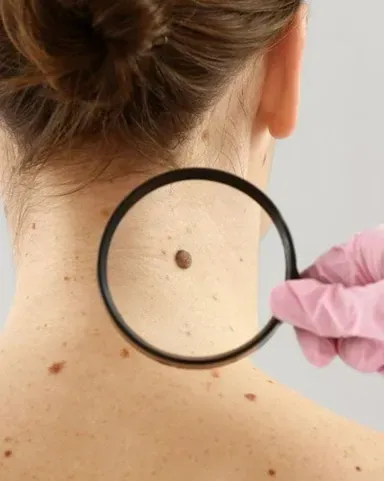
Moles are commonly used to describe black or brown spots on the skin. Many conditions can cause these spots, but moles are most commonly understood as pigmented birthmarks. There are two types of moles (pigmented birthmarks): congenital and acquired.
Congenital moles appear from birth or before the age of two. Acquired moles appear after the first two years but originate from embryonic development. Most moles emerge after the age of two.
The different colors of moles, such as black, brown, or blue, are due to pigment cells containing different colored substances. Depending on the location, density of pigment, and depth of the mole, their color manifests differently. Most moles are black, while some are brown. Essentially, moles are similar in nature.
MOLE LOCATIONS THAT MAY INDICATE CANCER
The essence of moles is the damage to pigment cells in the skin, which carries a certain risk of becoming cancerous. Among these, large congenital moles have the highest risk, with a 13% chance of developing into cancer. Additionally, moles located on the palms, soles, semi-mucous areas, or scalp are considered dangerous due to their potential to become cancerous. Changes in moles in other locations can also signal cancer.

- Changes in size: Congenital moles that grow faster than the body’s development.
- Changes in color: Transitioning from dark to light, light to dark, or becoming blotchy, with additional colors appearing.
- Changes in surface: The mole becomes raised and uneven.
- Changes in borders: If the edges of a mole become blurred and unclear, differing from other moles, this could also indicate cancer.
The lesions from malignant tumors often cause the blurring of mole boundaries. Additionally, other symptoms like inflammation, bleeding, ulceration, or itching from moles should also raise concern about cancer.
To treat mole-related cancer, the affected moles are surgically removed. Furthermore, moles located in high-risk areas like the palms, soles, semi-mucous areas, or scalp are advised to be removed as early as possible. You should visit a dermatology hospital or a reputable clinic if you notice any unusual changes in your moles.
Contact Information
- Contact us for a free consultation and appointment!
WeDo Skin Clinic
- Website: cms.wedoskinclinic.com
- Facebook: Meddi Skin Clinic & Spa | Wedo by Dr.Meddi
WeDo District 1 – Tran Doan Khanh Street
- Hotline/Zalo: 0898898875
- WhatsApp: +84898898875
- Address: 11 Tran Doan Khanh Street, Da Kao Ward, District 1, HCMC
WeDo District 2 – Thai Thuan Street
- Hotline/Zalo: 0707196622
- WhatsApp: +84707196622
- Address: 17 Thai Thuan Street, An Phu Ward, Thu Duc City, HCMC