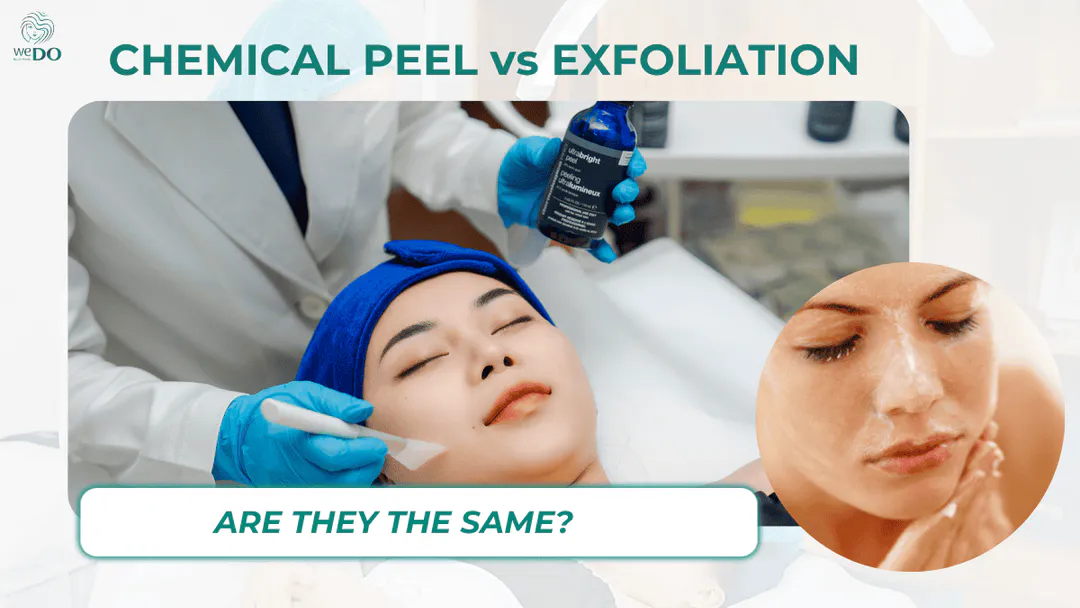
In a skincare routine, many steps can easily be mistaken for one another — chemical peels and exfoliation are prime examples. But is a chemical peel simply another form of exfoliation, or are these two entirely different steps in skin care? Let’s take a clear and professional look at the distinction between them.
Understanding Chemical Peels and Exfoliation
A chemical peel is a dermatological procedure that resurfaces the skin using active ingredients capable of breaking down cellular bonds, promoting the shedding of the stratum corneum or part of the epidermis. Depending on its depth, a peel may be superficial, medium, or deep, each targeting specific skin concerns such as acne, hyperpigmentation, photoaging, or scarring. This procedure should be performed by a dermatologist or licensed medical professional.

Exfoliation, on the other hand, refers to the removal of dead skin cells accumulated on the surface over time due to natural cell turnover and environmental factors such as pollution, sunlight, or cosmetic buildup. There are two main types:
-
Physical exfoliation: using scrubs, brushes, or cleansing devices.
-
Chemical exfoliation: using mild acids such as AHA or BHA in low concentrations.
Is Chemical Peeling the Same as Exfoliation?
No, chemical peeling is not the same as exfoliation — although both remove dead skin cells, a peel is a more intensive, medically supervised treatment with therapeutic effects beyond surface cleansing. The table below highlights their key differences:
| Criteria | Chemical Peel | Exfoliation |
|---|---|---|
| Purpose | Deep treatment and skin regeneration | Removing surface dead skin cells |
| Active ingredients | Strong acids (Glycolic, Salicylic, TCA, etc.) | Mild acids (AHA/BHA) or physical particles |
| Depth of action | Epidermis to dermis | Outermost stratum corneum |
| Effects | Stimulates collagen, reduces pigmentation, treats acne | Smooths skin, enhances absorption of skincare products |
| Frequency | Every 2–4 weeks or longer | 1–3 times per week depending on skin type |
| Performed by | Dermatologist or medical professional | Can be done at home |
In short, a chemical peel is a clinical resurfacing treatment, not just a simple “cleansing” step like exfoliation.
Do You Still Need to Exfoliate After a Peel?

You should not exfoliate immediately before or after a peel, especially within one week of treatment. Post-peel skin is in a healing and regenerating phase — exfoliating during this time may damage the fragile new skin and cause irritation.
Once your skin has fully recovered (typically after several weeks, depending on peel depth), you can resume gentle exfoliation appropriate for your skin type:
-
Dry or sensitive skin: 1–2 times per week with mild chemical exfoliants.
-
Oily, combination, or acne-prone skin: 2–3 times per week.
After a peel, it’s crucial to maintain hydration, apply broad-spectrum sunscreen daily, and avoid strong actives such as retinoids, AHA/BHA, or high-concentration vitamin C until the skin has completely healed.
Conclusion
In summary, chemical peels and exfoliation are related but distinct concepts. A peel is not merely exfoliation — it is an advanced dermatologic treatment aimed at addressing deeper skin concerns. Understanding the difference helps you build a safe and effective skincare routine. If you’re considering a chemical peel, always consult a qualified dermatologist to determine the most suitable approach for your skin.
Related articles:
Common Questions About Chemical Peels and Exfoliation
1. Can chemical peels be done at home?
No. Chemical peels use strong acids that penetrate deeply into the skin. They should only be performed in licensed medical facilities under professional supervision to ensure safety and effectiveness.
2. Why shouldn’t you exfoliate before a peel?
Pre-peel exfoliation can thin or sensitize the skin, increasing the risk of irritation or injury during treatment. It’s unnecessary and may compromise results.
3. Does a peel cause peeling or flaking?
Yes. Depending on the peel type and ingredients used, mild to visible peeling may occur for several days. This is a normal part of the skin renewal process.
4. What benefits do chemical peels offer beyond brightening?
In addition to improving skin tone, chemical peels help treat acne, fade pigmentation, minimize wrinkles, tighten pores, and stimulate collagen production for firmer skin.
5. Can you combine exfoliation and chemical peels in the same week?
No. Both procedures remove dead cells and renew the skin, so combining them in the same week—especially before or after a peel—can lead to irritation and damage.